1 citations
,
February 2024 in “Gynecological Endocrinology” This study found that cyclic MPA is as effective as OCPs in resuming ovulation among women with PCOS, offering a viable alternative for those who cannot or choose not to use OCPs.
 1 citations
,
February 2023 in “Deleted Journal”
1 citations
,
February 2023 in “Deleted Journal” This study found that Diphenylcyclopropenone (DCP) was effective for treating extensive alopecia areata in Thai patients, although a high relapse rate suggests maintenance therapy might be necessary.
48 citations
,
June 2000 in “Japanese Journal of Cancer Research” This study found that dimethylarsinic acid significantly accelerates skin tumor development in hair follicle-targeted K6/ODC transgenic mice.
 March 2005 in “Journal of The American Academy of Dermatology”
 Diphencyprone treatment protocols could be simplified as no harm occurred despite not fully following them.
March 2018 in “Chin J Reprod Contracep” This review outlines chlormadinone acetate's contraceptive and non-contraceptive applications but reports no new clinical findings, emphasizing its potential in treating dysmenorrhea and androgen-related conditions.
 7 citations
,
September 2017 in “Pharmacoepidemiology and Drug Safety”
7 citations
,
September 2017 in “Pharmacoepidemiology and Drug Safety” This study observed a strong overall reduction in the use of CPA/EE in the Netherlands, despite similar proportions of users with acne or other hyperandrogenic conditions before and after the referral procedure.
 August 2025 in “Journal of Cosmetic Dermatology”
 In this study, a DMG-Na and caffeine-containing shampoo significantly reduced hair loss and increased hair density in men with male pattern hair loss over 6 months, compared to a placebo, without adverse effects.
2 citations
,
May 2022 in “Advanced therapeutics” This study reported that a novel vasodilator drug called TOP-M119, when delivered using a specially designed dissolving microneedle system, showed enhanced targeting of hair follicles and effectiveness in treating alopecia, demonstrated through in vitro, ex vivo, and in vivo studies involving mouse skin.
September 2023 in “bioRxiv (Cold Spring Harbor Laboratory)” This study found that dissolving microneedle array patches containing mesoporous silica nanoparticles can deliver antigen-loaded nanoparticles into mice effectively, inducing strong immune responses similar to traditional subcutaneous injection.
50 citations
,
December 2017 in “Nanoscale” This study found that polymeric micelle formulations significantly improved the targeted delivery of adapalene to hair follicles compared to standard Differin® products, which suggests potential advantages in treating hair follicle-related conditions and reducing side effects.
 7 citations
,
January 2018 in “Reproduction”
7 citations
,
January 2018 in “Reproduction” This study found that dutasteride treatment in pregnant mares significantly increased progesterone concentrations but did not alter gestational length or neonatal outcomes.
 February 2026 in “Skin Appendage Disorders”
 This study found that scalp microinfusion with dutasteride using microneedling and tattoo devices appears safe and shows promise as a treatment for male androgenetic alopecia, resulting in stabilization or improvement in 96.7% of patients, although further controlled studies are needed.
April 2013 in “The FASEB Journal” In this study, dutasteride, but not finasteride, reduced high-grade PIN lesions more effectively in C57xFVB TRAMP mice, although both drugs increased the incidence of poorly differentiated prostate cancer.
22 citations
,
March 1999 in “International Journal of Clinical Practice” This review discusses the use of topical immunotherapy for severe alopecia areata and resistant viral warts, highlighting diphencyprone's advantages and the need for careful handling to avoid staff sensitisation; it reports no new clinical results.
 April 2016 in “The Journal of Sexual Medicine”
 This report analyzed an FDA adverse event database and aimed to evaluate and describe post-finasteride syndrome potentially related to dutasteride, but it does not report new clinical findings.
7 citations
,
September 1991 in “Journal of Andrology” In this study, 4‐MAPC treatment reduced ventral prostate weight in rats primarily through decreased synthetic activity, with testosterone propionate increasing prostate weight and activity at pharmacologic doses.
 March 2014 in “Journal of The American Academy of Dermatology”
 Mycophenolic acid may help hair grow by activating pathways important for hair growth.
 4 citations
,
August 2021 in “Annals of Translational Medicine”
4 citations
,
August 2021 in “Annals of Translational Medicine” In this study, dihydroartemisinin reduced prostate enlargement and related markers in a rat model of benign prostatic hyperplasia, suggesting its potential as a therapeutic agent.
 34 citations
,
December 2015 in “Neuroscience & Biobehavioral Reviews”
34 citations
,
December 2015 in “Neuroscience & Biobehavioral Reviews” In this study, several compounds, including estrogen and Dutasteride, showed neuroprotective effects on dopaminergic neurons in an MPTP mouse model of Parkinson's disease.
 September 2011 in “Clinical Biochemistry”
 The demineralized bone matrix scaffold is better for cell attachment than the mineralized bone allograft.
 8 citations
,
September 2004 in “Contact dermatitis”
8 citations
,
September 2004 in “Contact dermatitis” Avoiding dyed wigs and clothing improved severe allergic reactions in a woman treated with diphencyprone.
 45 citations
,
July 2002 in “The Neurologist”
45 citations
,
July 2002 in “The Neurologist” This article reviews the challenges of using disease-modifying therapy for multiple sclerosis and offers strategies to improve treatment adherence and manage adverse effects, but reports no new clinical findings.
 April 2016 in “Journal of Investigative Dermatology”
 This study found that the peptide derivative beta-Ala-Pro-Dab-NHbenzyl may reduce wrinkles and sebum production in human skin by inhibiting dipeptidyl peptidase 4, suggesting potential for acne and skin inflammation treatment.
 February 2023 in “European Journal of Dermatology”
 In this retrospective study from North France, apremilast was used in patients with psoriasis and recent cancer, showing a good safety profile and improved quality of life, though with 65.2% experiencing non-serious adverse events. The need for further research on oncological safety was highlighted.
328 citations
,
November 2020 in “Nature Materials” This study found that D-peptide crosslinked MAP hydrogel accelerated material degradation in vivo but significantly enhanced skin regeneration, suggesting an adaptive immune response can drive regenerative healing even with rapid scaffold breakdown.
May 2024 in “Journal of the Egyptian Womenʼs Dermatologic Society” This study suggests that DPCP treatment can be effective and safe for severe alopecia areata in children, with maintenance therapy potentially reducing relapse rates.
 20 citations
,
October 2003 in “The Journal of Dermatology”
20 citations
,
October 2003 in “The Journal of Dermatology” This study observed that while dexamethasone-cyclophosphamide pulse therapy is relatively free from hypertension and diabetes compared to conventional steroids in pemphigus patients, it frequently causes generalized weakness and flushing.
 86 citations
,
March 2018 in “ACS Biomaterials Science & Engineering”
86 citations
,
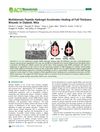
March 2018 in “ACS Biomaterials Science & Engineering” This study found that MDP hydrogel significantly accelerated wound healing and improved tissue formation in diabetic mice compared to a standard clinical hydrogel and control buffer.
 5 citations
,
September 2020 in “Journal of Cosmetic Dermatology”
5 citations
,
September 2020 in “Journal of Cosmetic Dermatology” This study reported that weekly intramuscular dexpanthenol may improve quality of life and satisfaction with hair appearance in women with female pattern hair loss, with no side effects observed.
 June 2022 in “Journal of The European Academy of Dermatology and Venereology”
 This study reports no results yet and only indicates an ongoing randomized placebo-controlled trial investigating the effects of microneedling combined with topical dutasteride solution for treating androgenetic alopecia.