February 2026 in “Biomedicine & Pharmacotherapy” In this study, researchers developed EPO-derived peptides that enhanced hair growth by stimulating dermal papilla cells and increasing IGF-1 expression without triggering systemic erythropoietic effects in tested models, indicating a promising approach for treating hair loss.
2 citations
,
November 2024 in “International Journal of Pharmaceutics X” In this study, desmopressin-loaded elastic liposomes (ODEL1) showed improved permeation and drug deposition across rat skin by altering the skin's cohesive energies and causing reversible changes on its surface.
In this study, a hair lotion made from Ganoderma lucidum spore extract resulted in new hair follicle growth and improved hair health in both mice and human participants, with 99% acceptance among users, suggesting potential usefulness for treating alopecia.
36 citations
,
July 2004 in “Journal of Controlled Release” This study demonstrates that confocal laser scanning microscopy can effectively visualize the rapid diffusion and penetration pathway of a dye into the hair follicle in fresh human scalp skin.
19 citations
,
January 2020 in “Journal of Biophotonics” This study found that using a PEG-400/oleic acid mixture as an optical clearing agent enhanced the detection depth of particles in skin without causing dehydration, based on tests in rats and further testing in vivo.
![The Synthesis of (−)-4-Methyl-8-Chloro-Trans-1,2,3,4,4a,5,6,10b-Octahydrobenzo-[f]-Quinolin-3-One-[3-14C] (LY300502-14C) via a Circuitous Route](/images/assets/73bab8dc-bdf0-45e3-8ef7-73d0d4b93cb1/small/21074.jpg) 3 citations
,
October 1994 in “Journal of Labelled Compounds and Radiopharmaceuticals”
3 citations
,
October 1994 in “Journal of Labelled Compounds and Radiopharmaceuticals” This synthesis report details the successful development of a C-14 labeled isotopomer of LY300502, a 5α-reductase inhibitor, through a multi-step radiochemical process.
 36 citations
,
November 2000 in “Journal of the American Academy of Dermatology”
36 citations
,
November 2000 in “Journal of the American Academy of Dermatology” This case study describes a unique patient with dermatomyositis who exhibited features of pityriasis rubra pilaris and porokeratosis, suggesting markers for malignancy warranting thorough investigation and monitoring.
10 citations
,
May 2020 in “Dermatologic therapy” In this study, a patient with recalcitrant lichen planopilaris and frontal fibrosing alopecia showed significant improvement after receiving four doses of the interleukin-23 monoclonal antibody tildrakizumab.
 3 citations
,
May 2018 in “The Journal of the American Animal Hospital Association/Journal of the American Animal Hospital Association”
3 citations
,
May 2018 in “The Journal of the American Animal Hospital Association/Journal of the American Animal Hospital Association” In this study, a single deslorelin acetate implant led to substantial and sustained hair regrowth in two sexually intact male keeshonden with hair cycle arrest.
October 2024 in “Developmental Dynamics” This paper highlights advances in Developmental Dynamics, noting how epoa-deficient zebrafish can model Diamond-Blackfan anemia like disorders for drug screening, Alx4 mouse models offer insights into craniofacial development, and mTORC1 signaling is crucial for retinal development.
 September 2018 in “Journal of Experimental & Biomedical Sciences”
 This study found that DK peptides demonstrated potent inhibition of 5α-reductase, suggesting they may be promising candidates for treating hair loss.
 9 citations
,
May 2020 in “Journal of Pharmaceutical and Biomedical Analysis”
9 citations
,
May 2020 in “Journal of Pharmaceutical and Biomedical Analysis” This study developed an efficient LC-MS bioanalytical method to simultaneously quantify minoxidil sulphate and latanoprost in skin layers, supporting the formulation of topical treatments for androgenic alopecia.
 5 citations
,
July 2014 in “Acta Crystallographica Section D-biological Crystallography”
5 citations
,
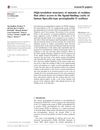
July 2014 in “Acta Crystallographica Section D-biological Crystallography” This study reports that mutations in human L-PGDS affect the entrance and exit of ligands in its binding cavity, suggesting these residues play a role in ligand interaction processes.
 June 2018 in “Acta Scientiae Veterinariae”
 This study describes three cases of dermatomyositis-like disease in mongrel dogs with compatible clinical findings and outcomes following slightly different treatment protocols.
5 citations
,
March 2019 in “Scandinavian journal of rheumatology” This article discusses the potential misdiagnosis issues in cutaneous manifestations of lupus erythematosus and reports no new research findings.
 12 citations
,
August 2017 in “Archives of Pharmacal Research”
12 citations
,
August 2017 in “Archives of Pharmacal Research” In this study, lecithin-based microparticle formulations of minoxidil showed enhanced skin penetration and comparable hair growth effectiveness to commercial products in mice, while minimizing skin irritation often seen with standard minoxidil solutions.
January 2013 in “프로그램북(구 초록집)” This study found that the Hair660™ low-level light therapy device significantly improved hair density and was safe for men with androgenetic alopecia over 24 weeks.
This case report describes a 5-year-old boy who developed generalized hypertrichosis after using 3% topical minoxidil for alopecia areata, which resolved six months after discontinuation.
 June 2020 in “The journal of investigative dermatology/Journal of investigative dermatology”
 In this case report, a patient with early inflammatory linear morphea showed remarkable hair regrowth after treatment with topical creams, highlighting dermoscopy's value in diagnosis and monitoring disease progression.
 1 citations
,
August 2019 in “Pediatric dermatology”
1 citations
,
August 2019 in “Pediatric dermatology” This study reports that topical minoxidil 5% foam may effectively promote hair growth in congenital alopecia and hypotrichosis linked to desmoplakin mutations, as demonstrated by significant hair growth in an 8-year-old boy.
 5 citations
,
July 2023 in “International Journal of Women’s Dermatology”
5 citations
,
July 2023 in “International Journal of Women’s Dermatology” This study reports that anifrolumab showed promising improvement in a case of refractory discoid lupus erythematosus, specifically enhancing skin lesions and promoting hair regrowth, suggesting potential as an effective therapy for severe cases.
February 2023 in “Clinical Toxicology” This letter to the editor raises concerns about minoxidil, an arterial vasodilator also used for androgenic alopecia, noting that overdose can cause severe side effects such as distributive shock, pulmonary edema, and myocardial ischemia.
 13 citations
,
March 2014 in “Pediatric Dermatology”
13 citations
,
March 2014 in “Pediatric Dermatology” This case report observed that a 2-year-old girl with loose anagen hair syndrome experienced rapid and significant improvement without adverse effects from tapered minoxidil 5% treatment over 28 months.
 1 citations
,
November 2008 in “Acta crystallographica”
1 citations
,
November 2008 in “Acta crystallographica” This study reports the crystallization of the human androgen receptor's ligand-binding domain with nonsteroidal ligands, which may aid in understanding the differences in binding compared to steroidal ligands.
 4 citations
,
February 2014 in “Proceedings of SPIE”
4 citations
,
February 2014 in “Proceedings of SPIE” This review discusses the diverse applications of low-level laser therapy in aesthetic dermatology, especially for managing alopecia, but notes that comprehensive literature on its effectiveness is lacking.
433 citations
,
April 2015 in “Photomedicine and laser surgery” This editorial discusses the terminology and distinctions between Low-Level Light/Laser Therapy and Photobiomodulation Therapy but reports no new clinical findings.
 13 citations
,
December 2017 in “Journal of Cosmetic and Laser Therapy”
13 citations
,
December 2017 in “Journal of Cosmetic and Laser Therapy” This study evaluated the use of low-level laser therapy for treating androgenic alopecia in adults, finding it a promising and safe at-home option for stimulating hair growth compared to sham devices, though further research is needed to confirm its clinical effectiveness.
 February 2026 in “Nano Research”
 This study developed a dissolvable microneedle system delivering specific molecules to remodel lymphatic networks and normalize metabolic processes, which accelerated hair growth and activated hair follicle stem cells in a mouse model of androgenetic alopecia.
2 citations
,
January 2019 in “Recent Advances in Biology and Medicine” This study found that a combination of 5% DMSO and BSA minimizes toxic effects on the cytogenetic stability of dermal papilla cells during cryopreservation.
August 2026 in “International Journal of Dermatology” This article discusses the availability of data from TriNetX for research purposes and reports no new findings.