68 citations
,
April 1965 in “General and Comparative Endocrinology” This study found that the pituitary gland is crucial for normal pelage color cycles in weasels, with certain hormones influencing regrowth of pigmented or white hair after molting.
14 citations
,
September 2017 in “Hormones and behavior” This study found that the estrous cycle influences the effect of the δ-GABAAR agonist THIP in reducing binge drinking behavior in female mice, with receptor expression elevated during diestrus.
 4 citations
,
February 2025 in “GeroScience”
4 citations
,
February 2025 in “GeroScience” This study found that restoring hypothalamic NPY levels in mice delayed aging-related characteristics such as fat loss, hair loss, and memory decline, suggesting that maintaining these levels could be important for counteracting aging and its effects.
 April 2016 in “Journal of Investigative Dermatology”
 This study found that the peptide derivative beta-Ala-Pro-Dab-NHbenzyl may reduce wrinkles and sebum production in human skin by inhibiting dipeptidyl peptidase 4, suggesting potential for acne and skin inflammation treatment.
25 citations
,
November 2015 in “Journal of Dermatological Science” In this study, researchers identified the antimicrobial peptide dermcidin in sebocyte lipid droplets, challenging the previous understanding of dermcidin as exclusively sweat-specific.
27 citations
,
May 2011 in “Journal of Investigative Dermatology” TCHHL1 is a protein important for hair growth, found in hair follicles.
November 2025 in “Journal of Investigative Dermatology” Dithranol reduces inflammation in alopecia areata by lowering certain immune responses.
18 citations
,
November 2007 in “Acta Veterinaria Hungarica” This article describes the structure of ovine interdigital sinuses using scanning electron microscopy, highlighting features such as dense secretory material, hair presence, and classical apocrine secretion characteristics.
December 2022 in “Biochemical and Biophysical Research Communications” This study found that HtrA2 inactivation in mnd2 mice is associated with delayed hair cycle phases and growth retardation of adipocytes, suggesting HtrA2's role in regulating adipogenesis-related hair growth.
1 citations
,
April 2019 in “PubMed” In this study, researchers found that papain-treated or mechanically altered Asian scalp hair fibers allowed for spontaneous ion movement and anthocyanin dye flow through the medulla tube, with dye flow enhanced by applied DC voltage.
4 citations
,
January 2011 in “European journal of dermatology/EJD. European journal of dermatology” This article provides an overview of lipedematous scalp, a rare condition characterized by a thickened scalp without hair loss, and emphasizes the need for further research due to limited case reports.
47 citations
,
December 2003 in “Journal of Investigative Dermatology” DS cells in hair follicles can help form and restore hair, especially in hair loss conditions.
5 citations
,
April 2021 in “Journal of Mind and Medical Sciences” This review examines the interconnected roles of bone, adipose tissue, and the central nervous system in regulating energy balance, providing no new experimental results.
June 2024 in “European neuropsychopharmacology” June 2023 in “Lithuanian University of Health Sciences”  2 citations
,
June 2012 in “Journal of Dermatological Science”
2 citations
,
June 2012 in “Journal of Dermatological Science” This study found that histidine decarboxylase is crucial for the hair-inducing ability of newborn mouse dermal cells, with its expression significantly decreasing in the first few days after birth.
January 2017 in “Archivio Istituzionale della Ricerca (Universita Degli Studi Di Milano)” This study found that one month of diabetes altered neuroactive steroid levels and associated mechanisms in the hippocampus and cerebral cortex of an experimental rat model.
 1 citations
,
May 2006 in “Thyroid Research and Practice”
1 citations
,
May 2006 in “Thyroid Research and Practice” In this study, 56% of patients with hypothyroidism had dry, coarse skin, while weight gain and lethargy were also common complaints.
1 citations
,
July 2025 in “Genetics Selection Evolution” In this study, using scRNA-seq, researchers detailed the gene expression and cell differentiation processes in goat fetal horn buds, identifying crucial roles for dermal and epithelial cells in horn initiation and highlighting potential genetic factors involved in horn morphogenesis.
83 citations
,
May 2011 in “European Journal of Dermatology” This review discusses the role of corneodesmosin in skin and hair follicle integrity, with mentions of its link to hypotrichosis simplex and peeling skin disease, and reports no new results.
 11 citations
,
August 2020 in “Diabetes”
11 citations
,
August 2020 in “Diabetes” This study found that testosterone enhances insulin secretion in human pancreatic islets by being converted into DHT and E2, processes that are necessary for this effect.
46 citations
,
January 1991 in “Tissue and Cell” This study observed that during male silkmoth development, trichogen cells in olfactory sensilla undergo significant membrane recycling, contributing to sensillum structure formation in a precisely timed series of stages.
June 2026 in “Immunity Inflammation and Disease” In this study, researchers observed that dandruff involves altered keratinocyte activity and a low-grade inflammatory response characterized by increased interleukin-17-producing T-cells and CCL17 levels, but without significant changes in immune cell populations or skin barrier lipids.
 13 citations
,
June 2018 in “Dermatopathology”
13 citations
,
June 2018 in “Dermatopathology” This classification proposal introduces a novel system for categorizing cutaneous adnexal cysts based on their origin in the folliculosebaceous unit and sweat glands, aiming to simplify and enhance understanding of these skin lesions.
155 citations
,
December 2002 in “Journal of Investigative Dermatology” This study found that thyroid-stimulating hormone receptors are functionally expressed in various skin cells, implying potential physiological and pathological roles in skin, especially in conditions like autoimmune diseases.
October 2021 in “Case Reports in Veterinary Medicine” This veterinary case study of a dog with myxedema coma found clinical and pathologic changes including severe thyroid atrophy and marked atherosclerosis consistent with the diagnosis.
164 citations
,
February 2010 in “Journal of Cell Science” This study demonstrates that stem cells from human foreskins, which lack hair follicles, can differentiate into melanocytes and migrate to the epidermis, potentially altering our understanding of pigmentation disorders.
18 citations
,
May 2023 in “Science Advances” In this study, transiently activating the sonic hedgehog signaling pathway in chickens transformed reticulate scales on the feet into feathers comparable to body feathers, without ongoing treatment, suggesting this pathway affects the diversity of bird skin appendages.
 March 2026 in “Dermatology Online Journal”
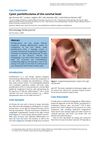
 In this case report, the authors describe a rare cystic panfolliculoma in an 84-year-old man's right conchal bowl, noting its potential to mimic other tumors like basal cell carcinoma, which complicates diagnosis.
 7 citations
,
January 1998 in “EXPERIMENTAL ANIMALS”
7 citations
,
January 1998 in “EXPERIMENTAL ANIMALS” This study found no significant differences in lectinhistochemical characteristics of the dorsal skin epidermis between hypotrichotic WBN/Ila-Ht rats and Wistar rats, except for varying lectin binding intensity.