 15 citations
,
December 2016 in “Advanced Pharmaceutical Bulletin”
15 citations
,
December 2016 in “Advanced Pharmaceutical Bulletin” This study found that N-acetyl-glucosamine-loaded nanostructured lipid carriers showed promise for skin lightening in healthy volunteers by reducing melanin distribution.
March 2023 in “Medical lasers” Low-level laser therapy is a safe and effective treatment for hair loss.
 74 citations
,
January 2006 in “The journal of investigative dermatology/Journal of investigative dermatology”
74 citations
,
January 2006 in “The journal of investigative dermatology/Journal of investigative dermatology” This study identified novel compound heterozygous mutations in the DSG4 gene in a Japanese patient with congenital hypotrichosis, suggesting overlap between localized autosomal recessive hypotrichosis and monilethrix.
 2 citations
,
July 2011 in “AFRICAN JOURNAL OF BIOTECHNOLOGY”
2 citations
,
July 2011 in “AFRICAN JOURNAL OF BIOTECHNOLOGY” This study identified genetic variations in the DSG4 gene among sheep, revealing valuable markers for assessing their impact on wool traits.
 April 2024 in “African Journal of Biological Sciences”
 This case report describes a patient with systemic lupus erythematosus who developed Degos disease and non-scarring alopecia, highlighting dermoscopy's role in diagnosis and treatment prognosis.
May 2026 in “International Journal of Dermatology” This study found that serum 3α-androstanediol glucuronide levels were higher in Indian women with female pattern hair loss and correlated with the severity of the condition.
 July 2022 in “http://isrctn.com/”
 Adding a cosmetic gel with caffeine, taurine, and growth factors to standard hair loss treatments could improve results.
 72 citations
,
June 2019 in “International Journal of Cosmetic Science”
72 citations
,
June 2019 in “International Journal of Cosmetic Science” This review discusses the biological properties of 18β‐glycyrrhetinic acid derived from licorice root, highlighting its potential anti-inflammatory, antioxidant, and antimicrobial benefits in treating dermatological disorders, and reports no new experimental results.
 July 2018 in “Elsevier eBooks”
 This article reviews the clinical presentation, diagnosis, and treatment options for discoid lupus erythematosus and reports no new clinical results.
 12 citations
,
July 2021 in “Scientific Reports”
12 citations
,
July 2021 in “Scientific Reports” This study found that exogenous glutamic acid can promote hair growth and keratinocyte proliferation, suggesting a novel signalling pathway in the skin.
1 citations
,
August 2021 in “Journal of Investigative Dermatology” ASLAN004 was safe and well-tolerated, supporting further development for treating certain diseases.
May 2024 in “Archives of Dermatological Research” TAT-GILZ peptide promotes hair growth by boosting stem cell activity.
 March 2025 in “Frontiers in Pharmacology”
 This study developed a hydrogel dressing incorporating angelica polysaccharides, demonstrating enhanced wound healing properties in a mouse model by promoting rapid hemostasis, tissue healing, and new blood vessel formation compared to Tegaderm™ film.
April 2005 in “World Journal of Pharmaceutical and life sciences” This article discusses the formulation and evaluation of hair gels that may improve the treatment and prevention of dandruff by providing longer-lasting effects compared to traditional shampoos and lotions, but it reports no new clinical findings.
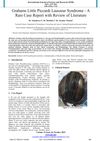 October 2023 in “International Journal of Science and Research (IJSR)”
 This paper describes Grahams Little Piccardi Lassueur Syndrome, a rare type of Lichen Planopilaris that causes different types of alopecia and distinctive skin papules, primarily affecting females aged 40 to 70, and notes the current challenges in treatment options, particularly once scarring occurs.
 February 2023 in “Archives of Dermatological Research”
 This study found fractional carbon dioxide laser therapy effective in treating alopecia areata, both alone and with topical treatments, suggesting decorin's involvement in improving hair growth.
1 citations
,
October 2025 in “Journal of Investigative Dermatology” In this study of women with frontal fibrosing alopecia, delgocitinib cream improved the molecular signature of lesions and demonstrated potential as a treatment, showing significant transcriptomic changes and some clinical improvements over 12 weeks compared to a cream vehicle.
22 citations
,
August 2020 in “Health and Quality of Life Outcomes” In this study, the DLQI demonstrated reliable psychometric properties and a unidimensional structure for assessing health-related quality of life in Brazilian patients with various skin conditions.
In this case study, donor lymphocyte infusions effectively eradicated measurable residual disease in a patient with relapsed acute myeloid leukemia after hematopoietic cell transplantation, while side effects included the development of vitiligo and alopecia areata, likely due to chronic graft-versus-host disease.
 3 citations
,
August 2014 in “Journal of The American Academy of Dermatology”
3 citations
,
August 2014 in “Journal of The American Academy of Dermatology” This article discusses the role of filaggrin gene mutations in understanding atopic dermatitis and their link to allergic sensitization but does not report new clinical results.
1 citations
,
April 2007 in “The FASEB Journal” In this study, D6D knockout mice showed severe deficiency in AA and DHA, leading to unexpected effects on skin health, fertility, and immune cell development.
 2 citations
,
April 2012 in “Science-business Exchange”
2 citations
,
April 2012 in “Science-business Exchange” Blocking a protein called prostaglandin D2 might help treat hair loss.
 108 citations
,
July 2002 in “Molecular and cellular biology”
108 citations
,
July 2002 in “Molecular and cellular biology” This study found that overexpressing Dsg3 in the suprabasal epidermis of transgenic mice resulted in flaking skin and abnormal hair growth, supporting Dsg3's role in regulating epidermal differentiation.
July 1999 in “Journal of the American Academy of Dermatology” This review discusses valproic acid as a common antiseizure medication associated with alopecia and highlights the need for its inclusion in relevant medical guides, without presenting new clinical findings.
 3 citations
,
September 2017 in “Stem cell investigation”
3 citations
,
September 2017 in “Stem cell investigation” This review discusses the various roles of skin-resident dermal white adipose tissue in hair growth inhibition, antibacterial responses, and wound healing, reporting no new empirical findings.
 April 2018 in “Journal of Investigative Dermatology”
 This study found that deleting all three Desmoglein 1 genes in mice led to impaired skin barrier function, disorganized epidermis, and postnatal lethality, highlighting Dsg1's essential role in epidermal development and maintenance.
1 citations
,
January 2024 in “Journal of Feline Medicine and Surgery Open Reports” In this study, the researchers describe a case of feline demodicosis that presented with dermatological lesions but lacked the typical signs of pruritus or overgrooming, and they report successful off-label treatment using a single spot-on application of fluralaner.
 9 citations
,
September 2017 in “Journal of Investigative Dermatology Symposium Proceedings”
9 citations
,
September 2017 in “Journal of Investigative Dermatology Symposium Proceedings” In this study, PGD2 was shown to increase testosterone production in human keratinocytes through reactive oxygen species, suggesting potential benefits of antioxidants like N-acetyl-cysteine for AGA patients.
48 citations
,
June 2000 in “Japanese Journal of Cancer Research” This study found that dimethylarsinic acid significantly accelerates skin tumor development in hair follicle-targeted K6/ODC transgenic mice.
 September 2014 in “Chinese Journal of Dermatology”
 In this study, several dermoscopic features such as hair diameter diversity, brown peripilar sign, and focal atrichia were frequently observed in both male and female androgenetic alopecia patients, highlighting these as potential AGA indicators.