 153 citations
,
November 2004 in “Current Medicinal Chemistry”
153 citations
,
November 2004 in “Current Medicinal Chemistry” This article updates a prior work on pharmacophore modeling and highlights the advances in 3D database searching technologies for drug design, without presenting new research findings.
 19 citations
,
July 2006 in “Acta crystallographica”
19 citations
,
July 2006 in “Acta crystallographica” This study determined that previous reports mistakenly identified different polymorphs of furosemide and finasteride, which are actually identical, due to incomplete data collection in single-crystal X-ray diffraction analysis.
 April 2025 in “BMC Chemistry”
 This study developed an organic hair conditioner using chitosan-thiadiazole conjugates that showed improved hair detangling, moisture retention, and protection without causing irritation, promising an environmentally sustainable approach to hair care.
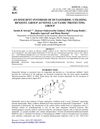 January 2017 in “Rasayan journal of Chemistry”
 This paper describes a new scalable synthesis method for Dutasteride, highlighting its potential for large-scale commercial production.
 March 2005 in “International Journal of Cosmetic Science”
 This paper discusses the use of Digital Volumetric Imaging with fluorescent dyes to visualize and compare the interior structures of six different virgin hair types, reporting no new clinical results.
 April 2019 in “Journal of Investigative Dermatology”
 This study found that CYP11A1-derived vitamin D3 analogs inhibit fibroblast proliferation and decrease collagen production through VDR expression, showing potential antifibrotic and antiproliferative activity in human dermal fibroblasts.
 January 2024 in “International Journal of Biological and Environmental Investigations”
 This study developed and validated a reliable RP-HPLC method for accurately quantifying dutasteride in pharmaceutical formulations and bulk pharmaceuticals using a Shiseido C18 analytical column, demonstrating precision, accuracy, and sensitivity across a concentration range of 10 to 22 ppm.
 March 2005 in “Journal of The American Academy of Dermatology”
 Diphencyprone treatment protocols could be simplified as no harm occurred despite not fully following them.
47 citations
,
September 1997 in “Journal of Pharmaceutical Sciences” This study found that cationic lipid-based formulations enhanced the delivery of large molecules into hair follicles in human scalp skin, with potential to reach pharmacologically active concentrations in the hair bulb.
 3 citations
,
August 2013 in “Tropical Journal of Pharmaceutical Research”
3 citations
,
August 2013 in “Tropical Journal of Pharmaceutical Research” This study concluded that the Box-Behnken experimental design effectively optimizes the size of finasteride nano-emulsions by assessing the impact of various experimental factors.
1 citations
,
April 2025 in “American Journal of Medical Genetics Part C Seminars in Medical Genetics” The researchers reported that repurposing the drug eflornithine may offer a treatment option for Bachmann-Bupp Syndrome, highlighting a potential model for other rare diseases.
 2 citations
,
September 2018 in “Journal of Separation Science”
2 citations
,
September 2018 in “Journal of Separation Science” This study demonstrated that using finasteride impurity as a non-isotopically labeled internal standard in paper spray ionization–mass spectrometry can effectively and efficiently measure finasteride tablet dissolution, achieving results comparable to high-performance liquid chromatography.
 3 citations
,
January 2006 in “Eclética Química”
3 citations
,
January 2006 in “Eclética Química” This study developed three spectrophotometric methods to effectively measure finasteride in bulk and tablet forms, providing accurate results that align closely with labeled claims.
 26 citations
,
March 2014 in “International journal of pharmaceutics”
26 citations
,
March 2014 in “International journal of pharmaceutics” This study confirmed that the novel solid lipid microparticle formulation of adapalene demonstrated follicular penetration potential and targeted particle erosion in sebum in in vitro tests.
28 citations
,
October 2014 in “Development” This study revealed that frizzled 3 can fully rescue polarity defects in frizzled 6-null mice, while frizzled 6 can partially rescue defects in frizzled 3-null mice, highlighting conserved signaling roles in these proteins.
 May 2026 in “Zenodo (CERN European Organization for Nuclear Research)”
 This study evaluated a multipurpose herbal liquid shampoo formulated with extracts like Horse Gram and Amla, reporting effective cleansing, no skin irritation, and a pH of 5, suitable for scalp and hair.
![The Synthesis of (−)-4-Methyl-8-Chloro-Trans-1,2,3,4,4a,5,6,10b-Octahydrobenzo-[f]-Quinolin-3-One-[3-14C] (LY300502-14C) via a Circuitous Route](/images/assets/73bab8dc-bdf0-45e3-8ef7-73d0d4b93cb1/small/21074.jpg) 3 citations
,
October 1994 in “Journal of Labelled Compounds and Radiopharmaceuticals”
3 citations
,
October 1994 in “Journal of Labelled Compounds and Radiopharmaceuticals” This synthesis report details the successful development of a C-14 labeled isotopomer of LY300502, a 5α-reductase inhibitor, through a multi-step radiochemical process.
 2 citations
,
January 2012 in “Hair therapy & transplantation”
2 citations
,
January 2012 in “Hair therapy & transplantation” This study observed that DDAIP-HCl enhanced the permeation of minoxidil through human cadaver skin, suggesting potential for improved treatment efficacy in male pattern hair loss.
1 citations
,
January 2024 in “Pharmaceuticals” The researchers reported that dPGS-PCL as a carrier improved the penetration of tofacitinib in an ex-vivo human skin model compared to free tofacitinib, but did not show significant differences in inhibiting IL-6 and IL-8 during short incubation.
 June 2010 in “Journal of Chemical Crystallography”
 This study determined the crystal structure and conformation of synthesized 17x-Acetoxy-pregn-4,6-diene-3,20-dione, revealing specific molecular interactions and structural details in an orthorhombic crystal system.
7 citations
,
January 2022 in “Bioengineering” This study found that a lipid-based nanoparticle formulation with oleic acid for delivering dutasteride showed lower skin permeation compared to a formulation without oleic acid, indicating its potential for targeted dermal delivery.
23 citations
,
October 2008 in “Journal of medicinal chemistry” This study suggests that PF-0998425 is an effective androgen receptor antagonist for sebum control and androgenetic alopecia with rapid metabolism reducing the risk of systemic side effects.
 May 2026 in “Zenodo (CERN European Organization for Nuclear Research)”
 This study evaluated a polyherbal hair oil with extracts from five medicinal plants and found that formulation F2 had an optimal balance of stability and potential benefits for hair growth and scalp health, maintaining stable physicochemical properties over six months.

This study developed and tested a polyherbal anti-dandruff hair serum using natural ingredients with antifungal, anti-inflammatory, and conditioning properties, reporting notable antifungal efficacy, good stability, and satisfactory physicochemical characteristics, suggesting the serum is a safe and effective natural alternative for daily dandruff treatment.
 7 citations
,
March 2024 in “Scientific Reports”
7 citations
,
March 2024 in “Scientific Reports” This study reports that the new neighborhood face index (NFI) demonstrates a remarkably high correlation with the physiochemical properties of benzenoid hydrocarbons, highlighting its potential as a predictive tool.
 June 2026 in “Zenodo (CERN European Organization for Nuclear Research)”
 This study evaluated a newly formulated herbal anti-dandruff shampoo containing natural ingredients such as neem and aloe vera, finding it effective and safe for dandruff control, with good cleansing, conditioning, and minimal irritation.
 February 1999 in “Analytical Sciences”
 A new antiandrogen compound was made and its detailed three-dimensional shape was described.
25 citations
,
July 2022 in “Pharmaceutics” This study optimized efinaconazole spanlastic nanovesicles using risk management and multivariate analysis for potential transungual delivery to treat onychomycosis, achieving improved drug permeability and dissolution efficiency.

This study explored the structure and function of lipocalin prostaglandin D synthase, revealing its dual role in substrate catalysis and as a lipophilic ligand carrier, potentially informing future drug delivery design.