 April 2023 in “Journal of Investigative Dermatology”
 This study reports that improvements to the EczemaNet pipeline, incorporating pixel-level segmentation and data augmentation, enhanced the reliability and interpretability of assessing atopic dermatitis severity from digital images.
 May 2026 in “Zenodo (CERN European Organization for Nuclear Research)”
 This study developed a low-viscosity triamcinolone acetonide serum, used with a derma stamp microneedling device, to improve targeted treatment of alopecia areata, reporting favorable drug solubility, spreadability, and permeation to hair follicles, while maintaining skin safety.
 April 2017 in “The journal of investigative dermatology/Journal of investigative dermatology”
 This study found that Quantitative Mass Spectrometry Imaging offers precise localization and quantification of active compounds in skin tissues, demonstrating benefits over traditional LC-MS in drug penetration studies.
February 2025 in “Brazilian Journal of Hair Health” This case study found that multiparametric ultrasound can be an effective non-invasive diagnostic tool for evaluating scalp changes in alopecia areata following repeated corticosteroid injections, potentially offering an alternative to biopsy.
In this chapter, the authors discuss how microneedling and platelet-rich plasma are effective for cosmetic purposes with minimal downtime, noting potential mild side effects and the necessity for multiple treatments.
 19 citations
,
October 2020 in “Biomedical Microdevices”
19 citations
,
October 2020 in “Biomedical Microdevices” This review discusses the use of derma rollers for cosmetic purposes and their potential in transdermal drug delivery by summarizing evidence on their design, efficacy, safety, and concerns from preclinical and clinical reports.
 20 citations
,
January 2015 in “Polish Journal of Pathology”
20 citations
,
January 2015 in “Polish Journal of Pathology” Reflectance confocal microscopy is a useful, non-invasive tool for diagnosing some skin diseases, with potential for future improvements.
16 citations
,
December 2022 in “Expert Opinion on Drug Delivery” This study reviewed preclinical and clinical research and found that AFL-assisted topical drug delivery is considered safe and effective, enhancing drug efficacy, reducing treatment time and pain, and improving cosmetic and safety outcomes, but larger clinical trials are needed to confirm these benefits.
January 2019 in “Clinical pediatric dermatology” This review discusses the use of follicular unit extraction and scalp micropigmentation in treating male pattern baldness, noting that scalp micropigmentation provides a non-surgical option to emulate natural hair appearance without downtime.
 1 citations
,
February 2004 in “Dermatologic Surgery”
1 citations
,
February 2004 in “Dermatologic Surgery” This study found that using deep plane fixation during scalp surgeries significantly reduced closure tension and allowed for increased tissue excision compared to standard techniques without fixation.
June 2026 in “Skin Appendage Disorders” This review discusses diffuse unpatterned alopecia (DUPA) as an understudied variant of androgenetic alopecia, summarizing its presentation and management while calling for further research to better understand its distinct characteristics.
 April 2018 in “Journal of Investigative Dermatology”
 This study found that combining CelluTome system and RCM is a safe and effective protocol for evaluating wound healing responses in patients with epidermolysis bullosa.
 2 citations
,
May 2018 in “International Society of Hair Restoration Surgery”
2 citations
,
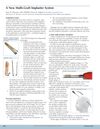
May 2018 in “International Society of Hair Restoration Surgery” The new system makes hair transplants faster and more precise.
 2 citations
,
December 2019 in “Electronic Journal of General Medicine”
2 citations
,
December 2019 in “Electronic Journal of General Medicine” This study found that combining microfocused ultrasound with autologous blood cell factors significantly improved skin rejuvenation compared to using microfocused ultrasound alone.
 28 citations
,
October 1992 in “JEADV. Journal of the European Academy of Dermatology and Venereology/Journal of the European Academy of Dermatology and Venereology”
28 citations
,
October 1992 in “JEADV. Journal of the European Academy of Dermatology and Venereology/Journal of the European Academy of Dermatology and Venereology” In this study, Scalp Immersion Proxigraphy (SIP) was shown to produce more accurate measurements of linear hair growth rate than crude phototrichogram techniques, suggesting SIP's suitability for clinical trials monitoring hair growth.
 February 2004 in “Dermatologic Surgery”
 This study found that deep plane fixation in scalp surgeries allowed for tension-reduced wound closures and increased tissue excision compared to techniques without deep plane fixation.
 33 citations
,
February 2019 in “Journal of Tissue Engineering and Regenerative Medicine”
33 citations
,
February 2019 in “Journal of Tissue Engineering and Regenerative Medicine” This review discusses the use of platelet-rich plasma for various dermatological conditions and highlights the need for more research to standardize its protocols and understand its biological mechanisms.
January 2026 in “Journal of Hair Restoration and Regenerative Medicine” This review discusses methods to better identify unsafe donor areas in patients with diffuse unpatterned alopecia, emphasizing non-surgical management when specific diagnostic criteria are met, but reports no new clinical results.

This article discusses a novel device for applying mediums to human and animal tissues and reports no new clinical results, focusing on its potential for precise applications and enhanced cell transplants.
 April 2025 in “Journal of Cosmetic and Laser Therapy”
 This study found that both microneedle delivery and intradermal injection of platelet-rich plasma were similarly effective for treating androgenetic alopecia, but microneedle delivery caused significantly less pain.
 1 citations
,
January 2025 in “BIO Integration”
1 citations
,
January 2025 in “BIO Integration” This review highlights that the combination of ultrasound and microneedles can enhance transdermal drug delivery by using physical and energy-driven mechanisms to improve drug penetration into deeper skin layers, with implications for precision medicine and chronic disease treatments.
 April 2021 in “Journal of Investigative Dermatology”
 This study found that multicomponent microarray patches for SARS-CoV-2 vaccination produced stronger immune responses and fewer side effects in mice compared to traditional intramuscular injection.
 July 2023 in “International journal of dermatology, venereology and leprosy sciences”
 This review discusses micro needling as a therapeutic option for various dermatological conditions, such as scars and pigmentation, and reports no new clinical results; the authors note potential side effects and contraindications.
In this case study, a 65-year-old male with androgenetic alopecia showed slight hair growth after treatment with a Derma Roller System and Capillary Therapy.
January 2020 in “한국공업화학회 연구논문 초록집” This study found that microencapsulated dermal papilla cells in hyaluronic acid/collagen hydrogel retained their ability to initiate hair follicle regeneration, suggesting potential for alopecia treatment.
 December 2024 in “Journal of Cutaneous and Aesthetic Surgery”
 The researchers observed that dermoscopy is valuable for assessing acne scars and their response to treatment, with shorter-duration scars responding more effectively.
July 2026 in “Current Medical Issues” In this study, using EMLA cream did not adequately control pain during and after scalp PRP injections for androgenetic alopecia, with anxiety and younger age linked to higher pain levels.
 61 citations
,
May 2016 in “Scientific reports”
61 citations
,
May 2016 in “Scientific reports” This study found that IMT-P8, a novel cell-penetrating peptide, effectively facilitated the dermal delivery of proteins and peptides in mouse skin and cell lines, suggesting potential for topical applications in cosmetics and skin diseases.
 July 2024 in “Periodontology 2000”
 This review summarizes the use of autologous platelet concentrates in aesthetic medicine, finding promising results for facial treatments, but highlights the need for more rigorous research due to current study limitations.
6 citations
,
May 2022 in “Pharmaceutics” This study demonstrates that MPM-FLIM multimodal imaging can effectively assess the delivery and dissolution of zinc pyrithione particles in human skin follicles using different application techniques.