January 2022 in “Skin appendage disorders” In this study, the researchers found that trichoscopy can effectively visualize scalp micropigmentation, identified by homogenous, grey to black circular dots similar to closely cut hair, potentially reducing the need for invasive procedures.
5 citations
,
January 2023 in “Journal of Cosmetic Dermatology” This study found that microbotox, especially when injected intradermally, effectively reduces enlarged facial pores with higher patient satisfaction and longer-lasting results compared to its topical application after microneedling.
 1 citations
,
May 2020 in “bioRxiv (Cold Spring Harbor Laboratory)”
1 citations
,
May 2020 in “bioRxiv (Cold Spring Harbor Laboratory)” This study found that D-peptide crosslinked MAP hydrogels accelerate skin regeneration and promote adaptive immunity, despite faster scaffold degradation in vivo.
This review evaluates the clinical efficacy of platelet-rich plasma therapy in dermatology, highlighting recent research findings and discussing its potential and limitations without reporting new clinical results.
April 2024 in “Cosmetics” This review highlights the use of microneedling devices and patches to deliver cosmetic agents through the skin, noting their applications in skin rejuvenation and safety considerations such as potential skin irritation and infection.
SMP creates illusion of full hair, addressing various issues and bringing happiness to those with thinning hair.
 21 citations
,
September 2024 in “Cureus”
21 citations
,
September 2024 in “Cureus” This review explores the mechanisms, techniques, and clinical applications of microneedling, highlighting its advantages and challenges in skin rejuvenation, and discusses future innovations in the field as it continues to evolve.
February 2025 in “Research Society and Development” This narrative review compiled evidence suggesting that microneedling can effectively and safely improve skin conditions like scars, hyperpigmentation, and aging, provided it is performed correctly, by stimulating collagen production and enhancing topical treatment penetration.
In this study, alternating PRP with microneedling produced faster hair growth results in patients with mild to moderate androgenetic alopecia compared to PRP alone.
 January 2023 in “Springer eBooks”
 Using one's own blood platelets and fat can improve facial and hair appearance without surgery.
1 citations
,
June 2006 in “Journal of Cosmetic Dermatology” This study found that photoepilation in mice may disrupt normal dermal wound healing and increase the risk of hypertrophic scars or keloids.
This study found that encapsulating dermal papilla spheroids in alginate hydrogel with extracellular matrix proteins increased alkaline phosphatase activity, suggesting an enhanced manipulation of dermal papilla activity.
March 2006 in “Chinese journal of plastic surgery” This study found that microencapsulated dermal papilla cells implanted into mice ears led to the successful regeneration of hair follicles, with APA microencapsulations of 400µm diameter allowing effective nutrient exchange.
 April 2023 in “Journal of Investigative Dermatology”
 This study found that patients receiving PRP treatments for various types of alopecia and skin rejuvenation had a higher risk of adverse events and lower self-assessment scores when injections were administered at shallower depths, with significant correlations between patient and physician assessments across different indications.
 January 2023 in “Indian Dermatology Online Journal”
 This article reviews the indications for micropigmentation in dermatological conditions like stable vitiligo and alopecia, but presents no new clinical results.
August 2026 in “JURNAL ILMU KEFARMASIAN INDONESIA” This study found that the addition of SPACE peptide significantly enhanced the penetration of amniotic membrane stem cell metabolites in mice, with only very mild irritation observed.
 25 citations
,
August 2010 in “Acta Biomaterialia”
25 citations
,
August 2010 in “Acta Biomaterialia” This study achieved a first by successfully forming large quantities of dermal papilla spheroidal microtissues, which retained their hair induction potential, using a micropatterned culture system.
 1 citations
,
October 2025 in “Nano Research”
1 citations
,
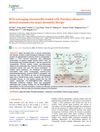
October 2025 in “Nano Research” In this study, researchers developed a dissolvable microneedle patch combining HA-TEMPO and Portulaca oleracea L.-derived nanoparticles, which effectively reduced oxidative stress and inflammation in an atopic dermatitis model while restoring immune balance, suggesting a promising treatment strategy.
 2 citations
,
March 2020 in “Plastic and Reconstructive Surgery”
2 citations
,
March 2020 in “Plastic and Reconstructive Surgery” This review discusses platelet-rich plasma and microneedling in aesthetic medicine, providing a comprehensive literature summary and practical insights, but reports no new clinical results.
14 citations
,
June 2021 in “British Journal of Dermatology” This article discusses the BIOMAP consortium's efforts in standardizing data for atopic dermatitis and psoriasis research to facilitate personalized medicine, but it presents no new research findings.
October 2022 in “Hair Transplantation” This review discusses scalp micropigmentation for hair loss and scarring and reports no clinical results; the authors highlight its use as both a standalone and adjunct treatment.
September 2023 in “bioRxiv (Cold Spring Harbor Laboratory)” This study found that dissolving microneedle array patches containing mesoporous silica nanoparticles can deliver antigen-loaded nanoparticles into mice effectively, inducing strong immune responses similar to traditional subcutaneous injection.
 July 2024 in “Periodontology 2000”
 This review summarizes the use of autologous platelet concentrates in aesthetic medicine, finding promising results for facial treatments, but highlights the need for more rigorous research due to current study limitations.
January 2024 in “Journal of Scleroderma and Related Disorders” This study concluded that autologous platelet-rich plasma is a safe and effective technique for improving aesthetic concerns such as contour defects, pigmentation issues, and indurated lesions.
 January 2026 in “Forum Dermatologicum”
 This article reviews the regenerative benefits of platelet-rich plasma in various medical fields, particularly in dermatology and aesthetic medicine, without presenting new clinical data.
 21 citations
,
January 2023 in “Biomaterials Science”
21 citations
,
January 2023 in “Biomaterials Science” This study investigated the use of dissolving microneedle patches to improve the skin-lightening effects of alpha-arbutin and resveratrol, finding that the patches enhanced intradermal delivery and slightly decreased the melanin index without affecting skin hydration or causing irritation over 24 hours.
5 citations
,
January 2020 in “Acta dermatovenerologica Alpina, Pannonica et Adriatica (Tiskana izd.)” This study found that PRP was effective for treating alopecia areata with similar improvement across groups, while topical delivery via fractional CO2 laser or microneedling reduced injection pain.
May 2025 in “Drug Delivery and Translational Research” 30 citations
,
August 2016 in “Skin research and technology” This study used 3D imaging to reveal age-related reductions in the volumes and connectivity of dermal papillae and rete ridges at the dermal-epidermal junction, which are not fully apparent in 2D examinations.
 September 2025 in “Journal of Cosmetic Dermatology”
 This study found that both PRP injections and microneedling treatments significantly improved hair count and thickness in patients with androgenetic alopecia, without significant differences between the two methods. Microneedling also enhanced patient satisfaction and treatment tolerance.