 1 citations
,
May 2026 in “bioRxiv (Cold Spring Harbor Laboratory)”
1 citations
,
May 2026 in “bioRxiv (Cold Spring Harbor Laboratory)” In laboratory studies on mice, Abstract UT-018, a stem cell chemoattractant formulation, was reported to significantly enhance wound healing and promote hair regeneration through mechanisms involving improved tissue formation, collagen organization, and follicular development.
1 citations
,
June 2021 in “Problems of Cryobiology and Cryomedicine” In this study on rats, CBF injections demonstrated significant wound healing effects and improved recovery after skin cryoablation, similar to the effects observed with Actovegin.
This study found that GPC1 plays a crucial role in regulating angiogenesis in human dermal microvascular endothelial cells, which may make it a potential target in alopecia treatment research.
192 citations
,
January 2018 in “Burns & Trauma” This review discusses the advancements in biologic skin substitutes for wound treatment and their potential in enhancing cutaneous regeneration but reports no new clinical results.
48 citations
,
December 2022 in “Biomolecules” This review discusses recent advancements in 3D bioprinting for skin regeneration and describes potential improvements for clinical applications, but it reports no new experimental results.
12 citations
,
September 2023 in “Polymers” This study reported that a newly developed hydrogel composed of recombinant type I collagen and chitosan, incorporating a metal–polyphenol structure, demonstrated strong mechanical and healing properties, effectively promoting wound healing in a full-thickness skin defect model.
12 citations
,
April 2023 in “Frontiers in Materials” This review discusses the biofunctionalization of hydrogel scaffolds for vascular tissue regeneration and reports promising results from in vivo studies, such as improved angiogenesis and healing in pressure ulcers when using specific peptides.
11 citations
,
July 2024 in “Biomimetics” This manuscript explores the development and future potential of injectable biomimetic gels in biomedical applications, highlighting their promise in wound healing and tissue regeneration, while also acknowledging challenges like mechanical durability and scalable production still persist.
11 citations
,
March 2023 in “Stem Cell Research & Therapy” In this study, epidermal stem cells were found to enhance blood vessel formation and support successful one-step transplantation of tissue-engineered skin in a rat model.
10 citations
,
September 2024 in “Neural Regeneration Research” This study found that using induced pluripotent stem cell-derived mesenchymal stem cells with acellular nerve allografts significantly improved axon regeneration and functional recovery in rats with sciatic nerve injuries, suggesting a promising approach for clinical nerve repair therapies.
9 citations
,
April 2022 in “Cell Communication and Signaling” This study found that the S100A4/NMIIA axis contributes to glioblastoma progression by recruiting and promoting migration of GBM cells along blood vessels, correlating with worse patient outcomes.
4 citations
,
January 2026 in “Micro” This review introduces a framework to integrate bioinspired conductive materials and advanced 3D/4D printing in regenerative medicine for dynamic, responsive tissue regeneration, emphasizing the potential of smart scaffolds to adapt to physiological cues.
4 citations
,
July 2025 in “Organoids” This review summarizes the state of organoid technology, highlighting its potential to transform biomedical research and regenerative medicine by providing accurate models for disease study, drug discovery, and potentially developing functional organs for transplantation.
1 citations
,
January 2025 in “Veterinary Medicine International” This review found promising benefits of platelet-rich plasma for treating ocular surface diseases in animals, but methodological flaws currently preclude recommending it as standard care.
 April 2026 in “Amino Acids”
 This study reviews prior research using transgenic K6/ODC mice and demonstrates that elevated polyamines in epithelial cells contribute significantly to skin tumor development and progression by stimulating proliferation, altering cell signaling and chromatin remodeling, and affecting immune functionality, amongst other mechanisms.
November 2025 in “Advanced Healthcare Materials” This review explores advancements in bioprinting technologies for developing in vitro skin models that replicate immune-mediated skin diseases, highlighting their potential to reduce animal testing and enhance research and product testing capabilities in dermatology.
July 2025 in “Microscopy and Microanalysis” In this research, scientists developed a compression therapy model using immobilized mice, successfully analyzing skin without causing injury, and observed increased epidermal thickness and changes in adipocyte volume, with no increase in DNA damage markers.
 March 2025 in “International Journal of Trichology”
 In this case report, researchers described a treatment for post-aplasia cutis congenita alopecia using follicular unit transplantation, platelet-rich plasma, and fat grafting, which significantly improved hair follicles, skin quality, and sensitivity in the affected scalp area.
 December 2024 in “Medical Review”
 This review examined the role of organoid technology in modeling genetic diseases, highlighting its promise for understanding disease pathology and developing tailored treatments by integrating genetic insights with advancements in regenerative medicine and biological engineering.
This study found that GPC1 is a significant regulator of angiogenesis in human dermal microvascular endothelial cells, suggesting its potential as a target for alopecia research.
7 citations
,
November 2025 in “Pharmaceutics” This review discusses how polymer- and lipid-based nanostructures can enhance wound healing by addressing issues like microbial contamination and inflammation, though it reports no new clinical results.
 1 citations
,
June 2021 in “Revista de la Facultad de Ciencias Médicas de Córdoba”
1 citations
,
June 2021 in “Revista de la Facultad de Ciencias Médicas de Córdoba” This case report describes a postmenopausal woman with virilization linked to ovarian stromal hyperthecosis, highlighting the importance of detailed clinical evaluation and complementary testing for accurate diagnosis and treatment.
 June 2023 in “LA Referencia (Red Federada de Repositorios Institucionales de Publicaciones Científicas)”
 Home photobiomodulation therapy can improve life quality and mobility for disabled individuals.
 February 2014 in “Medicine - Programa De Formación Médica Continuada Acreditado”
 This paper reviews various types of scarring and non-scarring alopecia, including their etiology, diagnosis, and treatment, but it reports no new clinical results.
 27 citations
,
June 2015 in “Revista Brasileira de Farmacognosia”
27 citations
,
June 2015 in “Revista Brasileira de Farmacognosia” This review discusses the traditional uses, pharmacology, clinical applications, and toxicology of Carthami flos but reports no new clinical results, aiming to inform further research on its medicinal potential.
 12 citations
,
June 2006 in “Anais Brasileiros de Dermatologia”
12 citations
,
June 2006 in “Anais Brasileiros de Dermatologia” This study reports that scalp biopsies in white adults usually have 16.5 hair follicles, primarily in the anagen phase, with male samples showing fewer follicular units but more fibrous tracts in certain areas.
 1 citations
,
November 2024 in “Revista JRG de Estudos Acadêmicos”
1 citations
,
November 2024 in “Revista JRG de Estudos Acadêmicos” This review discusses available treatments for androgenetic alopecia and highlights that, although no definitive treatment exists, current options generally achieve high satisfaction rates.
 December 2023 in “LA Referencia (Red Federada de Repositorios Institucionales de Publicaciones Científicas)”
 Both photobiomodulation and low-frequency treatments effectively reduce body measurements.
 2 citations
,
January 2018
2 citations
,
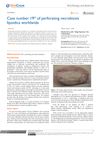
January 2018 This article reports the first case of perforating necrobiosis lipoidica in Colombia and the 19th case worldwide in diabetic patients.
 December 2015 in “Vascular Pharmacology”
 Prasugrel is better than clopidogrel at preventing heart damage and improving blood flow in small heart vessels during heart artery procedures.