2 citations
,
July 2013 in “Journal of Life Sciences” In this case report, researchers described a two-year-old girl with Vitamin D dependent rickets Type II, noting elevated 1,25-dihydroxyvitamin D3 and alopecia, and observed limited treatment response likely due to poor compliance.
January 2011 in “Journal of the American Academy of Dermatology” This book critiques Dr. Conroy's theory on Morgellon's disease, highlighting a lack of scientific evidence and detailing his unverified claims about fungal organisms attracted to cocaine.
73 citations
,
January 1980 in “Annals of Neurology” This case report describes a child developing pancreatitis directly linked to valproic acid therapy.
 1 citations
,
January 2025 in “RSC Advances”
1 citations
,
January 2025 in “RSC Advances” The researchers evaluated scientific data on the usage and pharmaceutical applications of ascorbic acid derivatives, such as ascorbyl-6-palmitate and ascorbyl-2-glucoside, highlighting their development into stable delivery platforms to overcome ascorbic acid's instability and formulation challenges.
 42 citations
,
December 2016 in “Cell Death & Differentiation”
42 citations
,
December 2016 in “Cell Death & Differentiation” This study found that transient mtDNA double strand breaks in mice accelerated aging in certain tissues through increased reactive oxygen species, independent of p21/p53 pathway mediation.
 April 2023 in “Tikrit Journal of Pharmaceutical Sciences”
 In this study, researchers assessed the effects of deferasirox in 85 children with ß-thalassemia in Kirkuk and reported that while 55.3% experienced a reduction in serum ferritin, 9.4% had adverse effects, indicating that deferasirox is generally well-tolerated as an iron chelator with modifiable side effects.
3 citations
,
October 1976 in “BMJ” In this case report, a 6-year-old boy developed thrombocytopenia while taking sodium valproate alone, after being seizure-free for eight months on the medication.
5 citations
,
January 2016 in “Clinical psychopharmacology and neuroscience/Clinical Psychopharmacology and Neuroscience” This report discusses that curly hair is a very rare side effect of valproate, a medication used as a mood stabilizer for bipolar disorder, though such drug-induced hair changes are uncommon.
 March 2024 in “EMBO molecular medicine”
 This study found that the antiviral drug daclatasvir significantly improved fibrosis and quality of life in a mouse model of recessive dystrophic epidermolysis bullosa, suggesting potential for treating this and other fibrotic diseases.
 7 citations
,
February 2022 in “Journal of Cosmetic Dermatology”
7 citations
,
February 2022 in “Journal of Cosmetic Dermatology” In this randomized controlled trial, intralesional vitamin D3 injections significantly improved localized alopecia areata symptoms compared to a saline placebo, with minimal and transient side effects, suggesting vitamin D3 as an effective treatment option without needing prior serum vitamin D level measurement.
October 2025 in “Benha Veterinary Medical Journal” In this study, the researchers reported that both dandelion and safflower extracts protected against liver and kidney damage caused by thioacetamide in rats, with safflower being more effective than both silymarin and dandelion.
18 citations
,
November 2009 in “Calcified tissue international” A genetic mutation caused severe rickets and alopecia in an Indian patient, but high-dose calcium and phosphate treatment improved their condition.
27 citations
,
June 2015 in “Journal of Investigative Dermatology” This study found that mutations in the TRPV3 gene can cause a broader range of symptoms in Olmsted syndrome than previously recognized, including severe palmoplantar keratoderma without other classic features.
31 citations
,
April 2020 in “Pharmaceutics” This study found that dexamethasone nanocrystals significantly increased drug penetration into skin compared to a traditional cream formulation, suggesting potential benefits for treating inflammatory skin conditions.
36 citations
,
July 2017 in “Journal of controlled release” In this study, a new formulation of all-trans retinoic acid bound to polyvinyl alcohol showed reduced skin inflammation and sustained drug release for up to six days compared to free ATRA in vitro and in vivo.
32 citations
,
January 2006 in “Liver transplantation” This case report describes a 60-year-old male with vitamin A toxicity leading to severe liver disease and symptoms that resolved following liver transplantation, suggesting transplantation as a treatment option for noncirrhotic portal hypertension when symptoms do not improve after stopping vitamin A.
64 citations
,
March 1989 in “PubMed” This review discusses the development of valproate as an effective monotherapy for controlling generalized seizures and reports no new clinical results.
1 citations
,
January 2025 in “Therapeutic Advances in Drug Safety” This case report highlights the rare overlap of DRESS and Stevens-Johnson syndrome following antituberculosis treatment, emphasizing the critical importance of timely diagnosis and intervention to manage severe symptoms and prevent organ damage.
 31 citations
,
September 2014 in “International Journal of Dermatology”
31 citations
,
September 2014 in “International Journal of Dermatology” This article reviews anthralin's pharmacology, mode of action, and its use for psoriasis and other dermatoses, but reports no new clinical results.
This study found that sodium valproate improved seizure control in children with epilepsy, with increased weight gain being the most common side effect reported.
17 citations
,
October 1980 in “PubMed” In this study, sodium valproate achieved complete seizure control in 82% of children as monotherapy, with higher plasma levels potentially linked to resistant cases.
 7 citations
,
January 1989 in “Leprosy Review”
7 citations
,
January 1989 in “Leprosy Review” This report describes a woman with borderline lepromatous leprosy who developed a serious skin reaction to dapsone; she recovered quickly after stopping dapsone and receiving corticosteroids.
September 2024 in “Indian Journal of Dermatology Venereology and Leprology” 36 citations
,
February 2007 in “Journal of biological chemistry/The Journal of biological chemistry” This study found that vitamin D receptor activation in primary keratinocytes can occur independently of the 1,25-dihydroxyvitamin D3 ligand, likely through interaction with retinoid X receptors.
 2 citations
,
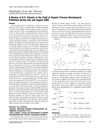
October 2004 in “Organic Process Research & Development”
2 citations
,
October 2004 in “Organic Process Research & Development” This review discusses U.S. patents in organic process development published in July and August 2004 and reports no new experimental results.
 January 2017 in “Elsevier eBooks”
 This chapter discusses charnolopharmacotherapeutics for various medical conditions and suggests antioxidant-loaded nanoparticles may improve treatment by enhancing central nervous system delivery and inducing charnolophagy.
 21 citations
,
October 2009 in “European Journal of Pharmaceutical Sciences”
21 citations
,
October 2009 in “European Journal of Pharmaceutical Sciences” This study found that drying finasteride solvates at 85 °C for one day produced a metastable anhydrous form.
 18 citations
,
November 2016 in “Neuromuscular Disorders”
18 citations
,
November 2016 in “Neuromuscular Disorders” This study found that patients with myotonic dystrophy types 1 and 2 often exhibit skin abnormalities, which correlate with genotype severity and serum vitamin D levels, and suggest premature aging.
 9 citations
,
March 2011 in “Clinical and experimental dermatology”
9 citations
,
March 2011 in “Clinical and experimental dermatology” This paper discusses the concept of "coudability," a characteristic of alopecia areata, and provides a historical perspective, but it reports no new clinical results.
July 2025 in “JAAD Case Reports”