64 citations
,
March 2004 in “Journal of Clinical Investigation” This study found that inhibiting the enzyme ornithine decarboxylase (ODC) prevented UVB-induced basal cell carcinomas in a mouse model, suggesting ODC is a potential target for chemoprevention strategies.
 September 2022 in “Skin appendage disorders”
 This article explores potential risk factors for central centrifugal cicatricial alopecia and suggests that seborrheic dermatitis may play a role in its development, but it reports no new scientific findings.
12 citations
,
October 2001 in “British Journal of Ophthalmology” This paper suggests intralesional cidofovir as a potentially effective treatment for SCC with no systemic toxicity observed, but surgical excision remains the standard for its curative outcomes and thorough evaluation.
November 2024 in “Journal of Investigative Dermatology” ATP-sensitive potassium channels are important for hair growth.
22 citations
,
March 1999 in “International Journal of Clinical Practice” This review discusses the use of topical immunotherapy for severe alopecia areata and resistant viral warts, highlighting diphencyprone's advantages and the need for careful handling to avoid staff sensitisation; it reports no new clinical results.
15 citations
,
June 2019 in “Biochemical Journal” This study identified a heterozygous de novo mutation in the ODC1 gene causing a new disorder characterized by overgrowth and developmental delay, and suggests that DFMO treatment may help manage elevated ODC activity and putrescine levels.
1 citations
,
September 2021 in “Frontiers in genetics” This case report identifies a previously undocumented nonsense mutation in DCAF17 in a Chinese patient with Woodhouse-Sakati syndrome, inherited from consanguineous parents.
 June 2023 in “British journal of dermatology/British journal of dermatology, Supplement”
 In this case study, a 19-month-old infant with palmoplantar keratoderma and nail dystrophy was found to have a desmoplakin gene mutation, leading to cardiomyopathy by age 7, illustrating diagnostic challenges and the potential link between skin, dental, and cardiac anomalies.
 86 citations
,
August 2011 in “Toxicological sciences”
86 citations
,
August 2011 in “Toxicological sciences” In this study, researchers found that TCDD exposure accelerated differentiation and altered gene expression in human epidermal cells, indicating the epidermal barrier as a target of TCDD-activated AHR.
August 2019 in “International journal of dermatology and venereology” This review discusses the calcineurin/NFAT pathway's role in cutaneous squamous cell carcinoma, noting its involvement in tumor development, skin cell behavior, and the tumor microenvironment; it reports no new results.
April 2023 in “Journal of Investigative Dermatology” This study found that autologous cell-based therapy using dermal sheath cup cells showed a moderate increase in hair volume in patients with pattern hair loss, particularly in women.
 April 2018 in “The journal of investigative dermatology/Journal of investigative dermatology”
 This study found that in a mouse model of Focal Dermal Hypoplasia, treatment with lithium carbonate improved skin disease symptoms compared to controls, though disease severity varied and posed interpretation challenges.
January 2024 in “Skin Appendage Disorders” This source reports that SET may offer notable cosmetic improvements and enhance well-being for patients with CA, serving as a cost-effective treatment option either alone or alongside hair transplantation.
November 2024 in “Stem Cell Research & Therapy” A new method improves the isolation of hair follicle cells for better hair growth research.
 1 citations
,
April 2022 in “The Journal of Family Practice”
1 citations
,
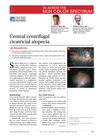
April 2022 in “The Journal of Family Practice” This report describes early and late stages of central centrifugal cicatricial alopecia in two Black women, highlighting progression from a small to a large central patch of hair loss.
 April 2019 in “Journal of Investigative Dermatology”
 This study reported that mSKPs and DMSCs share similarities in biological characteristics but exhibit distinct transcriptome profiles, with mSKPs being more immune-related and DMSCs more associated with differentiation and disease pathways.
11 citations
,
February 2018 in “Oncotarget” This study observed that reduced activation of SMAD2/3 proteins in cutaneous squamous cell carcinoma tissue compared to adjacent tissue may indicate a tumor suppressor role in disease progression.
164 citations
,
December 1984 in “Proceedings of the National Academy of Sciences” This study found that TCDD significantly reduced EGF receptor binding in various animal models, linked to toxic symptoms like weight loss and developmental delays, with receptor phosphorylation persisting several days.
41 citations
,
March 2016 in “The Journal of Clinical Endocrinology & Metabolism” This study suggests that patients with STSD show a different pattern in androgen activation compared to healthy controls, potentially due to increased 5α-reductase activity and absent prepubertal serum DHEA surge.
4 citations
,
October 2021 in “Journal of Clinical Medicine” This study found that individuals with heterozygous truncation-type variants in the *DSP* gene exhibit lower skin temperature and higher transepidermal water loss, with specific microscopic skin changes and pseudomonilethrix.
 June 2026 in “Frontiers in Oncology”
 In this study, researchers found that deficiencies in Gsdma1/2/3 significantly inhibited the initiation and progression of cutaneous squamous cell carcinoma (cSCC) in mice, suggesting GSDMA's role in promoting cSCC proliferation and its potential as a therapeutic target.
 October 2020 in “International Journal of Medical Arts (Print)”
 This study found that for anterior cervical discectomy fusion in patients with degenerative cervical disc disease, the PEEK cage resulted in greater pain reduction, while the dynamic cervical implant maintained a slightly better range of motion.
1 citations
,
July 2023 in “Clinical Cosmetic and Investigational Dermatology” In this report, a 54-year-old woman with familial dyskeratotic comedones showed slight improvement in skin lesions after topical retinoids and urea cream. This source also describes the first dermoscopic findings for this condition and reviews 21 previous cases.
December 2024 in “European journal of medical research” This study suggests that the NCSTN knockout mouse could serve as an HS animal model, with tamoxifen potentially used for gene deletion in mice.
April 2023 in “Journal of Investigative Dermatology” CD206+ macrophages are crucial for hair growth in alopecia areata treatment.
2 citations
,
July 2020 in “bioRxiv (Cold Spring Harbor Laboratory)” This study demonstrates that neural stem cells in the adult vertebrate brain coordinate their division decisions using delayed local feedback mechanisms, involving Notch-mediated inhibition and dispersion effects, to maintain population homeostasis.
 3 citations
,
August 2020 in “Journal of The American Academy of Dermatology”
3 citations
,
August 2020 in “Journal of The American Academy of Dermatology” This study observed that patients with scalp dysesthesia frequently exhibited cervical spine degenerative changes, which localized predominantly in the lower cervical spine, and reported modest symptom improvement with neuropathic pain medications and physical therapy.
5 citations
,
April 2023 in “Life” This review discusses central centrifugal cicatricial alopecia in adolescents, noting varied presentation and highlighting genetic and environmental factors, but reports no new clinical findings.
 April 2025 in “Dermatology Practical & Conceptual”
 This study found that erosive pustular dermatosis of the scalp is often misdiagnosed as squamous cell carcinoma, highlighting the importance of biopsy for accurate diagnosis.
11 citations
,
January 2009 in “World Journal of Gastroenterology” This study reports the first documented case of Cronkhite-Canada syndrome in a patient with myelodysplastic syndrome, where corticosteroids dramatically improved the patient's condition.