 December 2024 in “Journal of General-Procedural Dermatology & Venereology Indonesia”
 This study found that telogen effluvium was significantly more common among women who wear hijabs compared to those who do not in the observed Indonesian population.
 November 2024 in “IP Indian Journal of Clinical and Experimental Dermatology”
 Dermoscopy is a useful tool for diagnosing and managing topical steroid dependent face.
 September 2024 in “IP Indian Journal of Clinical and Experimental Dermatology”
 This study found that a centrifugation protocol of 1300 rpm/246 g for 20 minutes followed by 1600 rpm/373 g for 20 minutes achieved the highest platelet yield in platelet-rich plasma.
 August 2024 in “Archives of Dermatological Research”
 Acne severity is not related to the type or severity of androgenetic alopecia.
 August 2024 in “Journal of Research in Clinical Medicine”
 In this study, researchers observed that patients with COVID-19 can develop a variety of skin lesions, with maculopapular rash, telogen effluvium, and urticaria showing significant associations with both the timing of symptom onset and the severity of the disease.
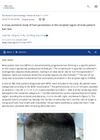 June 2024 in “Skin Research and Technology”
 This study found that patients with severe male pattern hair loss had lower hair density in the occipital region compared to those with mild or moderate cases.
 June 2024 in “Journal of Clinical Oncology”
 This study observed that dalpiciclib is associated with fewer adverse events like diarrhea and hepatotoxicity compared to other CDK4/6 inhibitors, potentially offering better patient-perceived safety and quality of life.
April 2024 in “Dermatology Reports” In this study, Saudi Arabian women showed moderate awareness of eyebrow microblading, yet many lacked knowledge of hygiene practices, indicating a need for more public education on the procedure's risks and standards.
April 2024 in “Journal of Pakistan Association of Dermatologists” This study observed that 16.84% of men aged 20 to 50 with androgenetic alopecia were found to have metabolic syndrome, indicating a substantial prevalence in this population.
April 2024 in “Journal of clinical medicine” The research observed that among Ecuadorian Andean women with polycystic ovary syndrome, classical phenotypes A and B were more prevalent and associated with higher risks of insulin resistance and metabolic disorders compared to phenotypes C and D.
April 2024 in “Our Dermatology Online” This study found that androgenetic alopecia may be a predictor of metabolic syndrome, emphasizing the importance of screening patients with severe hair loss for related health risks.

In this study, nearly 38% of Saudi women with PCOS reported extremely severe depression and extreme anxiety, with higher rates linked to young age, divorce, lifestyle advice, and higher BMI.
In this study of Andean Ecuadorian women with PCOS, phenotypes A and B were more prevalent and associated with higher risks of insulin resistance, anovulation, and metabolic disorders compared to phenotypes C and D.
 October 2023 in “Dermatology practical & conceptual”
 This study observed that among 120 patients recovering from COVID-19, severe diffuse hair loss typically began less than two months post-infection, with the majority of patients experiencing a severe degree of hair loss and positive hair pull tests, often alongside vitamin D deficiency.

This study found that androgenic alopecia significantly impaired quality of life among men in the Eastern Province of Saudi Arabia, with younger males and those diagnosed by a doctor experiencing greater quality of life issues, particularly in the symptoms domain.
 September 2023 in “Irish Journal of Medical Science (1971 -)”
 In this study, 61.4% of females infected with COVID-19 reported hair problems, such as telogen effluvium and increased gray hair, with most cases starting or worsening post-infection as confirmed by trichoscopy.
 September 2023 in “Clinical, Cosmetic and Investigational Dermatology”
 This study found a significant negative correlation between serum SHBG levels and androgenetic alopecia severity in women, but not in men, while no significant correlation was observed for testosterone, estradiol, dehydroepiandrosterone sulfate, and vitamin D levels with hair loss severity across genders.
 August 2023 in “Faculty Opinions – Post-Publication Peer Review of the Biomedical Literature”
 Minoxidil users may experience hair discoloration, especially with long-term use and a family history of gray hair.
This study found that hair loss following COVID-19 infection was frequently observed, especially in women, and awareness of post-COVID-19 acute telogen effluvium was generally low.
 July 2023 in “Health science reports”
 In this study, researchers examined the prevalence of comorbid conditions among 402 alopecia areata patients, finding that hypothyroidism was notably more frequent in women, while hyperlipidemia was more common in men, with overall thyroid function testing suggested for these patients.
 July 2023 in “Al-Azhar Assiut Medical Journal”
 In this study, tinea capitis was identified as the most common cause of noncicatricial alopecia in children, followed by alopecia areata and marginal traction alopecia. Diagnosis using trichoscopy enhanced understanding by revealing specific hair and scalp disorder characteristics.

This study found that 23.2% of surveyed dermatologists in Saudi Arabia prescribe Tofacitinib for alopecia areata, with 72.4% reporting its effectiveness, while 47.7% cited unavailability as the main reason for not prescribing.
 April 2023 in “JMIR Research Protocols”
 In this study, researchers are constructing a comprehensive data set from 997 adult participants in Japan to develop a statistical model that explores the relationships among various health parameters, aiming to enable personalized and preventive health care interventions based on empirical data.
 April 2023 in “International journal of dermatology and venereology”
 This study observed distinct dermoscopic features in pityriasis versicolor that could aid in its differentiation from similar skin disorders.
 March 2023 in “Journal of skin and stem cell”
 This study concluded that trichoscopy is a reliable, non-invasive, and faster diagnostic method for ambiguous cases of alopecia.
 January 2023 in “Austin Journal of Obstetrics and Gynecology”
 This study found that in a sample of girls and adolescents aged 15–24 years, the prevalence of PCOS was 22.5% according to the Rotterdam criteria.
December 2022 in “Journal of Sulaimani Medical College” This study observed that laparoscopic sleeve gastrectomy significantly reduced BMI and helped improve or eliminate certain obesity-related comorbidities over six months, with a low incidence of postoperative complications.
 October 2022 in “JAAD international”
 This study found that more than 70% of patients with autoimmune blistering diseases experienced alopecia, with about 10% having scarring alopecia, and elevated Dsg1 ratios were linked to hair loss in pemphigus vulgaris.
 March 2022 in “Journal of The American Academy of Dermatology”
 This study characterized the incidence of hair loss patterns among men of different races, highlighting a lack of direct racial comparisons in previous research.
 January 2022 in “Journal of Dermatology and Dermatologic Surgery”
 This study found that trichoscopy is a valuable tool for diagnosing various hair disorders by identifying specific trichoscopic patterns, such as hair diameter diversity in androgenetic alopecia and exclamatory marks in alopecia areata.