 3 citations
,
July 2011 in “Journal of the Egyptian Women's Dermatologic Society (Print)”
3 citations
,
July 2011 in “Journal of the Egyptian Women's Dermatologic Society (Print)” This study observed a high prevalence of postadolescent acne in adult women, which was often inflammatory and moderately severe, with persistent acne in half the cases and frequent involvement of the mandible.
 2 citations
,
March 2015 in “Toxicology and Environmental Health Sciences”
2 citations
,
March 2015 in “Toxicology and Environmental Health Sciences” This study found that rice bran supercritical CO₂ extract was classified as a non-irritant for ocular use but a moderate irritant for dermal use in rabbits and guinea pigs.
 2 citations
,
January 2010 in “International Journal of Trichology”
2 citations
,
January 2010 in “International Journal of Trichology” The Hair India 2010 conference introduced a new hair loss classification and highlighted advanced diagnostic techniques in trichology.
1 citations
,
July 2025 in “Cosmetics” This review highlights the multifunctional benefits of plant-derived ingredients in skincare, such as antioxidant and anti-inflammatory effects, supported by biological evidence from medicinal plants like Camellia sinensis and Panax ginseng, suggesting their potential as natural dermocosmetic agents.
 1 citations
,
February 2022
1 citations
,
February 2022 The researchers reported that lavender shampoo activated alpha brain waves, suggesting calming and memory effects, while geranium shampoo enhanced arousal and memory by stimulating brain waves in the laryngeal lobe.
 1 citations
,
January 2022 in “Pharmaceutical Sciences Asia”
1 citations
,
January 2022 in “Pharmaceutical Sciences Asia” This review highlights the potential of microneedles as a low-cost, well-tolerated method for transdermal drug delivery in dermatology, though further research is needed to establish their clinical efficacy.
 1 citations
,
July 2021 in “Aesthetic Plastic Surgery”
1 citations
,
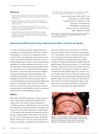
July 2021 in “Aesthetic Plastic Surgery” This study concluded that a triangular flag-shaped incision design in hair transplantation achieved better hair alignment compared to the common elliptical incision, particularly in patients with specific hair directions.
 1 citations
,
May 2016 in “Dermatologic Surgery”
1 citations
,
May 2016 in “Dermatologic Surgery” The document concludes that using a phototrichogram with a protractor and tapeline is a reliable and noninvasive way to measure hair loss.
 1 citations
,
December 2005 in “Therapeutische Umschau”
1 citations
,
December 2005 in “Therapeutische Umschau” This article reviews anti-aging strategies in dermatology, emphasizing the role of skin as a model for studying aging and promoting preventive and therapeutic interventions, but it does not present new findings.

This review identifies 1859 plant and fungal species from the Pantanal and highlights patents, mainly from South Korea, focused on extracts with antitumoral, anti-inflammatory, and cosmetic applications, but reports no new clinical results.
April 2026 in “IntechOpen eBooks” The researchers presented a case study on Exo.Reset®, a cosmetic formulation using extracellular vesicle technology, demonstrating systematic application of recognized standards to ensure scientific rigor and regulatory compliance in skin rejuvenation product development, providing a practical model for EV-based cosmetic innovations.
 April 2026 in “International Journal of Molecular Sciences”
 This narrative review highlights the need for diabetes-informed approaches to aesthetic dermatology as accelerated skin aging in diabetic patients complicates the safety and effectiveness of cosmetic procedures.
 April 2026 in “Cosmetics”
 In this randomized, double-blind, placebo-controlled trial, researchers found that a multi-targeted cosmetic formulation containing TrinogeniX™ significantly increased hair density and thickness in individuals with androgenetic alopecia without adverse effects, suggesting it as a potential safe and effective treatment option.
 February 2026 in “Cosmetics”
 This review highlights that Trigonella foenum-graecum L. (fenugreek) shows promise as a versatile plant-based ingredient in cosmetics due to its phytochemicals, which offer benefits for skin and hair care, although further research is necessary for robust validation.
 December 2025 in “International Journal of Newgen Research in Pharmacy & Healthcare”
 This review compares regulations for herbal hair products' labeling and claim validation across various regions, identifying existing discrepancies and discussing the need for global standardization to improve consumer protection and trade facilitation.
December 2025 in “Cosmetics” This review highlights that post-oncologic skin suffers from several impairments following cancer treatments, and dermocosmetic strategies, particularly those involving nanocarriers, can enhance the efficacy and stability of antioxidants, thereby aiding skin regeneration and improving quality of life.
October 2025 in “Journal of Cosmetic Dermatology” This study found that the AOPT-MTL mode is an effective and safe treatment option for nasal blackheads in Asians, indicating potential for widespread clinical use.
 August 2025 in “SSP Modern Pharmacy and Medicine”
 This analytical review of alopecia treatments in the US found that drugs like minoxidil and finasteride are most affordable and effective, while newer JAK inhibitors show significant clinical results but are cost-prohibitive; the study stresses individualizing treatment based on financial capability and alopecia type.
 June 2025 in “Erzincan Binali Yıldırım Üniversitesi İktisadi ve İdari Bilimler Fakültesi Dergisi”
 This study conducted a bibliometric analysis of hair transplantation literature, revealing trends, leading researchers, and highly cited sources, while highlighting dermatology and surgical fields' concentration and the need for interdisciplinary research, clinical studies, and technological innovation.
 June 2025 in “Saratov Medical Journal”
 This review highlights recent advances in dermatology, including innovations in skin cancer treatments, acne and psoriasis management, trends in cosmetic procedures, and the impact of telemedicine, emphasizing ongoing research's role in enhancing patient care and outcomes.
May 2025 in “Preprints.org” This review highlights the potential of olive mill wastewater as a sustainable source of cosmeceutical ingredients with antioxidant, anti-inflammatory, and dermatological benefits but reports no new clinical findings.
May 2025 in “Preprints.org” This review discusses the potential of olive mill wastewater as a sustainable source of dermatological ingredients with antioxidant and regenerative properties but reports no new clinical findings.
May 2025 in “Preprints.org” This review discusses the dermatological potential of olive mill wastewater as a sustainable source of high-value cosmeceutical ingredients but reports no new clinical results.
 March 2025 in “Pakistan Journal of Scientific & Industrial Research Series A Physical Sciences”
 This abstract discusses the challenges of diagnosing and managing PCOS, highlighting that individualized management, lifestyle modifications, and medical treatments such as contraceptives and metformin are recommended to address hormonal imbalances and co-morbidities.
January 2025 in “Cosmetics” In this study, a systematic review highlighted the potential of exosomes in cosmetics and regenerative medicine for improving skin rejuvenation and addressing aging, while also pointing out existing challenges such as regulatory hurdles and the need for more clinical validation.
Hair restoration surgery is becoming more common as male pattern baldness increases with age.
This article explores the potential applications of polyglutamic acid in cosmetics, discussing its benefits for skincare and haircare, but reports no new experimental results.
April 2024 in “Cosmetics” This review highlights the use of microneedling devices and patches to deliver cosmetic agents through the skin, noting their applications in skin rejuvenation and safety considerations such as potential skin irritation and infection.
 April 2024 in “The Egyptian Journal of Hospital Medicine ”
 This article discusses the genetic and hormonal factors involved in androgenetic alopecia and its association with increased risks of cardiovascular diseases and metabolic disorders, but it does not present new research findings.
 January 2024 in “Indian Journal of Plastic Surgery/Indian journal of plastic surgery”
 This case report describes a flap advancement technique following skin expansion as a successful method to address primary essential cutis verticis gyrata, preserving hair growth and improving cosmetic outcomes.