
This study found that plasma-activated water significantly improved wound healing in diabetic rats compared to both atmospheric pressure cold plasma and conventional dressings.
 December 2025 in “Zenodo (CERN European Organization for Nuclear Research)”
 This review highlights the growing popularity and benefits of herbal shampoos, which use plant-based extracts to provide a gentle, effective, and environmentally friendly alternative to conventional chemical shampoos, promoting hair health and eco-sustainability.
 October 2025 in “International Journal of Research and Review”
 This study highlights the potential benefits of herbal soaps and shampoo bars as eco-friendly alternatives to conventional cosmetics, noting their antibacterial, antifungal, and antioxidant properties as well as sustainability advantages such as reduced plastic use and avoidance of synthetic chemicals.
 July 2025 in “Chinese Journal of Dermatology”
 This study concluded that the effectiveness and safety of a domestic follicular extraction system were similar to conventional follicular unit excision in patients undergoing hair transplant surgery for androgenetic alopecia.
July 2025 in “International Journal of Pharmacognosy and Pharmaceutical Sciences” This review discusses acne's common triggers, challenges with conventional treatments, and the potential of alternative therapies to reduce side effects and enhance outcomes, highlighting an increasing interest in safer approaches due to the limitations of current topical options.
 April 2025 in “International Journal of Cosmetic Science”
 This study found that using 1,4-butylenediamine bismaleimide for hair perming through thiol-Michael click chemistry offers comparable efficiency to conventional oxidative methods, with enhanced durability and reduced damage to hair fibres, preserving mechanical, color, and surface properties.
February 2025 in “PubMed” This article discusses the need for rigorous trials to compare the effectiveness and safety of CAM supplements with conventional dermatologic therapies, reporting no new findings.
 January 2025 in “International Journal of Biological Innovations”
 This review article discusses the potential benefits of phytochemicals in hair care, highlighting their ability to improve scalp health, reduce dandruff, and promote hair growth, while emphasizing their safety and minimal side effects compared to conventional therapies.
 December 2024 in “Current Cosmetic Science”
 This review introduces Ayurvedic remedies as a promising natural treatment for premature greying of hair, highlighting the use of Vedic plant taxonomy to accurately identify herbs that stimulate melanogenesis and restore hair pigmentation, offering a safer alternative to conventional chemical treatments.
 September 2024 in “Skin Appendage Disorders”
 This case report describes a 21-year-old woman with circumscribed alopecia areata incognita, who experienced a sustained positive response to treatment with oral tofacitinib after conventional treatments frequently failed to provide lasting effects.
 April 2024 in “Journal of biomedical and pharmaceutical research”
 This study highlights the promise of nanoparticles in cancer treatment, addressing limitations of conventional chemotherapy such as drug resistance and toxicity, by using nanocarriers like gold nanoparticles and dendrimers to improve drug delivery.
 March 2024 in “Clinical, cosmetic and investigational dermatology”
 This study reported that five patients with alopecia areata achieved satisfactory results using 15 mg of Upadacitinib daily after conventional treatments had failed, without experiencing adverse events.
 February 2024 in “Journal of ayurveda and integrated medical sciences”
 This case study suggests that Ayurvedic treatment, including Karanj oil, herbal churna, and leech therapy, provided significant hair regrowth in a 16-year-old with alopecia areata after three months, despite previous unsuccessful conventional medicine treatments.
December 2023 in “Journal of Asia Pacific Aesthetic Sciences” This review discusses the potential of bone marrow mesenchymal stem cell-derived cytokines and growth factors as a promising alternative to conventional treatments for androgenetic alopecia, given their favourable outcomes in hair regrowth and follicle repair.
 October 2023 in “Al-Anbar medical journal”
 This study found that a new clinic-based modified hair fall count method is a valid tool for assessing hair loss in women, showing strong association and high precision compared to the conventional home-based method.
 July 2018 in “DOAJ (DOAJ: Directory of Open Access Journals)”
 This study found that finasteride delivered through a nano-transferosomal gel showed improved penetration through skin layers compared to a conventional gel, suggesting a potential alternative for oral administration.
 January 2017 in “Clinical approaches and procedures in cosmetic dermatology”
 This review explores clinical studies on low-level laser therapy (LLLT) for alopecia and suggests it may benefit patients unresponsive to conventional treatments, but larger studies are needed to confirm efficacy.
 July 2016 in “The journal of investigative dermatology/Journal of investigative dermatology”
 This study concluded that a new model of reconstructed human epidermis using keratinocytes from plucked hair follicles offers a less-invasive alternative to conventional skin-derived models for skin research.
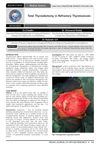 March 2016 in “Indian Journal Of Applied Research”
 This report presents a case of refractory thyrotoxicosis where the patient required a total thyroidectomy after resistance to conventional treatments including antithyroid drugs and radioactive iodine.
 December 2016 in “Journal of Dermatology and Dermatologic Surgery”
 In this study, the Instant Follicular Hair Unit Transplant technique demonstrated superior hair growth compared to conventional FUE in patients with androgenetic alopecia, although it requires a steeper learning curve for surgeons.
 92 citations
,
September 2019 in “ACS nano”
92 citations
,
September 2019 in “ACS nano” This study observed that a wearable electric stimulation device significantly promoted hair regeneration in rats and mice, outperforming conventional pharmacological treatments and enhancing growth factor secretion.
 69 citations
,
December 2015 in “Journal of Controlled Release”
69 citations
,
December 2015 in “Journal of Controlled Release” This study found that nanocapsules formulated as a dispersion and applied with massage may enhance follicular uptake of clobetasol propionate while minimizing its skin penetration, offering a potential improvement over conventional treatments for scalp diseases.
61 citations
,
April 2021 in “Frontiers in Medicine” This study found that hidradenitis suppurativa significantly impaired quality of life in German patients, with severity linked to skin and certain extra-cutaneous changes, but not reduced by surgical or conventional medicamentous treatments.
 48 citations
,
April 2019 in “ACS Applied Materials & Interfaces”
48 citations
,
April 2019 in “ACS Applied Materials & Interfaces” In this study, researchers introduced calcium carbonate-based carriers for transdermal drug delivery, observing efficient transport of substances and systemic absorption in rats, suggesting potential applications in regenerative medicine and dermatology beyond conventional topical treatments.
 43 citations
,
February 2020 in “Clinica chimica acta”
43 citations
,
February 2020 in “Clinica chimica acta” This review discusses the role of phytochemical nanoparticles in cervical cancer therapy and reports no new clinical results; the authors highlight their potential advantages over conventional chemotherapy.
 39 citations
,
January 2019 in “Journal of the American Academy of Dermatology”
39 citations
,
January 2019 in “Journal of the American Academy of Dermatology” In this study, three children with severe alopecia treated with systemic tofacitinib showed significant hair regrowth, suggesting it may be a potential option for those unresponsive to conventional therapy.
 36 citations
,
August 2017 in “Journal of Cosmetic Dermatology”
36 citations
,
August 2017 in “Journal of Cosmetic Dermatology” In this study, patients with mild to moderate androgenetic alopecia who received platelet-rich plasma injections with microneedling showed improvements in hair growth and thickness, as well as high satisfaction, over a three-month period compared to conventional therapy non-responders.
 30 citations
,
December 2001 in “Journal of The European Academy of Dermatology and Venereology”
30 citations
,
December 2001 in “Journal of The European Academy of Dermatology and Venereology” This paper discusses hormonal therapy options for women with severe acne, focusing on treatment for cases that do not respond to conventional methods, but it reports no new clinical findings.
 28 citations
,
August 2015 in “Journal of Drug Targeting”
28 citations
,
August 2015 in “Journal of Drug Targeting” This study found that a novel proniosomal gel formulation of CoQ10 improved antioxidant levels and provided better skin protection against UV radiation compared to a conventional CoQ10 gel in animal models.
28 citations
,
January 1986 in “International Journal of Dermatology” This case study describes a pregnant woman who developed a pruritic rash with follicular lesions containing yeast-like organisms, resistant to conventional acne treatments.