 May 2019 in “International journal of advanced chemistry”
 In this study, researchers formulated a green depilatory cream from natural extracts like turmeric and aloe vera, finding it reduced hair growth by 25% in mice without causing skin irritation, suggesting it may be safer than conventional options.

This study found that proretinal nanoparticles, applied topically, are safe and effective for penetration into hair follicles, enhancing retinoid biological activity in the skin while reducing irritation compared to conventional retinal formulations.
 May 2025 in “Journal of research in pharmaceutical science.”
 In this study, researchers developed and tested a herbal hair serum using hibiscus, flaxseed, and aloe vera, finding that the optimal formulation effectively reduces frizz, enhances hair smoothness and glossiness, and provides moisturizing benefits without harmful ingredients compared to conventional hair serums.
 January 2025 in “International Journal For Multidisciplinary Research”
 In this study, the researchers developed and evaluated eco-friendly poly-herbal soap strips using plant extracts from Lantana camara, Moringa Oleifera, and Corn silk, finding that the strips exhibited superior physicochemical properties and significant anti-fungal activity compared to conventional anti-fungal soaps.
9 citations
,
February 2021 in “Evidence-based Complementary and Alternative Medicine” This study reported that Longdan Xiegan decoction is more effective than conventional western medicine alone in treating eczema, but the evidence quality was generally low, highlighting the need for further studies.
6 citations
,
April 2025 in “Frontiers in Sustainable Food Systems” This review highlights the potential of valorizing vegetable waste by extracting valuable biomolecules for use in food, nutraceuticals, and energy, noting that while promising methods exist, several niche areas lack sufficient research on a global scale.
April 2025 in “Annals of Medicine” This study assessed the combination of compound glycyrrhizin and conventional treatments for alopecia areata and found it effective for promoting hair regrowth while being safe with mild adverse effects, based on a systematic review and meta-analysis of randomized controlled trials.
 5 citations
,
January 2022 in “Proceedings of the Pakistan Academy of Sciences B Life and Environmental Sciences”
5 citations
,
January 2022 in “Proceedings of the Pakistan Academy of Sciences B Life and Environmental Sciences” This review discusses the role of nanoparticles in cancer diagnosis and treatment and outlines their potential to improve outcomes by reducing systemic toxicity and overcoming multidrug resistance, though it reports no new clinical results.
1 citations
,
October 2025 in “Journal of Microbiology and Biotechnology” This study suggests that phytochemicals from natural sources could be safer alternatives to conventional treatments for hair loss, as they may activate key pathways involved in hair growth.
January 2024 in “Metabolites” This review highlights the importance of standardizing pre-analytical procedures for collecting and extracting samples from uncommon biological specimens like breast milk and sweat in clinical metabolomics, to enhance diagnostic and biomarker discovery efforts while minimizing contamination and bias.

This study found that plucked hair follicles exhibited a higher growth rate than conventional one-hair micrografts in vitro, suggesting they may be a less invasive alternative for hair transplantation.
 25 citations
,
January 1983 in “Analyst”
25 citations
,
January 1983 in “Analyst” Method measures minoxidil in tablets accurately and easily.
 14 citations
,
November 1963 in “The journal of investigative dermatology/Journal of investigative dermatology”
14 citations
,
November 1963 in “The journal of investigative dermatology/Journal of investigative dermatology” This article reviews the identification and characterization of soluble proteins in horny tissues such as calluses and psoriatic scales, but reports no new clinical results.
13 citations
,
January 2024 in “Journal of Nanobiotechnology” This research reported that a newly developed adhesive wound dressing (SIS/PAA/LAP) demonstrated higher tissue adhesion and burst strength compared to conventional products, and improved tissue repair outcomes in animal models, suggesting potential for enhanced wound healing applications.
 8 citations
,
March 2018 in “Journal of Drug Delivery Science and Technology”
8 citations
,
March 2018 in “Journal of Drug Delivery Science and Technology” This study found that treating paracoccidioidomycosis-infected mice with a nanoparticle formulation of itraconazole led to higher drug accumulation in lung, liver, and spleen tissues, improved treatment efficacy, and reduced side effects compared to traditional oral solutions.
2 citations
,
July 2025 in “Biopolymers” This review explores the eggshell matrix as a potential sustainable and cost-effective alternative source for glycosaminoglycans, but highlights the need for further research to enhance extraction techniques and economic viability.
 July 2026 in “Frontiers in Bioengineering and Biotechnology”
 This study reports that Echinacea-loaded silk fibroin/chitosan dressings may effectively promote scarless skin regeneration and accelerate wound healing compared to conventional treatments.
 November 2025 in “Research Review”
 This review of studies published after 2020 found that probiotics may significantly reduce acne lesions and improve skin health in individuals with acne vulgaris, though further high-quality research is needed for confirmation and treatment optimization.
 March 2025 in “Dental Journal (Majalah Kedokteran Gigi)”
 This study developed a biodegradable gelatin and chitosan hemostatic sponge, enhanced with pomegranate peel extract, for dental applications, highlighting its effective antibacterial properties, improved blood absorption, and reduced clotting time, suggesting potential for use in clinical dental and wound care procedures.
 June 2024 in “ACTA SCIENTIAE VETERINARIAE”
 This study reported a case of equine ringworm infection in a 2-year-old horse caused by Nannizzia gypsea, confirmed through culture and SYBR-Green real-time PCR techniques, demonstrating that qPCR allows specific detection of dermatophytes more rapidly than conventional methods.
 November 2023 in “Linköping University medical dissertations”
 This research presents a comprehensive workflow for producing EMA-compliant autologous keratinocyte-based therapies for wound healing and explores miRNA-mediated regulations in human keratinocytes and adipose-derived mesenchymal stem cells.
 54 citations
,
January 2013 in “Journal of Biological Macromolecules”
54 citations
,
January 2013 in “Journal of Biological Macromolecules” This study proposes a new method to selectively isolate keratin-associated proteins and keratin from human hair, suggesting that KAPs may support keratin fibers in hair structure.
 48 citations
,
February 2025 in “Nano-Micro Letters”
48 citations
,
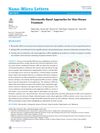
February 2025 in “Nano-Micro Letters” This review summarizes the application of microneedles in treating various skin diseases and highlights challenges like low drug loading, noting no new clinical results are reported.
 42 citations
,
September 2017 in “Advances in protein chemistry and structural biology”
42 citations
,
September 2017 in “Advances in protein chemistry and structural biology” This chapter reviews surface plasmon resonance (SPR) methodology and its applications in basic science and human disease without reporting new clinical results.
26 citations
,
January 2024 in “Gels” This review highlights advancements in nanoemulgel platforms for topical and transdermal drug delivery, noting their improved safety and efficacy over conventional treatments in in vitro and in vivo studies, specifically for conditions like skin diseases and inflammatory issues.
 19 citations
,
October 2024 in “BMC Medical Informatics and Decision Making”
19 citations
,
October 2024 in “BMC Medical Informatics and Decision Making” This study used machine learning models to analyze PCOS symptoms for early diagnosis, finding Support Vector Machine and VGG16 algorithms achieved high accuracy rates of 94.44% and 98.29% respectively.
 11 citations
,
September 2020 in “Steroids”
11 citations
,
September 2020 in “Steroids” This study developed a new method using liquid chromatography-tandem mass spectrometry to measure multiple steroid hormones in hair, requiring significantly fewer strands than previous methods, with high accuracy and precision.
 8 citations
,
February 2022 in “Scientific Reports”
8 citations
,
February 2022 in “Scientific Reports” This study suggests that 20 vital medicinal herbs may exert therapeutic effects on alopecia by regulating specific target genes and proteins, offering insights into their novel mechanisms distinct from conventional drugs.
 6 citations
,
March 2018 in “Journal of Chromatography A”
6 citations
,
March 2018 in “Journal of Chromatography A” This study describes an analytical technique combining field-enhanced sample stacking with dispersive liquid-liquid microextraction, offering improved sensitivity for detecting finasteride and its metabolite in urine samples from patients treated for androgenetic alopecia.
 3 citations
,
September 2023 in “Advanced science”
3 citations
,
September 2023 in “Advanced science” Researchers demonstrated that a new vaccine platform using antigen-loaded hydrogels enhanced humoral immune responses in mice, producing stronger antigen-specific antibody levels compared to the conventional adjuvant Alum, and offering promising protective capabilities against influenza virus.