 15 citations
,
November 2017 in “Drug Development and Industrial Pharmacy”
15 citations
,
November 2017 in “Drug Development and Industrial Pharmacy” This study found that the optimized finasteride-loaded lyophilized tablets using a self-nanoemulsifying drug delivery system improved bioavailability in human volunteers compared to the marketed finasteride product.
 14 citations
,
April 2002 in “Brain Research Protocols”
14 citations
,
April 2002 in “Brain Research Protocols” Quickly get finasteride from tablets using easy methods.
 4 citations
,
January 2002 in “Indian Journal of Pharmaceutical Sciences”
4 citations
,
January 2002 in “Indian Journal of Pharmaceutical Sciences” This study developed a precise and reproducible method for estimating finasteride in tablet formulations using a colorimetric reaction with specific reagents.
 4 citations
,
January 2018 in “Forensic Science International”
4 citations
,
January 2018 in “Forensic Science International” This study reported that a newly developed UHPLC-MS/MS method detected illegal synthetic hair-growth compounds in 10% of 76 hair-growth products, highlighting the need for ongoing monitoring to protect public health.
 January 2019 in “Analytical Science and Technology”
 This study developed a rapid method using advanced chromatography and mass spectrometry to detect hair-growth enhancing compounds, discovering synthetic drugs in about 21% of tested supplements.
 January 2014 in “Side effects of drugs annual”
 This review discusses the 2011 publications on the side effects of sex hormones and related compounds, without reporting new clinical results.
 47 citations
,
March 2018 in “Journal of Pharmaceutical and Biomedical Analysis”
47 citations
,
March 2018 in “Journal of Pharmaceutical and Biomedical Analysis” This study identified 43 compounds in Platycladi Cacumen, including flavonoids, and found significant chemical variation in flavonoid content across different regions and processed products.
 14 citations
,
August 2009 in “Cancer epidemiology”
14 citations
,
August 2009 in “Cancer epidemiology” This study found that AHCC significantly reduced alopecia caused by Ara-C in neonatal rats and improved liver function affected by 6-MP and MTX in mice.
 5 citations
,
November 2020 in “Frontiers in Cell and Developmental Biology”
5 citations
,
November 2020 in “Frontiers in Cell and Developmental Biology” This study introduced a simple and reliable in vitro assay capable of large-scale simultaneous screening of hair growth-promoting compounds using a 3D co-culture system of human dermal papilla and outer root sheath cells.
 May 2026 in “International Journal of Drug Delivery Technology”
 This review highlights that nanotechnology enhances the solubility, stability, and bioavailability of phytochemicals from medicinal plants, improving their therapeutic efficiency in disease models like cancer and infections. However, it indicates that further research is necessary to optimize formulations and ensure safety for clinical use.

In this study, GV-350 treatment over three months improved iron status and reduced the impact of Telogen Effluvium on quality of life among 20 iron-deficient women, with no adverse events reported.
 February 2019 in “Journal of the Faculty of Agriculture Kyushu University”
 This study found that terpene compound concentrations in coniferous tree leaves were generally highest in spring and summer, suggesting these seasons are most effective for extracting essential oils.

In this study involving 13 patients with vitiligo-associated leukotrichia, minimal hair repigmentation was observed following treatment with fractional CO₂ laser and topical betamethasone, though the method was well tolerated, highlighting the need for further research to optimize treatment parameters.
 183 citations
,
January 2018 in “Cosmetics”
183 citations
,
January 2018 in “Cosmetics” This review discusses side effects and allergy contact dermatitis caused by essential oils in cosmetic products and reports no new clinical results.
 21 citations
,
January 2008 in “Talanta”
21 citations
,
January 2008 in “Talanta” New, cheaper method measures finasteride in tablets accurately and quickly.
 4 citations
,
May 2019 in “Asian Journal of Pharmaceutical Sciences”
4 citations
,
May 2019 in “Asian Journal of Pharmaceutical Sciences” This study found that a dutasteride tablet formulation using cyclodextrin complex, solubilizing polymer, and surfactant achieved similar bioavailability in beagle dogs to that of a commercial capsule.
 4 citations
,
December 2011 in “Drug Research”
4 citations
,
December 2011 in “Drug Research” This study found that two different 5 mg finasteride tablet formulations are bioequivalent in terms of the rate and extent of absorption in healthy volunteers.
 2 citations
,
January 2006 in “Durham e-Theses (Durham University)”
2 citations
,
January 2006 in “Durham e-Theses (Durham University)” This study found that solid-state NMR combined with X-ray techniques provided critical insights into the structure and solvation of finasteride polymorphs, identifying gaps in existing patent characterizations.
 June 2026 in “International Journal of Drug Delivery Technology”
 In this study, researchers optimized fast-dissolving tablets of nifedipine using a systematic approach, resulting in formulations that demonstrated rapid disintegration, enhanced dissolution profiles, and improved solubility, potentially improving oral delivery for patients requiring poorly soluble antihypertensive medication.
 January 2026 in “Journal of Ayurveda and Integrated Medical Sciences”
 In this study, oral Bhringaraj extract was found to significantly reduce hair shedding in adults over 24 weeks, according to comb test measurements and patient-reported improvements, with mild and self-resolving side effects observed.
 11 citations
,
February 2021 in “Trends in Food Science and Technology”
11 citations
,
February 2021 in “Trends in Food Science and Technology” This review explores the potential of edible flowers, particularly the genus Impatiens, for their chemical, nutritional, and bioactive properties but does not report new clinical findings.
 24 citations
,
October 2024 in “Process Biochemistry”
24 citations
,
October 2024 in “Process Biochemistry” In this study, Gaussian process regression models combined with Grey Wolf optimization were used to predict and optimize phenolic and flavonoid content extraction from Carthamus caeruleus L. rhizomes, showing high accuracy and helping improve understanding and extraction processes through a new interactive tool.
 20 citations
,
February 2009 in “Chemistry & Biodiversity”
20 citations
,
February 2009 in “Chemistry & Biodiversity” This study found that Ganoderma lucidum extracts showed weak 5alpha-reductase inhibition but significantly inhibited prostate cell proliferation and testosterone-driven prostate growth in rats, suggesting potential as an ingredient for treating androgen-induced diseases.
 10 citations
,
August 2024 in “Clinical Cosmetic and Investigational Dermatology”
10 citations
,
August 2024 in “Clinical Cosmetic and Investigational Dermatology” This review reports that natural compounds show promise in slowing skin photoaging by targeting cellular pathways in keratinocytes and fibroblasts. However, comprehensive clinical studies are needed to verify their efficacy and safety.
 9 citations
,
January 1999 in “Journal of Liquid Chromatography & Related Technologies”
9 citations
,
January 1999 in “Journal of Liquid Chromatography & Related Technologies” This article discusses using high performance liquid chromatography to optimize mobile phase composition for separating synthesis products of Finasteride, without reporting new clinical results.
 5 citations
,
May 2025 in “Scientific Reports”
5 citations
,
May 2025 in “Scientific Reports” This study found that extracts from Indian gooseberry leaves showed strong antimalarial activity against Plasmodium falciparum, with low cytotoxicity, suggesting potential for developing new antimalarial drugs.

In this study, researchers analyzed the waters of Ladakh's hotsprings, identifying 27 bioactive compounds with potential health benefits, but emphasize that further clinical trials are needed to confirm their therapeutic efficacy and safety.
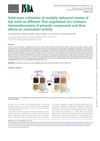 June 2024 in “Okayama University Scientific Achievement Repository (Okayama University)”
 In this study, methanol extracts from Thai-colored rice fermented with Aspergillus molds exhibited an increase in polyphenolic content and antioxidant activity, outperforming Thai white and Japanese white rice, notably transforming key polyphenols like quercetin and ferulic acid.
 December 2023 in “Biointerface Research in Applied Chemistry”
 This study used molecular docking to identify stiripentol as a potential new inhibitor of the SRD5A2 enzyme, which is targeted for treating androgen-related diseases; however, in vivo trials are needed to validate its efficacy.
 January 2018 in “International Journal of Advances in Scientific Research and Engineering”
 This study presents a new automated method for measuring total phenolic compounds in Ziziphus Jujuba fruit extract, showing high precision and potential applications in health and environmental sciences.