 September 2018 in “Epsilon Archive for Student Projects (University of Southampton)”
 This study found that treatment with Bacillus amyloliquefaciens UCMB5113 significantly increased root hair growth in half of the tested Arabidopsis thaliana accessions.
 April 2018 in “Journal of Investigative Dermatology”
 This study found that kaempferol increased the proliferation potential of basal epidermal cells in three-dimensional skin models by enhancing integrin expression and altering cell morphology.
 April 2018 in “Journal of Investigative Dermatology”
 This study found that elevated STAT5 levels are linked to improved hair-inducing capabilities in human dermal papilla cells, and reducing STAT5 impairs hair follicle induction.
 April 2018 in “Journal of Investigative Dermatology”
 This study found that treating human dermal fibroblast cells with ginsenoside Rd increased the expression of mRNA associated with the dermal-epidermal junction, suggesting potential as an anti-aging cosmetic ingredient.
 January 2018 in “Springer eBooks”
 This study discusses how dermatological issues in athletes can arise from or be exacerbated by mechanical trauma, infections, and environmental factors, highlighting the importance of thorough history and examination to differentiate these from other skin conditions.
 April 2017 in “Our Dermatology Online”
 This study explored how septuagenarians and octogenarians responded hedonically to natural cosmetics that were marketed as making them feel younger and more attractive, using a simple satisfaction questionnaire.
This study reports that hair fibers degrade most in acidic sandy clay, while silicone oil treatment is effective for conserving various hair types and artifacts.
 November 2008 in “Medical & surgical dermatology”
 This study reports that a prototype device may accurately measure changes in hair quantity, diameter, and density in patients with balding by assessing the cross-sectional area of hair bundles.
 April 2018 in “Journal of Investigative Dermatology”
 This study found that the absence of Hes1 in hair follicles delays secondary hair germ activation and shortens the anagen phase, impacting HFSC self-renewal and long-term hair regeneration.
 January 2014 in “Journal of Pharmaceutical Negative Results”
 This study found that the ethanolic extracts of G. glabra and Z. mauritiana roots did not prevent androgenic alopecia in a testosterone-induced animal model.
 45 citations
,
January 2015 in “Dermatology”
45 citations
,
January 2015 in “Dermatology” In this study, 41.6% of patients with secondary syphilis exhibited syphilitic alopecia, with the 'moth-eaten' pattern most commonly observed through trichoscopy.
 24 citations
,
May 2017 in “Journal of Cosmetic and Laser Therapy”
24 citations
,
May 2017 in “Journal of Cosmetic and Laser Therapy” This study reported that a new laser scanner using 655 nm red and 808 nm infrared lasers significantly improved hair density in patients with androgenic alopecia compared to both a laser hat and no treatment, without observable adverse effects.
 17 citations
,
January 2024 in “Journal of Materials Chemistry B”
17 citations
,
January 2024 in “Journal of Materials Chemistry B” In this study, researchers developed a hyaluronic acid-coated copper peroxide nano-antimicrobial system that demonstrated precise antimicrobial activity and accelerated wound healing by releasing reactive oxygen species in response to bacterial enzymes, in both laboratory and animal tests.
 17 citations
,
May 1998 in “Steroids”
17 citations
,
May 1998 in “Steroids” This study constructed a model to predict finasteride's inhibitory activity on 5α-reductase type 2 and calculated that a 1 μM plasma concentration, after 50 mg administration, matches prostate inhibition levels.
 12 citations
,
March 2020 in “Journal of Bioactive and Compatible Polymers”
12 citations
,
March 2020 in “Journal of Bioactive and Compatible Polymers” This study found that finasteride- and minoxidil-loaded nanoparticles in a gel improved skin permeability and drug retention, suggesting a promising approach for topical alopecia treatment with reduced dosing frequency and side effects.
 2 citations
,
October 2025 in “Journal of Materials Science Materials in Medicine”
2 citations
,
October 2025 in “Journal of Materials Science Materials in Medicine” In this study, researchers developed a novel zinc oxide nanoflower-infused nanocomposite that demonstrated promising results in accelerating wound healing in a murine model, with enhanced angiogenesis, reduced inflammation, and improved collagen deposition compared to a control group.
 1 citations
,
April 2025 in “Revista científica FACS.”
1 citations
,
April 2025 in “Revista científica FACS.” This study explored the potential use of natural ingredients in managing alopecia areata, investigating their safety and efficacy as alternatives to conventional chemical treatments.
 1 citations
,
August 2018 in “bioRxiv (Cold Spring Harbor Laboratory)”
1 citations
,
August 2018 in “bioRxiv (Cold Spring Harbor Laboratory)” This study reports that a novel gain-of-function mutation in TMEM173, combined with polymorphisms in TMEM173 and IFIH1, results in a distinct clinical phenotype with features of SAVI, including alopecia and photosensitivity.
 April 2026 in “International Journal for Research in Applied Science and Engineering Technology”
 In this study, the developed polyherbal shampoo with Hibiscus rosa-sinensis exhibited good stability and cleansing properties, suggesting it may be an effective natural alternative to synthetic anti-hair fall products.
 April 2026 in “International Journal of Drug Delivery Technology”
 In this study, phytochemical analysis and molecular docking suggested that bioactive compounds in several Ayurvedic herbs may interact persistently with hair growth and antifungal protein targets, indicating potential as plant-based treatments for dandruff and hair loss.
This study introduced ElixirSeeker2, a computational framework for designing anti-aging peptides, and found that some newly identified peptides significantly delayed cellular senescence and enhanced cellular and locomotor functions in aged Caenorhabditis elegans.
 March 2025 in “Scientific Reports”
 This study evaluated a menthol-based microemulsion for transdermal delivery of finasteride and silodosin, finding that it enhanced skin permeation and flux compared to aqueous solutions, suggesting a promising method for managing benign prostatic hyperplasia.
 January 2025 in “Nanotechnology Reviews”
 This study reported a green synthesis method for copper oxide nanoparticles using pumpkin seed extract, achieving significant antibacterial activity against Bacillus subtilis and moderate cytotoxic effects against certain cancer cell lines, indicating potential biomedical applications for these eco-friendly nanomaterials.
 July 2024 in “Annals of Phytomedicine An International Journal”
 In this study, the authors reviewed various herbal ingredients used in hair care products and found that components like aloe vera, hibiscus, amla, and fenugreek have traditional and scientifically validated benefits for addressing hair issues such as hair loss, dandruff, and damage.
 March 2024 in “World Journal Of Advanced Research and Reviews”
 This study highlights the potential benefits of herbal hair oil in improving hair health, controlling frizz, and preventing hair loss, with common ingredients like coconut, sesame, and mustard oils being frequently used.
 January 2024 in “International Research Journal of Modernization in Engineering Technology and Science”
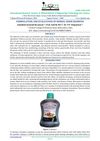
 This study formulated a poly-herbal shampoo using ingredients like hibiscus, neem, and alo-vera and evaluated its cosmetic properties, reporting positive organoleptic and physico-chemical characteristics, with the potential for safe use as a hair cleansing and conditioning product.

This study found that elastin-like recombinamer (ELR) wound dressings promote tissue regeneration and stability without rejection in ex vivo and in vivo models, indicating potential for hard-to-heal wound treatment.
 June 2023 in “Acta Scientifci Nutritional Health”
 This study found that children with celiac disease who adhered to a gluten-free diet experienced significant improvements in height, weight, and symptoms like diarrhea and abdominal pain, although cases of abdominal distention increased.

This study concludes that one year after COVID-19 infection, patients in Northeast Brazil showed improvements in quality of life, although some symptoms such as anxiety and memory loss persisted.
In this study, a spayed adult female dog with recurrent vaginitis and cystitis due to bone structures in the vaginal canal was successfully treated with manual removal and medication.