16 citations
,
August 2017 in “Lupus” This case report and literature review highlights an unusual acne-like presentation of chronic cutaneous lupus erythematosus that doesn't improve with standard acne treatments, emphasizing the importance of considering CCLE in atypical acneiform eruptions.
 7 citations
,
November 2007 in “Annales de Dermatologie et de Vénéréologie”
7 citations
,
November 2007 in “Annales de Dermatologie et de Vénéréologie” A man was diagnosed with a rare form of lupus after showing unique skin symptoms that responded well to treatment.
2 citations
,
May 2016 in “Journal of Clinical Oncology” This study found that topical BPM31543 was safe, tolerable, and showed potential to reduce chemotherapy-induced alopecia at higher dosing levels among adult women with cancer receiving taxane-based chemotherapy.
 November 2022 in “CARDIOMETRY”
 This article discusses the potential benefits of GcMAF and oral MAF, developed by "Saisei Mirai", for cancer and other conditions, but reports no new clinical results.
33 citations
,
March 2018 in “Italian Journal of Dermatology and Venereology” This article reviews clinical and histopathological aspects of cutaneous lupus erythematosus and its treatment, emphasizing the importance of photoprotection and outlining current therapies, but reports no new experimental results.
 December 2023 in “The journal of cell biology/The Journal of cell biology”
 This study developed the mTurquoise2-Col4a1 mouse model and used fluorescent tagging of collagen IV to offer new insights into basement membrane dynamics during hair follicle budding, revealing that basement membranes are flexible and stable structures in developing skin tissue.
 10 citations
,
July 2021 in “Archiv für Pathologische Anatomie und Physiologie und für Klinische Medicin”
10 citations
,
July 2021 in “Archiv für Pathologische Anatomie und Physiologie und für Klinische Medicin” This study found that the expression of LRIG1 in Merkel cell carcinoma tumors was associated with improved overall and cancer-specific survival.
12 citations
,
August 2016 in “Biomedical Chromatography” This study developed and validated an HPLC-UV method for accurately quantifying clobetasol propionate in skin and hair follicles, demonstrating its application in in vitro permeation experiments.
 June 2024 in “Journal of Clinical Oncology”
 This study observed that dalpiciclib is associated with fewer adverse events like diarrhea and hepatotoxicity compared to other CDK4/6 inhibitors, potentially offering better patient-perceived safety and quality of life.
113 citations
,
June 2010 in “Biological Chemistry” This study found that mice deficient in the enzyme cathepsin L exhibited impaired degradation of autophagolysosomal content, leading to an accumulation of large, abnormal vesicles in various tissues.
 1 citations
,
February 2018 in “Orthopedics and rheumatology”
1 citations
,
February 2018 in “Orthopedics and rheumatology” This study found that combining intra-arterial chemotherapy with Traditional Chinese Medicine may improve response rates in malignant bone and soft tissue tumor treatment while also managing specific side effects.
18 citations
,
February 2001 in “Der Hautarzt” This case study of a 50-year-old woman with myotonic dystrophy and multiple basal cell carcinomas suggests there could be a genetic predisposition for certain cutaneous tumors in such patients.
April 2025 in “Cancer Research” This study examined older adults undergoing chemotherapy and found that nutritional-inflammatory biomarker ratios were significantly linked to cognitive impairments, treatment side effects, and quality of life indicators, suggesting these lab measurements might help identify high-risk individuals for intervention.
 April 2019 in “Journal of Investigative Dermatology”
 This study found that Merkel cell carcinoma recurrence risk peaks within the first two years after diagnosis and varies significantly by stage, with immune suppression, age, and male sex also influencing risk.
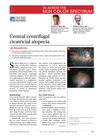 1 citations
,
April 2022 in “The Journal of Family Practice”
1 citations
,
April 2022 in “The Journal of Family Practice” This report describes early and late stages of central centrifugal cicatricial alopecia in two Black women, highlighting progression from a small to a large central patch of hair loss.
October 2025 in “Clinical and Experimental Pediatrics” In this case report and literature review, researchers identified a novel mutation in the CLDN1 gene linked to neonatal ichthyosis-sclerosing cholangitis syndrome and found that its phenotype varies widely, suggesting a multidisciplinary approach is crucial for management.
 September 2024 in “Journal of Anatomy and Histopathology”
 In this study, researchers found that topical application of 3-β-methoxy-Δ18-oleanene (miliacin) in mice sped up the recovery of hair follicles damaged by cyclophosphamide, moving them into a new hair growth cycle more quickly compared to controls.
 February 2026 in “Scientific Reports”
 This preclinical study found that Mesenchymal Stem Cell-derived Conditioned Media formulations were safe and effective in rat and mouse models for treating chemotherapy- and radiation-induced oral mucositis, demonstrating improved tissue regeneration and healing, most notably at higher concentrations.
6 citations
,
October 2001 in “British Journal of Ophthalmology” This article discusses the potential of intralesional cidofovir for treating SCC without systemic toxicity, noting that surgical excision remains the best treatment option; it reports no new clinical results.
April 2024 in “Journal of the American Academy of Dermatology” Diagnosing and treating CCCA requires understanding multiple causes and using various diagnostic tools.
9 citations
,
August 2002 in “British journal of ophthalmology” This case report describes a young man diagnosed with encephalocraniocutaneous lipomatosis who had unique bilateral optic disc colobomas, a previously unreported association with this syndrome.
This study found that prophylactically administering amotosalen-treated allogeneic donor T cells at transplantation significantly improved immune reconstitution and protection against murine cytomegalovirus infection without inducing graft-versus-host disease.
 52 citations
,
January 2001 in “Eye”
52 citations
,
January 2001 in “Eye” This review discusses challenges in treating CMO associated with uveitis and highlights the need for prospective studies to guide therapy, as current treatments are largely empirical and potentially harmful.
56 citations
,
April 2019 in “The Plant Journal” This study found that CNGC 6, CNGC 9, and CNGC 14 are crucial for maintaining calcium oscillations necessary for normal root hair growth in plants, with mutations leading to defects like swelling and bursting.
4 citations
,
September 2021 in “Medical Lasers” This review reports that low-level laser therapy may effectively prevent and alleviate oral mucositis from chemotherapy, supporting its use as a viable treatment option.
3 citations
,
January 2011 in “American Journal of Hematology” This study describes a case where immunochemotherapy, including chlorambucil and rituximab, successfully reversed agranulocytosis and other Waldenström's macroglobulinemia symptoms, indicating a possible connection between the two.
July 2025 in “Journal of Investigative Dermatology” Three molecular subtypes of advanced skin T-cell lymphoma were identified, with potential biomarkers for predicting treatment response and disease progression.
 June 2026 in “Strathprints: The University of Strathclyde institutional repository (University of Strathclyde)”
 In this study, researchers found that inhibiting IKKα in patient-derived CCS tumour models reduces tumour viability, supporting the potential for topical IKKα inhibitors as a treatment for CCS.
 80 citations
,
June 2000 in “Modern Pathology”
80 citations
,
June 2000 in “Modern Pathology” Long-standing benign tumors can become cancerous, especially in people with weakened immune systems.
July 2026 in “Clinical Cosmetic and Investigational Dermatology” In this case report, a 9-year-old boy with Sjogren-Larsson syndrome was also diagnosed with central precocious puberty, showing genetic mutations and increased hormone levels; he was treated with triptorelin acetate for CPP but experienced growth delay during follow-up.