 4 citations
,
December 1997 in “Clinical Endocrinology”
4 citations
,
December 1997 in “Clinical Endocrinology” This article presents a case of giant cell arteritis occurring in a patient with de Quervain's thyroiditis but reports no new clinical findings.
33 citations
,
August 2000 in “Experimental Cell Research”  28 citations
,
July 2022 in “Endocrine”
28 citations
,
July 2022 in “Endocrine” This study suggests that young women with low prolactin levels may face higher cardiometabolic risk, and reducing cabergoline dosage reversed related metabolic disturbances.
 26 citations
,
January 1994 in “Hormone and Metabolic Research”
26 citations
,
January 1994 in “Hormone and Metabolic Research” This study found that one year of antiandrogen treatment with spironolactone significantly decreased bone mineral density in young women with androgen excess.
 January 2023 in “Endocrine Journal”
 This review discusses the challenges in optimizing glucocorticoid treatment for classic 21-hydroxylase deficiency, emphasizing individualized care and the need for comprehensive management, but presents no new findings.
 1 citations
,
January 2008 in “touchREVIEWS in Endocrinology”
1 citations
,
January 2008 in “touchREVIEWS in Endocrinology” Generalized glucocorticoid resistance causes hormone imbalances and varied symptoms due to gene mutations.
3 citations
,
November 2022 in “Separations” This study successfully established and validated a method using LC-MS/MS to measure multiple androgens in plasma, finding that individuals with acne had higher levels of certain androgens compared to those with obesity.
January 2026 in “Digital Repository (National Repository of Grey Literature)” In this study, researchers measured long-term cortisol levels in horse hair to assess stress under different management conditions, finding the highest levels in police horses and much lower levels in sport and leisure horses, suggesting management methods may influence stress loads.
July 2008 in “International journal of psychophysiology” This retrospective study found that cyproterone acetate, both alone and with estrogens, was safe, well tolerated, and induced modest feminizing effects in late-pubertal transgender female adolescents.
12 citations
,
October 1952 in “Experimental biology and medicine” This study found that in young male rats, cortisone acetate inhibited body growth and caused alopecia, which vitamin B12 and aureomycin largely counteracted, especially when combined.
September 2024 in “Toxicology Letters” Cortisone and cortisol levels in pregnant women’s hair increase as labor approaches, indicating higher stress.
 101 citations
,
January 1985 in “British Journal of Dermatology”
101 citations
,
January 1985 in “British Journal of Dermatology” This article discusses oral spironolactone therapy for female patients with acne, hirsutism, or androgenic alopecia and reports no new clinical results.
 16 citations
,
August 2004 in “Tetrahedron”
16 citations
,
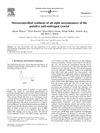
August 2004 in “Tetrahedron” In this study, all stereoisomers of cyoctol were synthesized and tested, revealing that contrary to initial patent claims, cyoctol does not function as an anti-androgen.
 July 2025 in “Pakistan Journal of Intensive Care Medicine”
 In this randomized controlled trial, researchers observed that topical clobetasol propionate 0.05% was significantly more effective than topical tacrolimus 0.1% for treating alopecia areata, with a higher treatment success rate of 74.2% versus 45.2%, suggesting clobetasol as a preferred first-line topical therapy.
 10 citations
,
May 2014 in “The Journal of Steroid Biochemistry and Molecular Biology”
10 citations
,
May 2014 in “The Journal of Steroid Biochemistry and Molecular Biology” This study found that altering neurosteroid levels during early development in male rats can influence KCC2 levels, underscoring the role of neurosteroids in hippocampal maturation.
April 2023 in “Journal of Investigative Dermatology” This review evaluates controlled studies on Platelet-Rich Plasma for androgenetic alopecia treatment, reporting positive effects on hair growth and density but highlighting the need for standardized protocols.
June 2025 in “Journal of Kufa for Chemical Sciences” This study found that in males with alopecia areata, adult patients had significantly higher levels of adrenaline and prolactin compared to healthy controls, suggesting these hormones may play roles in the condition's development.
 December 2024 in “Kahramanmaraş Sütçü İmam Üniversitesi Tıp Fakültesi Dergisi”
 This study found that switching patients with alopecia areata unresponsive to topical clobetasol 17 propionate 0.05% to anthralin treatment led to improved treatment success.
5 citations
,
May 1958 in “Archives of Dermatology” In his letter, the author reports that regular corticosteroid and corticotropin therapy was associated with hair growth and the return of pigment in patients with alopecia totalis.
 November 2023 in “Pakistan Journal of Health Sciences”
 This study found that clobetasol propionate 0.05% was significantly more effective in stimulating hair re-growth in alopecia areata patients compared to topical tacrolimus 0.1%, with an excellent response observed in 74.3% of the clobetasol group versus 40% in the tacrolimus group.
This study reported that transitioning dairy cows from a tie-stall to a free-stall barn significantly reduced carpal and hock lesions, but increased stress and heel horn erosions.
68 citations
,
May 1991 in “The Journal of clinical endocrinology and metabolism/Journal of clinical endocrinology & metabolism” This study found that both cyproterone acetate and spironolactone effectively reduced hair diameter and plasma testosterone levels in hirsute women, with no significant differences between the two treatments.
489 citations
,
June 2005 in “The FASEB Journal” This study found that human scalp hair follicles can respond to corticotropin releasing hormone stimulation similarly to the classical HPA axis, including up-regulating cortisol production and activating neuroendocrine feedback loops.
39 citations
,
January 1980 in “Dermatology” In this study, cyproterone acetate with ethinyl estradiol effectively treated acne, hirsutism, and alopecia in women, with the highest success in acne and rare side effects similar to estrogen contraceptives.
May 2026 in “Research Square”  August 2020 in “International Journal of Research in Dermatology”
 This report describes a 23-year-old male with Clouston’s syndrome, characterized by nail abnormalities, palmoplantar skin thickening, anodontia, and androgenic alopecia, highlighting the need for supportive management due to the lack of a definitive treatment.
 May 2026 in “Journal of Asia Pacific Aesthetic Sciences”
 This case report highlights significant hair regrowth in a Malaysian woman with localized alopecia areata after intralesional triamcinolone acetonide treatment at a concentration of 5 mg/mL.
January 2026 in “Endocrinology” 10 citations
,
August 1990 in “Journal of Steroid Biochemistry” High doses of cyclosporine A increase testosterone conversion, possibly boosting hair growth.
 May 2021 in “Journal of the Endocrine Society”
 This case report highlights the importance of timely biochemical and radiographic evaluation of adrenal masses, as illustrated by a rapidly progressing aggressive adrenal cortical carcinoma.