January 2026 in “Journal of Clinical Case Studies” This article discusses the potential of copper tripeptide (GHK-Cu) to support collagen synthesis and antioxidant activity in the context of androgenetic alopecia but reports no clinical results.
February 2026 in “Endokrynologia Polska” This report presents two cases of Berardinelli–Seip syndrome, emphasizing the role of genetic analysis and comprehensive care in managing the variability and complications of this rare condition.
 3 citations
,
January 2011 in “Intestinal Research”
3 citations
,
January 2011 in “Intestinal Research” This article reports on a patient case of Cronkhite-Canada syndrome, detailing symptoms and diagnostic findings, and reviews the syndrome's characteristics without presenting new clinical data.
 April 2018 in “Journal of Investigative Dermatology”
 In this study, researchers identified CENPV as a new CYLD interacting partner that localizes to primary cilia and regulates acetylated tubulin levels, offering insights into the pathogenesis of skin appendage tumors.
September 2025 in “Genes & Diseases” This study explores the role of Lgr6+ cells in tissue development and repair across different organs and associates abnormal Lgr6 expression with major diseases, including tumors, noting its potential as a therapeutic target for cancer and other conditions.
 April 2018 in “Journal of Investigative Dermatology”
 This study found that treating human dermal fibroblast cells with ginsenoside Rd increased the expression of mRNA associated with the dermal-epidermal junction, suggesting potential as an anti-aging cosmetic ingredient.
 May 2024 in “Animal genetics”
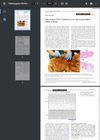
 The researchers investigated a Maine Coon cat with suspected classical Ehlers-Danlos Syndrome and discovered a heterozygous deletion in the COL5A1 gene, underscoring the value of whole-genome sequencing for precise veterinary diagnostics.
This study found that GNAQQ209L expression in mouse melanocytes led to reduced survival in the interfollicular epidermis due to paracrine signaling, while GNAQQ209L boosted survival in a different microenvironment.
 November 2022 in “Journal of Investigative Dermatology”
 This study explores the role of cell competition in maintaining genomic quality in epidermal stem cells and proposes that this process might influence cancer development in skin tissues.
 3 citations
,
January 2017 in “Evidence-based complementary and alternative medicine”
3 citations
,
January 2017 in “Evidence-based complementary and alternative medicine” This study found that Galla chinensis solution significantly improved skin lesions and fungal eradication in dermatophytosis-infected dogs, showing over 85% efficacy in fungal removal after 14 days and outperforming the positive control treatment.
 97 citations
,
March 2002 in “Molecular and cellular biology”
97 citations
,
March 2002 in “Molecular and cellular biology” This study found that mice with a mutant CDP/Cux protein lacking the homeodomain showed severely impaired growth, high postnatal mortality, and reduced fertility, highlighting CDP/Cux's role in developmental regulation.
April 2011 in “Reactions Weekly”  21 citations
,
September 1979 in “Archives of Otolaryngology-head & Neck Surgery”
21 citations
,
September 1979 in “Archives of Otolaryngology-head & Neck Surgery” This article reviews the use of the Juri procedure for transferring hair to bald scalps, achieving satisfactory cosmetic results in all patients over two years, but reports no new clinical findings.
 December 2022 in “International Journal of Research in Dermatology”
 This pilot study found that growth factor concentrate therapy improved hair growth in patients with androgenetic alopecia, was well tolerated, and achieved high patient satisfaction.
 September 2022 in “Hair transplant forum international”
 This article introduces the coeditor of the current edition of Forum but provides no new research findings.
 March 2024 in “Journal of Society of Cosmetic Chemists of Japan”
 In this study, a medicated hair growth tonic containing RJ extract increased hair counts, the proportion of anagen phase hairs, and scalp moisture in human trials, although the specific role of RJ in hair growth remains unclear due to other active ingredients.
 January 2024 in “Indian Journal of Plastic Surgery/Indian journal of plastic surgery”
 This case report describes a flap advancement technique following skin expansion as a successful method to address primary essential cutis verticis gyrata, preserving hair growth and improving cosmetic outcomes.
3 citations
,
April 2018 in “Journal of Investigative Dermatology” CCCA may be a fibroproliferative disorder, and anti-fibrotic therapies could help.
 1 citations
,
November 2020 in “Dermatologic Surgery”
1 citations
,
November 2020 in “Dermatologic Surgery” Using combined hair restoration methods can effectively treat severe scalp wrinkling.
 1 citations
,
April 2021 in “Journal of the Korean Society of Cosmetology”
1 citations
,
April 2021 in “Journal of the Korean Society of Cosmetology” This study observed that consuming 50g of cheonggukjang daily for 3 months improved eyebrow length, thickness, and reduced damage in middle-aged women compared to controls, although the number of eyebrows did not change.
 January 2012 in “Journal of Investigative Dermatology”
 Some Greek melanoma patients have gene mutations linked to increased cancer risk, a new color feature helps diagnose melanoma, the incidence of a skin condition in the Netherlands is rare, and a gene possibly affects male-pattern baldness.
 October 2023 in “Al-Kauniyah”
 In this study of gibbons at the Tegal Alur Animal Rescue Center, researchers found that while the feeding schedule met natural requirements, the gibbons' body weights were lower compared to their counterparts in the wild, and some exhibited hair loss and depigmentation.
1 citations
,
November 2013 This study identified hypogonadism in 65% of men with Cushing syndrome, suggesting glucocorticoid excess may affect the hypothalamic-pituitary level or testosterone metabolism.
 1 citations
,
July 2024 in “Indian Journal of Case Reports”
1 citations
,
July 2024 in “Indian Journal of Case Reports” This article presents a case study of a 16-year-old male with GAPO syndrome, characterized by growth retardation, alopecia, pseudoanodontia, and optic atrophy, who sought dental treatment for missing teeth.
 104 citations
,
October 2016 in “PLoS ONE”
104 citations
,
October 2016 in “PLoS ONE” This study found that CRISPR/Cas9-mediated disruption of the FGF5 gene in goats increased hair follicle numbers and fiber length, suggesting more cashmere production could be achieved.
 1 citations
,
November 2023 in “Indian Dermatology Online Journal”
1 citations
,
November 2023 in “Indian Dermatology Online Journal” In a rare case described by this source, a woman in her thirties was diagnosed with primary essential cutis verticis gyrata, a condition marked by thick scalp folds, after secondary causes were ruled out through clinical evaluations and biopsy.
9 citations
,
January 2021 in “Mediators of Inflammation” In this study, 15d-PGJ2 administered in a topical cream inhibited oxidative and inflammatory skin changes caused by UVB radiation in hairless mice, suggesting it as a promising treatment approach.
6 citations
,
January 2022 in “BIO-PROTOCOL” This article provides a protocol for live imaging of C. elegans germline stem cells, highlighting their potential for studying mitosis and other cell processes, but does not report new experimental findings.
9 citations
,
January 2014 in “Molecular Genetics and Metabolism Reports” This study discovered that a specific G to C mutation in the ornithine aminotransferase gene is linked to the retarded hair growth phenotype in mice and may serve as a model for human gyrate atrophy.
In this phase I study, CG2001, a topical foam combining minoxidil and finasteride, was found to be safe and well-tolerated in Chinese males with androgenetic alopecia, showing significantly reduced systemic finasteride exposure compared to oral administration, potentially reducing related side effects.