9 citations
,
January 2015 in “Medical hypotheses” This report suggests that TCDD may alter human epidermal stem cell populations by upregulating c-Myc, potentially leading to increased stem cell turnover during chloracne development.
October 2024 in “Journal of Cosmetic Dermatology” This study found that downregulating miR-30a-5p levels inhibits apoptosis and promotes proliferation in hair follicle stem cells, which is associated with the activation of the Wnt/β-catenin signaling pathway.
 10 citations
,
May 2012 in “Journal of Craniofacial Surgery”
10 citations
,
May 2012 in “Journal of Craniofacial Surgery” This case report describes a successful frontal region reconstruction using Cerament for a 50-year-old man, resulting in satisfactory forehead morphology and improved appearance four years post-surgery.
83 citations
,
May 2011 in “European Journal of Dermatology” This review discusses the role of corneodesmosin in skin and hair follicle integrity, with mentions of its link to hypotrichosis simplex and peeling skin disease, and reports no new results.
This study introduced the C-CAT, a new assessment tool for central centrifugal cicatricial alopecia, and found that established treatments improved symptoms in most patients over six months.
July 2024 in “Journal of Investigative Dermatology” A new test helps find drugs to treat head and neck cancer by targeting c-Rel.
December 2021 in “Morphologia” This article reviews the characteristics and therapeutic potential of neural crest cells from various sources, including embryonic and mature stem cells, but reports no new experimental results.
 October 2024 in “Journal of the Endocrine Society”
 This study examined uncharacterized CYP21A2 gene variants related to non-classic congenital adrenal hyperplasia and found that several mutations reduce enzyme activity, which may help improve diagnostic and treatment strategies.
 40 citations
,
March 2019 in “Nature Communications”
40 citations
,
March 2019 in “Nature Communications” This study found that deleting Stim1 and Stim2 in mature T regulatory cells disrupts Ca 2+ signaling, preventing their differentiation and leading to severe autoimmune disorders in mice.
 1 citations
,
April 2022 in “The Journal of Family Practice”
1 citations
,
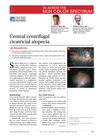
April 2022 in “The Journal of Family Practice” This report describes early and late stages of central centrifugal cicatricial alopecia in two Black women, highlighting progression from a small to a large central patch of hair loss.
 June 2026 in “International Journal of Innovative Technologies in Social Science”
 This source describes clascoterone, a new topical treatment for acne vulgaris that blocks androgen receptors to reduce sebaceous gland activity and inflammation, offering a lower risk of systemic side effects compared to oral treatments.
 January 2025 in “bioRxiv (Cold Spring Harbor Laboratory)”
 This study identifies Armadillo Repeat Only proteins as crucial regulators of plant CNGC channels, influencing various plant functions and showcasing a unique plant-specific role in Ca2+ signaling.
 7 citations
,
January 2023 in “Frontiers in cell and developmental biology”
7 citations
,
January 2023 in “Frontiers in cell and developmental biology” This study found that Celsr1, not Celsr2, is the primary protein involved in establishing planar cell polarity and hair follicle polarization in the epidermis of mice.
32 citations
,
August 2016 in “Science Signaling” This study developed PiSCES biosignatures that distinguished alopecia areata patients from controls, revealing enhanced basal TCR signaling and a potential disease-specific signaling network signature.
4 citations
,
July 2022 in “Clinical Cosmetic and Investigational Dermatology” This review discusses the clinical trials of clascoterone 1% cream for acne vulgaris and reports no new results; the authors highlight its novel role as a topical antiandrogen.
 4 citations
,
February 2019 in “PubMed”
4 citations
,
February 2019 in “PubMed” This study found that cortexolone 17α-propionate (clascoterone) effectively inhibited androgen receptor-regulated transcription and IL-6 synthesis in scalp cells, potentially making it a promising candidate for topical treatment of androgenetic alopecia.
 72 citations
,
July 2008 in “Dermatologic Therapy”
72 citations
,
July 2008 in “Dermatologic Therapy” This article reviews central centrifugal cicatricial alopecia in African-descent females, discussing possible causes, associated styling habits, and potential treatments, but reports no new clinical findings; the authors call for further research.
2 citations
,
May 2020 in “Journal of the American Academy of Dermatology” Hair shaft changes may be linked to CCCA, but their role is unclear.
 July 2023 in “British journal of dermatology/British journal of dermatology, Supplement”
 In this study, researchers analyzed skin tumors from patients with CYLD cutaneous syndrome and found that loss of CYLD function is linked to changes in cellular signaling pathways, particularly NF-κB signaling, and leads to increased secretion of specific extracellular matrix proteins.

Men with CCCA often face delayed diagnosis and severe hair loss, highlighting the need for earlier recognition and treatment.
August 2026 in “Acta Dermato Venereologica” This study found that women with central centrifugal cicatricial alopecia had a substantial prevalence of systemic comorbidities, including strong associations with dyslipidemia, uterine leiomyomas, and anxiety disorders.
70 citations
,
December 2008 in “Cancer Research” This study found that activating CXCR2 on ras-transformed keratinocytes promotes migration and tumor development in a mouse skin model.
May 2025 in “International Journal of Women’s Dermatology” This study found that patients with central centrifugal cicatricial alopecia were less likely to report treatment improvement and more commonly associated with certain hairstyling practices compared to those with other scarring alopecias.
January 2009 in “Epsilon: Revista de la Sociedad Andaluza de Educación Matemática "Thales"” This report describes a Cronkhite-Canada syndrome patient with severe sepsis and disseminated intravascular coagulation successfully treated using combined therapies, including recombinant human soluble thrombomodulin.
 November 2022 in “The Caucasus”
 This article explores theoretical and methodological aspects of crisis management in industrial enterprises and emphasizes the importance of rapid response systems to effectively handle crises.
 September 2024 in “Portuguese Journal of Dermatology and Venereology”
 This review discusses central centrifugal cicatricial alopecia, its similarities to lichen planopilaris, and emphasizes the need for further research due to its underdiagnosis and impact on African-descended women.
 15 citations
,
November 2012 in “International Journal of Dermatology”
15 citations
,
November 2012 in “International Journal of Dermatology” This case series observed a potential familial link in central centrifugal cicatricial alopecia (CCCA), suggesting a genetic predisposition that may be worsened by hair grooming practices.
 64 citations
,
June 2014 in “Journal of The American Academy of Dermatology”
64 citations
,
June 2014 in “Journal of The American Academy of Dermatology” This study found that a peripilar white gray halo around hair emergence is a highly specific and sensitive dermatoscopic feature for diagnosing central centrifugal cicatricial alopecia in African American patients with mild central thinning.
30 citations
,
January 2024 in “Frontiers in Pharmacology” This study identified common and previously unlisted adverse events associated with four anti-CGRP monoclonal antibodies for migraine prevention, highlighting a varied safety profile post-marketing.
September 2019 in “Journal of Investigative Dermatology” CCCA in women of African ancestry may be caused by PADI3 gene mutations and intense hair grooming.