 October 2024 in “International Journal For Multidisciplinary Research”
 This review highlights that Wedelolactone, a compound in Eclipta prostrata, appears to be a potent antioxidant and selective modulator of proteins linked to chronic diseases, suggesting further research into its pharmacological effects is warranted according to the examined data.
8 citations
,
January 2025 in “Gels” This study developed cilostazol-loaded formulations for nose-to-brain delivery, finding that these formulations improved cilostazol's bioavailability by enhancing solubility, absorption, and permeability, achieving nearly 100% drug release in vitro within 2 hours.
 11 citations
,
May 2015 in “Stem Cells Translational Medicine”
11 citations
,
May 2015 in “Stem Cells Translational Medicine” This study found that megestrol acetate increases the proliferation, migration, and adipogenic differentiation of adipose-derived stem cells through glucocorticoid receptor phosphorylation.
9 citations
,
November 1980 in “Geburtshilfe und Frauenheilkunde” In this study, prolonged intravenous Fenoterol infusion was associated with intensive hair growth in most patients, although hormonal changes typically linked to such effects were not observed.
 May 2024 in “Journal of Agricultural and Food Chemistry”
 In a study using mice, researchers observed that Cacumen platycladi fermented with Lactiplantibacillus plantarum CCFM1348—both as postbiotics and synbiotics—promoted hair growth, potentially by engaging the Wnt/β-catenin signaling pathway and enhancing growth factor expression.
January 2022 in “Zenodo (CERN European Organization for Nuclear Research)” This review discusses the various traditional uses and reported bioactivities of Eclipta prostrata but does not present new research findings.
 5 citations
,
May 2020 in “Clinical and Experimental Dermatology”
5 citations
,
May 2020 in “Clinical and Experimental Dermatology” This correspondence discusses clascoterone as a potential new treatment for androgenetic alopecia but reports no clinical results.
 25 citations
,
November 2015 in “Journal of Ethnopharmacology”
25 citations
,
November 2015 in “Journal of Ethnopharmacology” This study found that Cacumen platycladi extract significantly promoted hair growth and reduced dihydrotestosterone levels by inhibiting 5α-reductase activity in an androgen-sensitive mouse model.
 1 citations
,
September 2025 in “International Journal of Drug Delivery Technology”
1 citations
,
September 2025 in “International Journal of Drug Delivery Technology” This randomized controlled study reported that combining Ecklonia cava with Diane-35 significantly improved weight, waist circumference, hormonal balance, and inflammation markers in women with polycystic ovary syndrome over three months compared to Diane-35 alone.
 34 citations
,
May 2012 in “International Journal of Molecular Sciences”
34 citations
,
May 2012 in “International Journal of Molecular Sciences” This study found that Ecklonia cava enzymatic extract, particularly its component dieckol, promoted hair growth by increasing dermal papilla cell proliferation and inhibiting 5α-reductase activity in cultured vibrissa follicles and C57BL/6 mice.
 December 2025 in “Scientific Reports”
 In this study, cedrol was found to reduce lipid accumulation in the liver and adipose tissues of dexamethasone-treated mice by antagonizing glucocorticoid receptors, suggesting its potential utility in treating dexamethasone-induced lipid metabolism disorders.
4 citations
,
July 2022 in “Clinical Cosmetic and Investigational Dermatology” This review discusses the clinical trials of clascoterone 1% cream for acne vulgaris and reports no new results; the authors highlight its novel role as a topical antiandrogen.
61 citations
,
September 1970 in “Journal of the American Geriatrics Society” In this study, anabolic and catatoxic steroids were reported to prevent weight loss, tissue calcification, and cardiac necrosis in a rat model of disturbed calcium metabolism and progeria-like syndrome.
 33 citations
,
January 2009 in “Contraception”
33 citations
,
January 2009 in “Contraception” This review summarizes the use of chlormadinone acetate for hormone replacement therapy and contraception, highlighting its anti-androgenic effects, contraceptive efficacy, and clinical tolerability, without offering new clinical results.
 1 citations
,
April 2006 in “International Journal of Oncology”
1 citations
,
April 2006 in “International Journal of Oncology” In this study, lysocellin induced G1 phase arrest in human osteosarcoma cells, but diminished the cytotoxic efficacy of etoposide, while its derivative alopestatin may reduce etoposide-induced alopecia in a rat model.
78 citations
,
October 2003 in “Cochrane library” This review found that adding cyproterone acetate to estradiol showed a subjective improvement in hirsutism versus placebo, but comparisons with other therapies revealed no clinical differences.
January 2011 in “Reactions Weekly” 27 citations
,
October 2020 in “Drugs” This article reviews the development milestones of clascoterone up to its first approval for treating acne vulgaris, reporting no new clinical results for androgenetic alopecia.
 5 citations
,
December 2011 in “Drug Research”
5 citations
,
December 2011 in “Drug Research” This study found that cortexolone 17α-propionate showed strong topical antiandrogenic activity, outperforming progesterone and several known antiandrogens, but lacked systemic antiandrogenic effects in animal models.
 21 citations
,
November 2021 in “Biomolecules”
21 citations
,
November 2021 in “Biomolecules” This review compiles information on traditional uses, phytoconstituents, and biological activities of Eclipta prostrata but reports no new experimental results; the authors call for more studies to understand its pharmacological mechanisms.
 March 2014 in “Journal of The American Academy of Dermatology”
 Cortexolone 17a-propionate may be an effective new treatment for hair loss.
 3 citations
,
August 2019 in “Journal of The American Academy of Dermatology”
3 citations
,
August 2019 in “Journal of The American Academy of Dermatology” Clascoterone safely promotes hair growth similar to minoxidil.

In this study, researchers identified an elite germplasm of the medicinal plant Eclipta alba, known for its liver disease benefits, with higher growth, yield, and wedelolactone content, suitable for large-scale cultivation to reduce strain on wild populations.
 27 citations
,
September 2015 in “PharmaNutrition”
27 citations
,
September 2015 in “PharmaNutrition” This article discusses various potential health benefits and increasing global interest in astaxanthin but presents no new clinical results, though ongoing trials are exploring its effects on chronic diseases and other conditions.
 6 citations
,
May 2018 in “Plant Cell, Tissue and Organ Culture (PCTOC)”
6 citations
,
May 2018 in “Plant Cell, Tissue and Organ Culture (PCTOC)” This study found that adjusting plant growth conditions, such as the use of elicitors like yeast extract and methyl jasmonate, increased wedelolactone production in Eclipta alba cell suspension culture.
9 citations
,
April 1970 in “Biochemical pharmacology” This study found that stilbamidine and hydroxystilbamidine can inhibit the release of specific enzymes from lysosomes and mitochondria in rabbit liver at certain concentrations, with effects similar to cortisol and chloroquine.
 22 citations
,
February 2002 in “Planta Medica”
22 citations
,
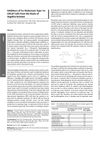
February 2002 in “Planta Medica” In this study, osthenol was identified as a highly potent inhibitor of 5alpha-reductase type I in LNCaP cells, significantly outperforming finasteride.
 July 1994 in “Annals of Pharmacotherapy”
 Cromolyn sodium's effectiveness for treating asthma in children under 2 is unclear, possibly more beneficial for older children, and further research is needed.
1 citations
,
May 2017 in “Journal of Clinical Oncology” This study found that applying BPM 31543 twice daily was safe, well-tolerated, and showed signs of reducing chemotherapy-induced alopecia in women receiving taxane-based chemotherapy.
1 citations
,
December 2011 in “Arzneimittelforschung” This study found that the compound 9,11-dehydrocortexolone 17alpha-butyrate (CB-03-04) showed strong local antiandrogenic activity in animal models, suggesting potential for treating prostate conditions.