Inhibitors of 5α-Reductase Type I in LNCaP Cells from the Roots of Angelica Koreana

    February 2002 in “ Planta Medica
    Eun‐Kyoung Seo, Kyeong Ho Kim, Min Ki Kim, Myung‐Haing Cho, Eun Wha Choi, Ki Nam Kim, Woongchon Mar
    Image of study
    TLDR Compounds from Angelica koreana roots, especially osthenol, could be effective for treating conditions like prostate disease and hair loss.
    In a study from 2002, researchers isolated two compounds, osthenol and bisabolangelone, from the roots of Angelica koreana that demonstrated inhibitory effects on 5α-reductase type I in LNCaP cells, a human prostatic cancer cell line. Osthenol was found to be significantly potent with an IC50 value of 0.1 µg/ml, making it about 200 times more effective than the positive control, finasteride, which had an IC50 of 19.8 µg/ml. Bisabolangelone also showed inhibitory activity with an IC50 of 11.6 µg/ml. Four other compounds were tested but were inactive. The study concluded that these compounds, particularly osthenol, could be promising for developing new treatments for conditions related to excessive dihydrotestosterone (DHT) production, such as prostate diseases and male pattern hair loss, and their effects were not due to cytotoxicity.
    Discuss this study in the Community →

    Related Community Posts Join

    6 / 182 results

      community Why does it seem everyone favors finasteride over dutasteride?

      in Female  62 upvotes 1 year ago
      The conversation discusses preferences for hair loss treatments, specifically finasteride over dutasteride. Users share personal experiences, cost considerations, FDA approval status, and potential side effects, with some switching between treatments to find what works best for them.
      FCE 28260: A Forgotten 5α-Reductase Inhibitor

      community FCE 28260: A Forgotten 5α-Reductase Inhibitor

      by nkrata in Research  330 upvotes 1 year ago
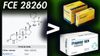
      FCE 28260 (PNU 156765), an under-explored 5α-reductase inhibitor, showcases promising results in research by Giudici et al., outperforming well-known treatments like Finasteride in reducing the conversion of testosterone to DHT. Its superior efficacy, demonstrated through lower IC50 values in both natural and human recombinant enzyme studies, suggests it could offer more effective management of DHT-related conditions. Additionally, its lower molecular weight hints at better potential for topical application, potentially offering advantages in treating conditions such as androgenic alopecia. Despite its potential, it has not advanced in development, possibly due to financial limitations, leaving its therapeutic prospects and side effect profile largely unexplored.

    Related Research

    3 / 3 results