 January 2023 in “Biocell”
 The study found that safflower extract may help protect human follicle dermal papilla cells from cisplatin-induced damage, suggesting its potential as an adjuvant in chemotherapy to mitigate hair follicle cell damage.
 August 2025 in “Tropical Journal of Natural Product Research”
 This study found that mint leaf and Aloe vera serum together significantly reduced CDK1 expression, which may help prevent chemotherapy-induced alopecia in rats, although only mint serum alone reduced CDC25 expression.
 7 citations
,
June 2022 in “Frontiers in Veterinary Science”
7 citations
,
June 2022 in “Frontiers in Veterinary Science” In this study, researchers identified ten key genes involved in the periodic development of hair follicles in cashmere goats, highlighting the importance of the Wnt signaling pathway and cell cycle in this process.
 92 citations
,
December 2016 in “Scientific Reports”
92 citations
,
December 2016 in “Scientific Reports” This study identified genomic regions and candidate genes that may contribute to phenotypic diversity in coat color, body size, cashmere traits, and high-altitude adaptation in domesticated goat breeds.
 January 2025 in “Cell Communication and Signaling”
 This study reviews the role of the zinc finger protein CXXC5 in cellular signaling and its implications for cancer, discussing how its dysregulation is linked to various physiological and pathological processes, as well as potential therapies targeting CXXC5.
 April 2018 in “Journal of Investigative Dermatology”
 In this study, researchers identified CENPV as a new CYLD interacting partner that localizes to primary cilia and regulates acetylated tubulin levels, offering insights into the pathogenesis of skin appendage tumors.
 28 citations
,
November 2018 in “Journal of Cellular and Molecular Medicine”
28 citations
,
November 2018 in “Journal of Cellular and Molecular Medicine” This review discusses the role of the CXXC5 protein as a transcription factor and signaling coordinator, noting its involvement in embryonic development, tissue homeostasis, and diseases such as tumorigenesis, but reports no new experimental findings.
33 citations
,
August 2000 in “Experimental Cell Research”  August 2012 in “Nature Cell Biology”
 In this study, researchers found that β-catenin directly promotes TERT expression in stem and cancer cells by interacting with the Tert promoter, illustrating a mechanistic link between tumorigenesis and pluripotency.
 759 citations
,
February 2009 in “Current Biology”
759 citations
,
February 2009 in “Current Biology” This review summarizes fundamental concepts and recent advancements in hair follicle biology, including insights from mouse models into broader molecular and cellular processes relevant to regeneration and development.
 191 citations
,
September 2011 in “Cell stem cell”
191 citations
,
September 2011 in “Cell stem cell” This study found that polycomb-group-mediated repression plays a key role in regulating hair follicle stem cell states and lineage progression by distinct mechanisms in adult mouse skin.
 187 citations
,
April 2019 in “npj Regenerative Medicine”
187 citations
,
April 2019 in “npj Regenerative Medicine” This study found that hMSC secretomes from umbilical cord Wharton's jelly had the most potent angiogenic effects, whereas those from adipose tissue demonstrated the weakest angiogenic potential.
 165 citations
,
June 2007 in “European Journal of Cell Biology”
165 citations
,
June 2007 in “European Journal of Cell Biology” This review discusses the various stem cell populations associated with hair follicles and their potential in regenerative medicine, highlighting differences between murine and human hair follicles but reports no new clinical results.
 77 citations
,
July 2020 in “Cell”
77 citations
,
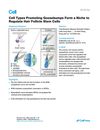
July 2020 in “Cell” This study found that sympathetic nerves and arrector pili muscles form a niche that modulates hair follicle stem cell activity, revealing their role in hair follicle regeneration.
 76 citations
,
August 2018 in “International Journal of Cosmetic Science”
76 citations
,
August 2018 in “International Journal of Cosmetic Science” This review discusses the use of Dermal Papilla cells as in vitro models for studying hair growth modulators, emphasizing their role in aiding the development of new hair treatments, but reports no new clinical results.
 76 citations
,
June 2018 in “EMBO Reports”
76 citations
,
June 2018 in “EMBO Reports” This study demonstrates that YAP and TAZ are essential for initiating basal and squamous cell carcinomas in mice, and suggests targeting these pathways could be beneficial for treating skin cancers.
 75 citations
,
June 2019 in “International Journal of Molecular Sciences”
75 citations
,
June 2019 in “International Journal of Molecular Sciences” This review discusses the therapeutic potential of costunolide for various diseases, highlighting its bioactivity and mechanisms, but it reports no new experimental results.
 56 citations
,
May 2017 in “Nature Cell Biology”
56 citations
,
May 2017 in “Nature Cell Biology” Hair can regrow after certain stem cells are lost because other stem cells can take over their role.
 50 citations
,
February 2018 in “Biomedicine & pharmacotherapy”
50 citations
,
February 2018 in “Biomedicine & pharmacotherapy” This review discusses the anticancer properties of ginseng, including its potential to alleviate chemotherapy side effects, and calls for more research on its mechanisms of action in various cancers.
 43 citations
,
February 2020 in “Clinica chimica acta”
43 citations
,
February 2020 in “Clinica chimica acta” This review discusses the role of phytochemical nanoparticles in cervical cancer therapy and reports no new clinical results; the authors highlight their potential advantages over conventional chemotherapy.
 24 citations
,
October 2022 in “Revista Brasileira de Farmacognosia”
24 citations
,
October 2022 in “Revista Brasileira de Farmacognosia” This review discusses the pharmacological actions of mangiferin and the potential of delivery carriers to overcome its limitations, but reports no new clinical results.
 20 citations
,
September 2010 in “Cell Cycle”
20 citations
,
September 2010 in “Cell Cycle” This study reports that in MRL mice, loss of p53 does not impair ear regeneration, suggesting p21's potential role in this process may involve the Tgfb/Smad pathway.
 19 citations
,
September 2019 in “EMBO molecular medicine”
19 citations
,
September 2019 in “EMBO molecular medicine” This study found that deletion of c-Jun and JunB in mouse bulge hair follicle stem cells was sufficient to trigger psoriasis-like skin disease through thymic stromal lymphopoietin signaling.
 19 citations
,
July 2018 in “Medicines”
19 citations
,
July 2018 in “Medicines” This review highlights the pharmaceutical potential of secondary metabolites from Juniperus species, noting promising antitumor, antibacterial, and antiviral activities, but reports no new experimental findings.
 16 citations
,
December 2016 in “Molecular Medicine Reports”
16 citations
,
December 2016 in “Molecular Medicine Reports” This study found that platelet-rich plasma may influence the proliferation of human hair dermal papilla cells by affecting gene expression related to the cell cycle.
 11 citations
,
August 2024 in “Nature Communications”
11 citations
,
August 2024 in “Nature Communications” In this study, researchers observed that quiescent mouse embryonic fibroblasts showed reduced glycolysis but increased TCA cycle flux and mitochondrial respiration, with these changes linked to metabolic reprogramming involving yes-associated protein inhibition and malate cycle modulation, which supports extracellular matrix protein synthesis.
 6 citations
,
October 2017
6 citations
,
October 2017 This review summarizes the antioxidant and anticarcinogenic properties of Indian Gooseberry, its phytochemical composition, and its use in traditional Ayurvedic medicine, but reports no new clinical results.
 5 citations
,
January 2021 in “iScience”
5 citations
,
January 2021 in “iScience” Using a combination of specific cell cycle regulators is better for safely keeping hair root cells alive indefinitely compared to cancer-related methods.
 1 citations
,
May 2025 in “Discover Chemistry.”
1 citations
,
May 2025 in “Discover Chemistry.” This review highlights that although mangiferin, a polyphenol from the mango tree, faces challenges like low solubility and bioavailability, delivery vehicles such as nanoparticles and complexes have the potential to enhance its therapeutic effectiveness in treating various diseases.
 1 citations
,
January 2021
1 citations
,
January 2021 In this study, CD4+ non-haematopoietic, skin-resident stem cell-like populations were identified in both murine and human epidermis, suggesting they may serve as potential basal cell carcinoma precursors.