9 citations
,
July 2007 in “Journal of Investigative Dermatology” This study found that exposure to 12-O-tetradecanoyl-phorbol-13-acetate in mouse skin caused changes in claudin expression and localization, indicating disruption and eventual recovery of the epidermal barrier.
December 2021 in “Figshare” This study found that BBS7 downregulation in occlusal hypofunctional periodontal ligament tissue is associated with reduced Sonic hedgehog signaling activity, potentially playing a key role in maintaining PDL homeostasis.
3 citations
,
June 2018 in “Internal Medicine” In this study, a patient with Cronkhite-Canada syndrome complicated by severe sepsis and disseminated intravascular coagulation was successfully treated using combined therapies, including recombinant human soluble thrombomodulin, despite the absence of a standard treatment regimen for CCS.
 March 2026 in “Pharmaceuticals”
 This study establishes a robust analytical method using mass spectrometry to comprehensively identify 170 chemical compounds in Xiaoban Kangfu capsules for enhanced quality control.
 8 citations
,
October 2019 in “Dermatologic Therapy”
8 citations
,
October 2019 in “Dermatologic Therapy” This source explores the potential use of oral bicalutamide for treating female pattern hair loss, but specific results or outcomes from the study are not reported in the abstract.
 2 citations
,
March 2024 in “Supportive Care in Cancer”
2 citations
,
March 2024 in “Supportive Care in Cancer” In this study, manual cold capping was found to be effective in minimizing chemotherapy-induced alopecia, with 92.1% of patients retaining 50% or more of their hair, although effectiveness varied with different chemotherapy regimens.
 February 2025 in “PubMed”
 In this study, researchers evaluated CS12192, a selective JAK3 inhibitor, in an alopecia areata mouse model and found it reversed hair growth inhibition comparably to baricitinib, with better safety and similar immune-modulating mechanisms.
 January 2025 in “Clinical Cosmetic and Investigational Dermatology”
 This case series involving 10 patients treated with clascoterone cream 1% for acne vulgaris found it effective and well-tolerated, regardless of severity, age, gender, or ethnicity, and noted additional benefits for related skin conditions.
 April 2017 in “Journal of Investigative Dermatology”
 In this study, CTCF was found to play essential roles in epidermal differentiation and skin barrier formation, simultaneously acting as a suppressor of epithelial inflammatory responses in mouse skin.
March 2018 in “Chin J Reprod Contracep” This review outlines chlormadinone acetate's contraceptive and non-contraceptive applications but reports no new clinical findings, emphasizing its potential in treating dysmenorrhea and androgen-related conditions.
2 citations
,
October 2022 in “Dermatologic Therapy” Results are not reported in this article by Zizhuo Li et al. on baricitinib as a treatment for lichen planopilaris.
24 citations
,
December 2011 in “International Journal of Cancer” This study found that the collagen-binding fusion protein PTH-CBD significantly improved hair regrowth and follicle health in mice after chemotherapy, suggesting potential as a therapy for chemotherapy-induced alopecia.
8 citations
,
August 1987 in “The Journal of Dermatology” This study reports that the monoclonal antibody BKN-1 specifically stained basal cell epithelioma cells and certain normal skin structures, indicating a similarity in keratin expression between the tumor and follicular epithelium below the isthmus portion.
May 2019 in “Journal of clinical oncology” This Phase 1 study reported that topical application of BPM31543 was safe and well-tolerated in patients receiving taxane-based chemotherapy, with some experiencing less than 50% hair loss, suggesting potential efficacy in reducing chemotherapy-induced alopecia, although no maximum tolerated dose was identified.

CaBP1 and 2 are important for maintaining the activity of calcium channels necessary for hearing in inner ear cells.
124 citations
,
January 2012 in “Journal of Allergy and Clinical Immunology” This study found that activation of cannabinoid 1 receptors in human scalp hair follicles may limit excessive mast cell activation and maturation, suggesting a potential therapeutic strategy for managing MC-dependent skin diseases.
4350 citations
,
May 2012 in “Arthritis & Rheumatism” This study found that the new SLICC classification criteria for systemic lupus erythematosus were more sensitive and resulted in fewer misclassifications than the current ACR criteria, although they had lower specificity.
 107 citations
,
December 2003 in “Dermatologic Therapy”
107 citations
,
December 2003 in “Dermatologic Therapy” This paper reviews the use of interferons, particularly alfa interferon, in treating cutaneous T-cell lymphoma, noting its substantial efficacy both alone and in combination therapies with predictable, generally well-tolerated side effects.
63 citations
,
April 2005 in “Mechanisms of development” This study found that heterozygous mice overexpressing Claudin-6 experienced alterations in epidermal and hair follicle differentiation, leading to distinctive coat characteristics and a disrupted epidermal permeability barrier.
 4 citations
,
March 2013 in “InTech eBooks”
4 citations
,
March 2013 in “InTech eBooks” Confocal Laser Scanning Microscopy (CLSM) is a useful tool for studying how drugs interact with skin and diagnosing skin disorders, despite some limitations.
 23 citations
,
January 2018 in “International Journal of Molecular Medicine”
23 citations
,
January 2018 in “International Journal of Molecular Medicine” This study reported that baicalin activates the Wnt/β-catenin signaling pathway in mouse hair follicles, suggesting its potential as a topical treatment for hair loss.
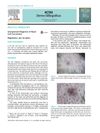 May 2015 in “Actas Dermo-Sifiliográficas”
 A young man was unexpectedly diagnosed with basal cell carcinoma after a scalp examination and confocal microscopy.
1 citations
,
December 2020 in “International journal of molecular sciences” This study suggests that biallelic loss of the Hedgehog signaling repressor Patched alone in Keratin 5+ epidermal cells is insufficient to drive basal cell carcinoma development unless exogenous stimuli trigger accumulation of BCC precursor cells.
August 2002 in “British journal of ophthalmology” This article reports that while surgical excision is often the best treatment for SCC, intralesional cidofovir also showed success without systemic toxicity in the case discussed.
4 citations
,
October 2021 in “International Journal of Cosmetic Science” This study found that C. japonicum flower extract significantly increased melanin content and cellular activity in human melanocytes and may improve follicular depigmentation and vitiligo through cAMP signaling.
 5 citations
,
December 2011 in “Drug Research”
5 citations
,
December 2011 in “Drug Research” This study found that cortexolone 17α-propionate showed strong topical antiandrogenic activity, outperforming progesterone and several known antiandrogens, but lacked systemic antiandrogenic effects in animal models.

In this study, bicalutamide at low doses was not linked to significant liver enzyme changes compared to other androgen-blocking treatments in transfeminine adolescents and young adults, suggesting its safety with careful monitoring for this population over one year.
 44 citations
,
November 2009 in “Archives of Dermatology”
44 citations
,
November 2009 in “Archives of Dermatology” This study observed that patients with CYLD mutations frequently experienced severe, painful tumors beyond the head and neck, impacting their quality of life, with hormonal factors possibly contributing to tumor development.
 October 2024 in “Medicine”
 In this case report, a 72-year-old female with Cronkhite-Canada syndrome showed significant improvement in symptoms and gastrointestinal polyps after hormone therapy and additional treatment.
January 2026 in “Journal of Ethnopharmacology” Cedrol promotes hair growth better than baricitinib by regulating immune cells.