 6 citations
,
September 2009 in “European journal of histochemistry”
6 citations
,
September 2009 in “European journal of histochemistry” This study found that CD90+ stem cells with fibroblast-like morphology are present in the lower part of the anagen hair follicle in dogs.
23 citations
,
August 1987 in “PubMed” In this study, a 7-year-old male ferret was diagnosed with hyperadrenocorticism complicated by dilatative cardiomyopathy, chronic active hepatitis, and renal disease, following symptoms including progressive hair loss and severe dehydration.
14 citations
,
July 2017 in “Fitoterapia” In this study, oleanolic acid was found to enhance hair follicle growth and promote hair matrix cell proliferation via the Wnt/β-catenin pathway in a human hair follicle organ culture model.
 2 citations
,
January 2016 in “Skin pharmacology and physiology”
2 citations
,
January 2016 in “Skin pharmacology and physiology” This study found that seed oil of Caragana korshinskii demonstrated high antifungal efficacy against Trichophyton mentagrophytes in an in vivo guinea pig model of dermatophytosis.
1 citations
,
February 1991 in “Journal of Biological Chemistry” 
This study found that lysine carboxymethyl cysteinate helps protect the epidermis from UVB-induced damage by activating autophagy and restoring cornification processes in a skin model.
67 citations
,
December 1990 in “The journal of cell biology/The Journal of cell biology” This study identified two evolutionarily conserved ultra-high-sulfur keratin proteins in human and sheep hair follicles, which are specifically expressed in the hair cuticle during the late stages of fiber development.
January 2004 in “Drug Development and Industrial Pharmacy” This study explored the solubility and crystal structure of GI197111X, a 5-alpha reductase inhibitor for androgenetic alopecia, finding its solubility in Capmul MCM suitable for a soft gel dosage form.
 August 2007 in “Contact Dermatitis”
 This article on allergic contact dermatitis caused by canrenone does not include new clinical findings; it appears to be a report or case note without an abstract.
 July 2022 in “Journal of Investigative Dermatology”
 This study found that the cosmetic olfactory receptor agonist cyclohexyl salicylate may stimulate hair growth and expand stem cell progeny, suggesting potential as a cosmetic adjuvant for hair loss.
211 citations
,
March 2011 in “Journal of Lipid Research” This study reports a novel LC/MS method that separates and analyzes all known ceramide subclasses in human stratum corneum, identifying a new subclass, CER [EOdS], with minimal sample preparation.
73 citations
,
January 2016 in “International review of cell and molecular biology” Cornification evolved from keratinization in vertebrates, with differences between mammals and sauropsids.
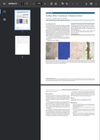
In this case study, a 15-year-old obese boy was diagnosed with acanthosis nigricans and hair casts in the axillae, with Wood's lamp and dermoscopic examination revealing specific features, yet fungal infection was ruled out through a negative KOH test.
 45 citations
,
August 2005 in “Bioorganic & medicinal chemistry”
45 citations
,
August 2005 in “Bioorganic & medicinal chemistry” This study found that novel androgen antagonists incorporating a carborane moiety showed anti-androgenic activity comparable to flutamide in a laboratory setting.
16 citations
,
June 2015 in “The journal of investigative dermatology/Journal of investigative dermatology” This study found that DHHC13 is crucial for hair anchoring and skin barrier function, with its deficiency in Zdhhc13(skc4) mice leading to cyclic alopecia and skin abnormalities due to cornifelin deficiencies.
1 citations
,
April 2021 in “Journal of Cosmetic Dermatology” In this placebo-controlled clinical study, a cream containing 4% capryloyl glycine and 1% glycine soy‐fermented extract effectively inhibited ODC1 activity and improved hypertrichosis in 91.7% of Caucasian female patients on the forearms, whereas no improvement was observed with the placebo.
3 citations
,
January 2025 in “Journal of Natural Products” In this study, researchers isolated new compounds from the plant *Calanthe cardioglossa* and found that five of these compounds, particularly calancardin B, significantly reduced TNF-α levels in immune cells relevant to multiple sclerosis, suggesting potential for immunomodulatory effects.
 February 2025 in “Jurnal Kesehatan Bakti Tunas Husada Jurnal Ilmu-ilmu Keperawatan Analis Kesehatan dan Farmasi”
 This study formulated nanostructured lipid carriers with curcumin, using specific surfactants, to enhance its stability and bioavailability for more effective androgenetic alopecia treatment.
 4 citations
,
January 1989 in “Journal of Steroid Biochemistry”
4 citations
,
January 1989 in “Journal of Steroid Biochemistry” This study suggests that 5-ADIOL-S may contribute to the synthesis of potent androgens in peripheral tissues, and 3 alpha-DIOL-S could be a marker of androgen metabolism in various female patient groups.
 26 citations
,
October 2007 in “Experimental Dermatology”
26 citations
,
October 2007 in “Experimental Dermatology” This study found that l-carnitine stimulated hair growth in vitro by promoting proliferation and reducing apoptosis in human scalp hair follicles, suggesting potential as a treatment for hair loss.
15 citations
,
February 2020 in “Journal of Investigative Dermatology” Ceramide Synthase 4 is crucial for healthy skin barrier function.
13 citations
,
October 1960 in “Experimental Biology and Medicine” This study found that small amounts of subcutaneously injected Se75 were deposited and retained in the hair of dogs for up to 316 days.
 18 citations
,
October 2013 in “EFSA Journal”
18 citations
,
October 2013 in “EFSA Journal” The EFSA panel concluded that coriander seed oil is safe for use as a novel food ingredient at the proposed intake levels for healthy adults.
 6 citations
,
January 2023 in “Medical Mycology Journal”
6 citations
,
January 2023 in “Medical Mycology Journal” In this case study of a 64-year-old woman with kerion celsi caused by Microsporum canis, treatment with the oral antifungal fosravuconazole resulted in symptom resolution without scarring or side effects over 12 weeks, suggesting its potential effectiveness for various dermatomycoses.
5 citations
,
April 1946 in “PubMed” This study found that a diet with purified casein and sulfasuxidine resulted in poor growth and anemia in a pig, which improved after treatment with a liver extract.
January 1999 in “Proceedings of the British Society of Animal Science” This study explored the effects of biotin and malate supplementation on hair follicle viability and enzyme activity in cultured cells, but it reports no new results.
 24 citations
,
May 2010 in “Veterinary dermatology”
24 citations
,
May 2010 in “Veterinary dermatology” This study found that both ciclosporin A and topical therapy were effective in reducing alopecia and scaling in dogs with idiopathic sebaceous adenitis, with evidence suggesting improved outcomes when both treatments are combined.
15 citations
,
September 2009 in “European Journal of Histochemistry” This study found that CD90+ cells, resembling mesenchymal stem cells, are abundantly present in the lower part of anagen hair follicles in dogs.
 21 citations
,
April 2012 in “European Journal of Pharmaceutics and Biopharmaceutics”
21 citations
,
April 2012 in “European Journal of Pharmaceutics and Biopharmaceutics” This study suggests that gel containing OSF3 loaded in niosomes offers high transfollicular penetration for topical anti-androgenic alopecia treatment with minimal systemic effect.
53 citations
,
August 2017 in “Journal of Investigative Dermatology”