31 citations
,
February 1972 in “Experientia” This study found that the diphosphonate ethan-1-hydroxy-1,1-diphosphonat was the most effective compound in preventing calcifications in rats induced by DHT, compared to other phosphatase inhibitors and polyphosphates tested.
3 citations
,
April 2017 in “Medicine” This case report describes a rare instance of pediatric idiopathic hypoparathyroidism in an 11-year-old Saudi boy, characterized by extensive cranial calcifications beyond the basal ganglia, with no other neurological abnormalities.
2 citations
,
January 2021 in “American Journal of Case Reports” This case report details a 13-year-old Thai boy with Hutchinson-Gilford progeria syndrome, who presented with cardiovascular complications, including coronary artery calcification and non-ST-segment elevation myocardial infarction.
2 citations
,
June 2003 in “American Journal of Dermatopathology” This article reports a rare case of squamous cell carcinoma with miliary calcification in a cutaneous horn, suggesting possible involvement of calcium-binding proteins in this unique presentation.
 January 1982 in “Japanese Journal of Clinical Immunology”
 This case study reports the rare occurrence of widespread soft-tissue calcification in a young patient with SLE, suggesting that 99mTe-phosphate compounds could help diagnose this complication.
 1 citations
,
January 2024 in “Wiadomości Lekarskie”
1 citations
,
January 2024 in “Wiadomości Lekarskie” This study evaluated a new computer-aided detection system for identifying Breast Arterial Calcification in mammograms, achieving 70% accuracy, but highlighted the need for a larger dataset to explore its relationship with cardiovascular diseases.
 80 citations
,
March 2004 in “Neuropediatrics”
80 citations
,
March 2004 in “Neuropediatrics” This article presents an update on a family with Coats' plus disorder, documenting additional symptoms and two new similar cases, and reviews literature suggesting a link to dyskeratosis congenita for potential molecular insights.
 April 2024 in “Research Square (Research Square)”
 This case report describes a 27-year-old male with autoimmune polyglandular syndrome type 1, characterized by symptoms including fever, dysarthria, dysphagia, oral candidiasis, nail dystrophy, alopecia, hypoparathyroidism, and dilated cardiomyopathy. The study highlights unique bilateral symmetrical brain calcifications and underscores the syndrome’s diverse manifestations.
 January 2022 in “Autopsy and Case Reports”
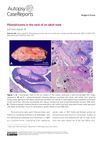
 This article describes a case of pilomatricoma in a 22-year-old male with successful surgical excision and no recurrence, highlighting its histopathological features and typical clinical presentation.
September 2020 in “Oral surgery, oral medicine, oral pathology and oral radiology” This case report describes a pilomatricoma in a 21-year-old woman, highlighting the diagnostic process and illustrating the potential for intraoral surgical access to minimize scarring.
12 citations
,
December 1965 in “Immunology and Cell Biology” This study found that experimentally induced calcification in rat skin led to rapid and localized mineralization in hair follicles, progressing to more extensive calcification with prior hypercalcemic treatment.
5 citations
,
April 1984 in “Archives of Dermatology” This article reviews the characteristics, causes, and types of porphyria cutanea tarda but presents no new findings, focusing instead on existing knowledge about the disorder.
 3 citations
,
July 2021 in “Cutis”
3 citations
,
July 2021 in “Cutis” This case report described a 62-year-old woman with dermatomyositis whose multiple subcutaneous nodules persisted despite treatment with prednisone and methotrexate, prompting further dermatological evaluation.
 3 citations
,
October 2019 in “Dermatologic Therapy”
3 citations
,
October 2019 in “Dermatologic Therapy” This article addresses the mechanisms of androgenic alopecia and seeks to clarify misconceptions, but it reports no new empirical findings and calls for further controlled studies.
 2 citations
,
February 2009 in “Clinical and Experimental Dermatology”
2 citations
,
February 2009 in “Clinical and Experimental Dermatology” In this case study, a 51-year-old Japanese man was diagnosed with desmoplastic trichoepithelioma after histological examination of surgically excised facial plaques.
2 citations
,
December 1973 in “Calcified tissue research” This study proposed a hypothesis for cutaneous calcinosis, suggesting that feeding DHT and subsequent epilation lead to ATP release and calcium orthophosphate formation, initiating calcification in rats.
1 citations
,
January 2022 in “Indian dermatology online journal” This case report documents the presentation and diagnosis of a rare bullous pilomatrixoma in a 20-year-old female using fine needle aspiration cytopathology, highlighting diagnostic challenges and features.
 1 citations
,
December 2010 in “Elsevier eBooks”
1 citations
,
December 2010 in “Elsevier eBooks” This review covers cell transplantation methods for genitourinary reconstruction, discussing tissue sources and complications but presenting no new clinical findings.
 April 2024 in “Journal of Cytology”
 In this case study, researchers describe a rare instance of pilomatricoma with ossification in a 32-year-old woman, highlighting specific histopathological features and the role of bone morphogenic proteins and macrophages in its development.
 February 2024 in “Cureus”
 This study presented an elderly male with a nodular lesion diagnosed as pilomatricoma and discussed the value of diagnostic tools like dermoscopy and high-frequency ultrasonography, encouraging clinicians to consider pilomatricoma in differential diagnoses of nodular lesions across all ages.
 March 2022 in “Folia Medica Indonesiana”
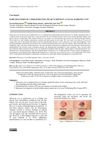
 This case report described a facial hairline tumor initially diagnosed as a sebaceous cyst but ultimately confirmed as a rare Proliferating Pilar Tumor with focal malignancies upon histopathological examination.
 October 2021 in “Journal of Investigative Dermatology”
 This study found no significant difference in SARS-CoV2 IgG seroconversion rates between patients with immune-mediated inflammatory diseases treated with targeted immune-modulating therapies and those on conventional systemic treatments.
January 2002 in “Linchuang pifuke zazhi” This report describes an unusual case of proliferating trichilemmal cyst with trichoepitheliomatous change in a young woman, differing from its typical presentation in elderly women.
July 2025 in “Journal of Cutaneous Pathology” In this case report, a newborn with Conradi-Hünermann-Happle syndrome was diagnosed through early skin biopsy, which revealed unique histopathological features, including dystrophic calcifications, confirming a pathogenic variant in the EBP gene.
May 2020 in “International Journal of Dermatology and Venereology” This article discusses the characteristics, clinical presentation, and diagnosis of calcified epidermal cysts but reports no new clinical results.
 67 citations
,
September 2003 in “Journal of cutaneous pathology”
67 citations
,
September 2003 in “Journal of cutaneous pathology” This review discusses the various skin manifestations associated with end-stage renal disease and their potential causes but reports no new clinical findings; the authors emphasize pruritus as a significant condition.
 30 citations
,
December 2017 in “Medical Hypotheses”
30 citations
,
December 2017 in “Medical Hypotheses” This review evaluates dihydrotestosterone's role in androgenic alopecia and proposes a model suggesting that chronic scalp tension and inflammation contribute to hair follicle miniaturization, identifying fibrosis, calcification, and tension as treatment targets.
 13 citations
,
November 2005 in “Veterinary Dermatology”
13 citations
,
November 2005 in “Veterinary Dermatology” This study reports that a German Shepherd developed generalized calcinosis cutis following a presumed bacterial infection, representing the first known case linked to such an infection in adult dogs.
7 citations
,
January 1973 in “Calcified Tissue International” This study found that hair follicle tissue effectively induced mineral formation in calcium phosphate solutions, likely due to its nucleating ability, which was lost when the tissue was lyophilized and stored.
3 citations
,
March 2013 in “American Journal of Dermatopathology” This study found that ossification in trichilemmal cysts may be more common than previously thought, often associated with cyst wall rupture, and reports a novel case of ossifying TC with extramedullary hematopoiesis.