 11 citations
,
August 2010 in “Developmental neurobiology”
11 citations
,
August 2010 in “Developmental neurobiology” This study suggests that Ptprq in the hair bundles may exist as multiple isoforms that are differentially expressed throughout development and affect the organization of stereocilia in the chick inner ear.
 6 citations
,
October 2012 in “Journal of Heredity”
6 citations
,
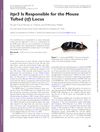
October 2012 in “Journal of Heredity” This study identified the Itpr3 gene as responsible for the tufted hair loss phenotype in the BTBR mouse strain.
18 citations
,
September 2003 in “International Journal of Cancer” This study found that Epstein-Barr virus infection upregulated a truncated variant of human basic hair keratin 1 (hHb1-ΔN) in gastric carcinoma cell lines, suggesting a possible link to carcinoma differentiation.
1 citations
,
April 2015 in “InTech eBooks” RAGE is a potential target for melanoma treatment, but its effectiveness is uncertain due to variable expression levels.
This study suggests that the ANE syndrome mutation in yeast Nop4, analogous to human RBM28, disrupts protein folding and protein-protein interactions, contributing to ribosomal dysfunction.
 1 citations
,
March 2023 in “Science Translational Medicine”
1 citations
,
March 2023 in “Science Translational Medicine” The researchers reported that targeting glycoprotein 130's signaling site in animal models promoted tissue regeneration and reduced osteoarthritis progression through anti-inflammatory and protective effects.
 April 2026 in “Institutional Repositories DataBase (IRDB)”
 This study investigated human hair follicle bulge cells and found that those with reduced CD200 expression exhibited enhanced hair regenerative capability, refining the functional understanding of bulge cell heterogeneity and providing insights for optimizing bulge cell–based hair regeneration techniques.
December 2021 in “Figshare” This study found that downregulation of BBS7 in periodontal ligament cells was associated with reduced Sonic hedgehog signaling, which plays a crucial role in maintaining PDL homeostasis.
 January 2012 in “Else Kröner-Fresenius Symposia”
 This symposium reported that DNA damage accumulation in aging stem cells affects genome integrity, highlighting novel mechanisms like Bmi1's role in DNA repair and the involvement of BATF in lymphoid differentiation.
39 citations
,
September 2007 in “BMC developmental biology” This study found that Neuregulin3 can influence the development and differentiation of mammary glands and epidermal features in mice, potentially by inducing c-Myc and altering cell proliferation and adhesion.
 3 citations
,
July 2022 in “Stem Cell Research & Therapy”
3 citations
,
July 2022 in “Stem Cell Research & Therapy” This study found that knocking out the integrin β1 subunit in induced pluripotent stem cells enhanced their migration and improved their wound-healing effects in a mouse model.
1 citations
,
January 2012 In this study, the researchers cloned and analyzed the CRABP I gene in Inner Mongolian cashmere goats, finding its highest mRNA expression at 90 days in embryo skin compared to later stages.
 March 2026 in “Folia Histochemica et Cytobiologica”
 This review highlights LTBP1 as a critical integrator in disease processes, showing its dual role in cancer progression and suppression, its pathological influence in fibrosis, and its contribution to various disorders, suggesting its potential as a biomarker and therapeutic target.
 April 2018 in “Journal of Investigative Dermatology”
 This study found that deleting all three Desmoglein 1 genes in mice led to impaired skin barrier function, disorganized epidermis, and postnatal lethality, highlighting Dsg1's essential role in epidermal development and maintenance.
5 citations
,
December 2023 in “Current Biology” A feedback loop between LRH and RSL4 controls root hair growth in Arabidopsis.
32 citations
,
April 2020 in “PLoS Biology” This study found that Rab5c is crucial for proper HSPC development in zebrafish embryos by regulating Notch and AKT signaling through endocytic trafficking, with both deficiency and overactivation leading to production defects.
35 citations
,
April 1998 in “PubMed” This study found that activating the erbB-2 oncogene in transgenic mice led to severe skin abnormalities and fatal defects, indicating erbB-2's significant role in skin and hair follicle development.
 2 citations
,
December 2016 in “Experimental cell research”
2 citations
,
December 2016 in “Experimental cell research” This study reveals that CSPG4-positive basal cell keratinocytes show distinct global gene expression from CSPG4-negative cells, despite similar colony-forming efficiency.
July 2021 in “Plastic and reconstructive surgery. Global open” This study identified specific genes involved in radiation-induced fibrosis in skin, capsule, and muscle tissues of breast cancer patients, offering insights that may help improve mitigation strategies for these side effects.
 39 citations
,
March 2008 in “Journal of biological chemistry/The Journal of biological chemistry”
39 citations
,
March 2008 in “Journal of biological chemistry/The Journal of biological chemistry” This study found that GLI2 plays a key role in activating follistatin, an activin/BMP antagonist, in response to hedgehog signaling in human epidermal cells, with implications for hair follicle development and basal cell carcinoma.
November 2025 in “Frontiers in Pharmacology” This study observed that both in vitro and in vivo research demonstrated rice bran extract can significantly enhance collagen and elastin synthesis, reduce water loss, and improve skin quality and elasticity, highlighting its potential as a sustainable cosmetic ingredient.
224 citations
,
February 2013 in “The Journal of clinical investigation/The journal of clinical investigation” This study identifies SOX9 as a critical downstream effector of ERG in TMPRSS2:ERG fusion-positive prostate cancer, indicating its role in tumor invasion and growth.
 66 citations
,
April 1995 in “The journal of cell biology/The Journal of cell biology”
66 citations
,
April 1995 in “The journal of cell biology/The Journal of cell biology” In this study, researchers reported that a keratinocyte growth factor-Ig fusion protein could specifically detect and localize KGFRs in epithelial tissues, suggesting a method for histochemical detection of growth factor receptors.
This study suggests that finasteride may upregulate BTG2 and CD244 gene expression through differential methylation, indicating potential as a treatment avenue for medulloblastoma.
February 2026 in “Biophysical Journal” July 2025 in “Journal of Investigative Dermatology” BrdU speeds up hair follicle aging and reduces hair quality.
 September 2024 in “Journal of Medicine and Life”
 In this study, researchers identified a recurrent nonsense mutation, c.409C>T (p.Arg137*), in the COL7A1 gene through whole exome sequencing in a family with autosomal recessive dystrophic epidermolysis bullosa, demonstrating the importance of this method for diagnosing genetically complex conditions.
June 2026 in “British Journal of Dermatology” In this case report, researchers observed a Slovakian neonate with a rare EGFR genetic mutation who presented with severe neonatal dermatoses, ichthyosis, and multisystem complications, emphasizing the significance of genetic diagnosis for such complex conditions.
11 citations
,
January 2015 in “Journal of cellular physiology” This study suggests that abnormal hair cycles in Hr mutant mice may be caused by HR protein overexpression, which down-regulates miR-31 and increases Tgf-β2 expression.
 May 2017 in “bioRxiv (Cold Spring Harbor Laboratory)”
 This study found that the peach gene CTG134, involved in auxin-ethylene interactions, plays a role in hormonal regulation during root hair formation in Arabidopsis and tobacco.