 October 2023 in “Pediatric dermatology”
 This study found that Middle Eastern patients with epidermolysis bullosa show specific correlations between their genetic variants and clinical features, which may aid in diagnosis and genetic counseling.
 October 2022 in “Boletín médico del Hospital infantil de México/Boletín médico del Hospital Infantil de México”
 This case report describes an 18-year-old male with a rare acquired smooth muscle hamartoma on his face, characterized by hyperpigmented plaques and increased hair growth, suggesting a histological overlap with folliculosebaceous cystic hamartoma.
44 citations
,
February 2023 in “Cell” In this study, researchers found that human fingerprint ridges are formed through a modified hair follicle developmental process and spatial patterns influenced by specific signaling pathways.
July 2022 in “European Journal of Dermatology” In this study, researchers found that patients with psoriasis had a higher probability of achieving and maintaining a clinical response using brodalumab compared to ustekinumab over 52 weeks, as measured by a multistate modelling approach based on absolute PASI scores.
13 citations
,
September 1997 in “Archives of Dermatology” This case report describes a 5-year-old boy with a solitary patch of hair loss, potentially linked to a fungal infection after antibiotic treatment showed minimal effectiveness.
6 citations
,
July 1976 in “JAMA” This article discusses dermatological issues associated with black skin, such as postinflammatory pigmentation and keloids, and highlights the need for practitioners to understand these racial characteristics; it reports no new clinical results.
4 citations
,
December 2014 in “Indian Journal of Dermatology” This case report documents a rare presentation of congenital milia en plaque on the scalp of a five-year-old boy, with blaschkoid extension to the nuchal area, highlighting its uncommon location and onset.
 January 2019 in “Elsevier eBooks”
 Early detection and skin biopsies are crucial for treating skin cancer and diagnosing various skin conditions.
 July 2026 in “Journal of Comparative Physiology B”
 This study demonstrated the usefulness of fully implantable loggers in measuring heart rate and sub-blubber temperature in captive harbour seals, with findings suggesting lower heart rates during molting and differences in temperature regulation between adults and sub-adults.
 May 2002 in “British Journal of Dermatology”
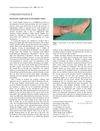
 A pregnant woman's skin condition improved after giving birth, possibly due to high estrogen levels during pregnancy.
December 2025 in “International Journal of Dermatology” This case report describes a unique instance of late-onset Björnstad syndrome in an 18-year-old female, mimicking androgenetic alopecia, and indicates potential improvement with JAK inhibitor baricitinib, highlighting the need for considering this syndrome in similar cases of patterned hair loss in young individuals.
3 citations
,
April 2019 in “Stem cells international” This study found that CRABP1, Nestin, and Ephrin B2 are expressed in both the tumor stroma and invasive front of skin adnexal tumors and basal cell carcinomas.
 January 2011 in “Journal of The American Academy of Dermatology”
 Two patients had a rare combination of red skin spots and white scaly skin lesions not on the genitals.
 30 citations
,
May 2005 in “Pediatric dermatology”
30 citations
,
May 2005 in “Pediatric dermatology” This report reviews familial cases of aplasia cutis of the scalp, noting large irregular defects at the vertex or anterior along the sagittal suture in six families.
 27 citations
,
October 2017 in “British Journal of Dermatology”
27 citations
,
October 2017 in “British Journal of Dermatology” Patients with GATA2 deficiency show early skin symptoms that help diagnose the condition.
June 2018 in “Chinese Journal of Dermatology” This study reported that connective tissue nevi show distinctive dermoscopic and RCM features, with RCM being particularly helpful for diagnosing lesions of less than one year in duration.
 10 citations
,
July 2013 in “British Journal of Dermatology”
10 citations
,
July 2013 in “British Journal of Dermatology” High MUC-18/MCAM levels in blood indicate a worse outlook for melanoma patients.
January 2026 in “Veterinarski glasnik” In this case report, researchers highlighted the importance of age-appropriate interpretation of clinical findings in an orphaned Bosnian Mountain Horse foal, observing that physiological changes rather than pathological ones contributed to variations in blood and biochemical parameters, while also diagnosing skin lesions of distinct origins.
September 1973 in “Primates” 10 citations
,
October 2018 in “JDDG Journal der Deutschen Dermatologischen Gesellschaft” This review discusses the skin and systemic conditions associated with Down syndrome and reports no new clinical results, emphasizing the need for awareness of these manifestations in diagnosis.
October 2024 in “Skin Research and Technology” This report describes several cases of pili annulati in children, highlighting its genetic predisposition and distinctive "zebra stripe" hair pattern, but notes no effective treatment is available.
May 2022 in “Голова и шея.” This study identified distinct differences between mature and immature hypertrophic scars of the head and neck, with immature scars showing higher TGF-β expression and more pronounced inflammatory reactions.
173 citations
,
July 2012 in “British Journal of Dermatology” This study found that the administration of the mutant BRAF inhibitor dabrafenib in patients with metastatic melanoma was associated with various skin lesions, including keratinocytic proliferation that sometimes showed low-grade malignancy features.
10 citations
,
December 2015 in “International Journal of Dermatology” This study suggests that basal cell carcinoma and trichoblastoma may share differentiation toward the hair follicle, as indicated by strong positivity in CK 15, follistatin, and Bmi‐1 markers.
59 citations
,
August 2024 in “Cell stem cell”  114 citations
,
April 2004 in “International Journal of Dermatology”
114 citations
,
April 2004 in “International Journal of Dermatology” Postinflammatory hyperpigmentation causes dark skin patches and needs personalized treatment.
 October 1988 in “Pediatric research”
 In this study, researchers observed that the sequence of maturity markers in normal boys showed specific time lags, with some markers appearing before and others after spermarche.
84 citations
,
June 1970 in “Journal of Investigative Dermatology” 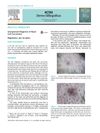 May 2015 in “Actas Dermo-Sifiliográficas”
 A young man was unexpectedly diagnosed with basal cell carcinoma after a scalp examination and confocal microscopy.
2 citations
,
July 2018 in “Chinese Journal of Dermatology” This study reported that imaging characteristics of sebaceous nevus vary significantly by age group, revealing dynamic developmental changes that can be effectively identified through dermoscopy and reflectance confocal microscopy, offering noninvasive diagnostic potential.