January 2013 in “Kidney international” This report describes a clinical case of a 38-year-old man diagnosed with Birt-Hogg-Dubé syndrome, confirmed by genetic testing, highlighting the presentation of multiple renal tumors and bilateral lung cysts.
This report describes a case of Goltz syndrome in a 12-year-old Saudi girl, highlighting the variability in symptoms and the importance of documenting such rare syndromes.
56 citations
,
October 2010 in “Pediatric Clinics of North America” This article discusses various types of epidermal nevi and associated syndromes but presents no new research findings.
 November 2020 in “Journal of The American Academy of Dermatology”
 This study examined dermoscopic features in African-American women with different types of alopecia and found that a perifollicular pink blush, potentially indicating inflammation, was common, particularly resolved with anti-inflammatory treatment, suggesting dermoscopy could aid in management.
 December 2025 in “Biology Bulletin”
 In this study, researchers examined the skin of Baikal seals, identifying two main skin pathologies potentially linked to global warming and an unknown viral pathogen, suggesting immune inflammatory processes associated with environmental changes may be affecting these seals.
 March 2024 in “Indian Journal of Dermatology/Indian journal of dermatology”
 In this article, the authors compile various dermatological conditions that metaphorically reference animal-related visuals, such as "buffalo hump" in HIV-associated lipodystrophy or "leonine facies" in lepromatous leprosy, to enhance learning through mnemonic and visual associations.
7 citations
,
February 2012 in “Journal of cutaneous pathology” This case report presents unique histopathological findings in skin lesions of hereditary mucoepithelial dysplasia that have not been previously documented.
May 2023 in “The Journal of Immunology” In this study, researchers found that BST2 expression is significantly upregulated in skin sections of mice with alopecia areata, implicating BST2's role in the disease pathogenesis through the action of epidermal γδ T cells and macrophages.
 9 citations
,
July 2010 in “British Journal of Dermatology”
9 citations
,
July 2010 in “British Journal of Dermatology” This article reports on lentiginosis observed within plaques of linear atrophoderma of Moulin and discusses its potential classification as a twin-spotting phenomenon but provides no new clinical research results.
2 citations
,
July 2024 in “Indian Journal of Dermatology” In this study, researchers found that adults with alopecia areata exhibited trichoscopic features of empty follicular openings and tulip hair, while children showed more honeycomb pigment patterns and pohlpinkus constriction on their scalp lesions.
32 citations
,
January 2020 in “Journal of Molecular Histology” This research identified K31 as a new marker for distinguishing clear secretory cells in human eccrine sweat glands, aiding in differentiating between distinct cell types within these glands.
1 citations
,
August 1998 in “Pediatrics in review” This review discusses how common skin disorders manifest differently in children with dark skin, highlighting distinctive reaction patterns and cultural practices, but reports no new clinical results.
10 citations
,
May 2007 in “British Journal of Dermatology” This case report describes the first known instance of congenital follicular mucinosis in a newborn, diagnosed through histopathological examination of a scalp lesion.
 October 2023 in “CRC Press eBooks”
 This chapter provides an overview of 11 common hair and nail conditions in children with brown skin, utilizing clinical photographs and a question-and-answer format to discuss conditions such as alopecia areata, telogen effluvium, and nail lichen planus.
30 citations
,
May 1980 in “Journal of the American Academy of Dermatology” In this study, three patients with alopecia areata exhibited spotty absence of the whiteness of their nail lunulae, potentially due to defects in the matrical epithelium.
2 citations
,
May 2024 in “BMC Genomics” This study analyzed the genetics of the patchiness phenotype in New Zealand rabbits and found that the gene KRT82, with identified SNPs in its promoter, may serve as a potential biomarker for breeding these rabbits.
November 2024 in “NeoReviews” This case report details an extremely low-birth-weight preterm neonate presenting with unique dermatologic symptoms, leading to a diagnosis of neonatal inflammatory skin and bowel disease due to a novel homozygous EGFR gene mutation, highlighting the importance of genetic testing in ambiguous cases.
 43 citations
,
February 2008 in “Journal of cutaneous pathology”
43 citations
,
February 2008 in “Journal of cutaneous pathology” This study revealed that during fetal development, MITF and Mart-1 expressing melanocytes progress from the dermis to the epidermis and hair follicles, with MITF possibly marking follicular stem cells.
 1 citations
,
February 2017 in “International journal of anatomy and research”
1 citations
,
February 2017 in “International journal of anatomy and research” This study found that the progression of fetal skin development, marked by key features like the appearance of hair follicles and eccrine sweat glands, can help determine fetal age and predict congenital skin diseases.
 34 citations
,
July 2011 in “Journal of the European Academy of Dermatology and Venereology”
34 citations
,
July 2011 in “Journal of the European Academy of Dermatology and Venereology” This study identified distinct dermoscopic patterns associated with different types of scalp tumors, highlighting variability in lesions related to patient age, gender, and tumor thickness.
5 citations
,
October 2021 in “American Journal of Medical Genetics Part A” This case report identifies a novel maternally inherited MBTPS2 variant associated with an expanded phenotypic spectrum of BRESHECK syndrome, including cytopenias, bone marrow fibrosis, and chronic diarrhea.
 56 citations
,
June 1970 in “The BMJ”
56 citations
,
June 1970 in “The BMJ” Drug addicts often have scars, skin color changes, blocked veins, and bruising, with severe ulcers from barbiturate injections.
February 2013 in “Journal of the American Academy of Dermatology” Follicular red dots can appear where alopecia areata and vitiligo overlap.
 11 citations
,
November 2005 in “The Journal of Dermatology”
11 citations
,
November 2005 in “The Journal of Dermatology” This report presents a unique case where a man developed Beau's lines on all fingers of one hand after a thumb injury, with the lines eventually disappearing as the nails grew.
51 citations
,
December 2012 in “Clinics in Dermatology” Skin changes can help identify eating disorders early.
 21 citations
,
January 2018 in “Anticancer Research”
21 citations
,
January 2018 in “Anticancer Research” This study suggests that NBCCS and BFHS may be the same genetic condition, which could help improve identification and management of misdiagnosed cases with specific surveillance strategies.
 January 2020 in “Research Square (Research Square)”
 In this study, Irish adults with severe obesity who had cervical or axillary skin tags showed higher systolic blood pressure, higher HbA1c levels, and more diabetes and hypertension, suggesting an increased vascular risk.
 3 citations
,
January 2010 in “Elsevier eBooks”
3 citations
,
January 2010 in “Elsevier eBooks” The document describes various skin conditions, their features, and treatments but lacks detailed study size information.
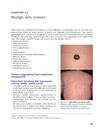
This chapter classifies various benign skin tumors and discusses their characteristics, treatment indications, and potential for recurrence, but reports no new clinical findings.