 February 2023 in “Cosmoderma”
 This study found that combining red light therapy with oral beta-carotene significantly improved photoaging treatment outcomes compared to red light therapy alone, with Group A showing a 56.12% reduction in photoaging scores over 12 weeks versus 44.78% in Group B.
 July 1989 in “British Journal of Dermatology”
 Long-term use of canthaxanthin may cause reversible changes in the eye, including crystal deposits and altered vision responses.
55 citations
,
January 2000 in “Cell biochemistry and function” This study observed that patients with alopecia had increased lipid peroxidation and decreased antioxidants, including lower beta-carotene, GSH levels, and GSH-Px activity, compared to healthy controls.
34 citations
,
January 2022 in “Molecules/Molecules online/Molecules annual” This review highlights the use of natural products in cosmetic-containing herbals for skin and hair care but reports no new clinical results, calling attention to their claimed curative properties and minimal side effects.
 8 citations
,
January 2017 in “Elsevier eBooks”
8 citations
,
January 2017 in “Elsevier eBooks” This review discusses the use of nutraceuticals in dermatology for preventing and reversing signs of skin aging, but it reports no new clinical results.
2 citations
,
June 2018 in “Jurnal Penelitian dan Pengembangan Pertanian” This paper discusses the health benefits and cultivation of new beta-carotene-rich antioxidant maize varieties released by the Ministry of Agriculture, noting their potentially higher yields compared to ordinary corn.
 December 2024 in “Majalah kedokteran Bandung/Majalah Kedokteran Bandung”
 In this study, carrot seed oil applied at a 75% concentration increased hair root, shaft, and tip thickness in rats, but did not promote hair length growth.
 November 2024 in “International Journal For Multidisciplinary Research”
 This review highlights moringa powder's promising role in cosmetics, discussing its nutritional benefits for skin and hair, including anti-aging, hydration, and antimicrobial effects, while also addressing its formulation versatility and consumer acceptance within the beauty industry.
December 2020 in “Zenodo (CERN European Organization for Nuclear Research)” This article discusses three herbal plants commonly used for hair growth support and reports no new clinical results; the authors suggest these herbs may help restore hair health.
April 2019 in “Journal of the Endocrine Society” This case report suggests that a supplement containing biotin, beta carotene, vitamin C, zinc, and copper may improve insulin resistance markers and hair loss in a patient with non-classic 11-hydroxylase deficiency.
This study found that ethanol and methanol extracts of Spirulina platensis did not exhibit cytotoxic activity on WiDr colon cancer cells.
 6 citations
,
September 2019 in “Skin pharmacology and physiology”
6 citations
,
September 2019 in “Skin pharmacology and physiology” This study found that RCS-01 cell therapy for aged skin was well tolerated and associated with increased gene expression related to extracellular matrix homeostasis, suggesting potential skin improvement.
56 citations
,
August 2011 in “Best Practice & Research Clinical Gastroenterology” Cancer prevention has progressed with successful drugs and vaccines, but challenges remain in understanding genetic changes and improving strategies.
 1 citations
,
October 2022 in “International Journal for Research in Applied Science and Engineering Technology”
1 citations
,
October 2022 in “International Journal for Research in Applied Science and Engineering Technology” This review discusses the diverse applications of algae in non-energy sectors, including pharmaceuticals, food ingredients, pigments, and cosmetics, and reports no new experimental results.
 June 2012 in “Springer eBooks”
 Skin changes can indicate starvation and nutritional deficiencies in anorexia nervosa.
September 2005 in “電子情報通信学会ソサイエティ大会講演論文集” This review discusses various cancer prevention strategies, summarizing established successes like tamoxifen for breast cancer and mixed outcomes of preventive trials like finasteride for prostate cancer, and reports no new results.
 17 citations
,
April 2004 in “Acta Clinica Belgica”
17 citations
,
April 2004 in “Acta Clinica Belgica” This study found that ultraviolet light-enhanced visualization can detect subtle skin changes linked to carotene and vitamin A deficiency, which improved with dietary correction in deficient individuals.
9 citations
,
October 1957 in “A M A Archives of Dermatology” In this study, carotene injected into the skin was converted into vitamin A by sebaceous gland cells, where it was not normally detectable.
This study using Mendelian randomization found that higher levels of circulating β-carotene and α-tocopherol may reduce the risk of androgenetic alopecia, while α-tocopherol may also protect against alopecia areata, suggesting diet-derived antioxidants could aid in preventing non-scarring alopecia.
39 citations
,
June 2009 in “Oncology” This study observed that high-dose retinol palmitate was well-tolerated in resected stage I lung cancer patients, though it raised concerns about potential impacts on lipid metabolism due to elevated gamma-GT levels and triglycerides.
 12 citations
,
January 2011 in “Dermatologic Surgery”
12 citations
,
January 2011 in “Dermatologic Surgery” This entry contains only a placeholder abstract with no research findings described or summarized.
18 citations
,
January 1988 in “Acta oncologica” This study found that retinol palmitate treatment in patients with stage Ia non-small-cell lung cancer may reduce cancer relapses, but longer follow-up is needed to confirm its efficacy.
 12 citations
,
November 2020 in “Molecules”
12 citations
,
November 2020 in “Molecules” This study found that carvone, a plant-derived compound, decreases melanin content and inhibits melanoma cell proliferation through the cAMP pathway, suggesting potential benefits for treating melanomas and other hyperpigmentation disorders.
This study found that 4-(ethoxycarbophenyl) retinamide (RI) exhibited significantly lower acute, subacute, and chronic toxicity compared to other retinoids in mouse and rat models.
May 1961 in “Tumori Journal” This study found that vitamin A treatment in rats reduced hyperplastic-dysplastic changes and sebaceous gland hypertrophy associated with 3,4-benzpyrene-induced tumors.
 47 citations
,
September 2023 in “Pharmacological Reports”
47 citations
,
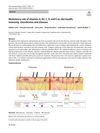
September 2023 in “Pharmacological Reports” In this review, researchers explored the roles of vitamins A, B3, C, D, and E in skin immunity, highlighting their potential as therapeutics for skin diseases due to their antioxidant, anti-inflammatory, and antimicrobial properties.
 3 citations
,
March 2024 in “Discover Applied Sciences”
3 citations
,
March 2024 in “Discover Applied Sciences” In this study, researchers found that a protein-enriched cream made from Spirulina platensis improved the physical structure of natural hair, as evidenced by more intact and smoother cuticles compared to a control cream without protein, suggesting its potential for hair care applications.
 March 2025 in “Journal of Environmental Science and Engineering B”
 This study analyzed soil, water, and carrot samples in Vietnam, and found that organic farming can reduce heavy metal levels in carrots compared to conventional methods, potentially improving their nutritional safety.
 January 2017 in “Clinical approaches and procedures in cosmetic dermatology”
 This research outlines how retinoids, compounds based on vitamin A, activate nuclear receptors to influence cellular processes such as differentiation and carcinogenesis, with benefits like anti-inflammatory properties but requiring careful management of dose-dependent side effects.
 July 1989 in “British Journal of Dermatology”
 Minoxidil helps increase hair growth and density in people with hair loss, with higher concentrations giving better results.