 48 citations
,
July 2019 in “International Journal of Biological Macromolecules”
48 citations
,
July 2019 in “International Journal of Biological Macromolecules” This study found that a newly developed injectable hydrogel combined with human umbilical cord-mesenchymal stem cells significantly accelerated wound healing and reduced inflammation in full-thickness cutaneous wounds.
 42 citations
,
April 2008 in “Acta materialia”
42 citations
,
April 2008 in “Acta materialia” This study investigated the tensile response and morphological changes of different ethnic hair types using AFM, showing variations between virgin, chemically damaged, and conditioner-treated Caucasian hair under different conditions.
 41 citations
,
October 2024 in “Nature Communications”
41 citations
,
October 2024 in “Nature Communications” In this study, researchers developed a wearable red and blue LED patch and a sprayable fibrin gel to treat infected wounds at home, demonstrating effective infection control and enhanced wound healing in diabetic mice and minipigs.
 29 citations
,
September 2020 in “International Journal of Molecular Sciences”
29 citations
,
September 2020 in “International Journal of Molecular Sciences” This review outlines the current state of freeze-dried platelet-rich plasma (FD-PRP) research, emphasizing its use in wound healing, lumbar fusion, knee conditions, and dentistry, but reports no new clinical findings.
 22 citations
,
January 2017 in “Advanced Healthcare Materials”
22 citations
,
January 2017 in “Advanced Healthcare Materials” This study found that thermoresponsive hydrogels can maintain mechanical memory in fibroblasts, enhancing wound healing compared to traditional trypsinized methods.
 19 citations
,
July 2018 in “ACS biomaterials science & engineering”
19 citations
,
July 2018 in “ACS biomaterials science & engineering” This study showed that chemical and mechanical treatments significantly alter the nanoscale surface properties of hair, affecting its roughness, mechanical stiffness, adhesion, and surface potential.
 17 citations
,
July 2019 in “Scientific reports”
17 citations
,
July 2019 in “Scientific reports” This study investigated lipid loss in hair caused by surfactants and found that surface and internal modifications can significantly protect different lipids from depletion, with internal modification preventing 52.0 to 81.3% of lipids in certain groups.
 11 citations
,
February 2019 in “Frontiers in Physiology”
11 citations
,
February 2019 in “Frontiers in Physiology” This review explores the complex interrelationships among different properties of natural hair fibers and underscores the need for a holistic taxonomy to improve data interpretation across disciplines, but it reports no new experimental results.
 9 citations
,
December 2024 in “Nano Research”
9 citations
,
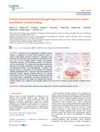
December 2024 in “Nano Research” In a study on diabetic mice, researchers developed a protein-based hydrogel that leverages zinc ions and the natural compound phellopterin to promote cutaneous nerve regeneration, angiogenesis, and tissue remodeling in diabetic wounds, highlighting its potential for advanced wound therapy.
 8 citations
,
November 2022 in “International Journal of Cosmetic Science”
8 citations
,
November 2022 in “International Journal of Cosmetic Science” This review discusses the limitations of current hair classification systems and highlights the need for standardized reporting of key hair characteristics to improve study comparisons; it reports no new results.
 6 citations
,
April 2022 in “Advanced Pharmaceutical Bulletin”
6 citations
,
April 2022 in “Advanced Pharmaceutical Bulletin” This study found that cefazolin-loaded silica nanoparticles embedded in polycaprolactone nanofibers successfully inhibited Staphylococcus aureus growth while maintaining stem cell viability, suggesting their potential use in wound healing.
 3 citations
,
January 2024 in “Materials advances”
3 citations
,
January 2024 in “Materials advances” This article reviews the properties of cellulose nanocrystals for sustainable development but presents no new experimental results.
 2 citations
,
February 2024 in “Nature cell biology”
2 citations
,
February 2024 in “Nature cell biology” In this research, the authors identify coordinated mechanical forces as crucial for hair follicle development in mammals, with contractile, proliferative, and proteolytic activities facilitating the formation and sectioning of epithelial structures crucial for forming a functional tissue.
 1 citations
,
June 2025 in “Journal of Materials Science Materials in Medicine”
1 citations
,
June 2025 in “Journal of Materials Science Materials in Medicine” This study reports that multifunctional electrospun scaffolds containing silver vanadate, hydroxyapatite, and graphene oxide significantly improved wound healing in a rat model, promoting rapid re-epithelialization, enhanced mechanical properties, and strong antibacterial activity, making them promising candidates for advanced wound care applications.
 1 citations
,
March 2019 in “International Journal of Cosmetic Science”
1 citations
,
March 2019 in “International Journal of Cosmetic Science” In this study, researchers developed a regression model that reasonably predicts consumer-perceived hair breakage using various parameters such as hair smoothness, detangling forces, extensional strength, and hair density among Indian women.

This study found that depleting fibroblasts in the skin does not affect the proliferative capacity of epidermal stem cells at various ages, suggesting robust compensatory mechanisms maintain skin functionality despite these cellular changes.
 January 2026 in “Nano-Micro Letters”
 This review discusses the principles, materials, and applications of melt electrowriting-based 4D printing for creating biomimetic scaffolds, but reports no new clinical results; it highlights recent advancements and remaining challenges in the field.
 January 2026 in “RSC Advances”
 The hydrogel helps heal wounds without scars by releasing two drugs gradually.
 March 2025 in “Frontiers in Pharmacology”
 This study developed a hydrogel dressing incorporating angelica polysaccharides, demonstrating enhanced wound healing properties in a mouse model by promoting rapid hemostasis, tissue healing, and new blood vessel formation compared to Tegaderm™ film.
 February 2025 in “Theranostics”
 In this study, researchers used 3D bioprinting with skin stem cells and specific hydrogels to create artificial skin that successfully promoted complete wound healing and the regeneration of skin structures, including hair follicles and blood vessels, in mice.

This study found that elastin-like recombinamer (ELR) wound dressings promote tissue regeneration and stability without rejection in ex vivo and in vivo models, indicating potential for hard-to-heal wound treatment.
This study identified new geometric and mechanical parameters for curly and kinky/coily hair, which may inform more effective personal care products tailored to these hair types.
 January 2023 in “Book of Abstracts”
 COVID-19 can cause different types of hair loss, with telogen effluvium being the most common.
 December 2022 in “bioRxiv (Cold Spring Harbor Laboratory)”
 This study found that inducing miR-205 reduces actin contractility and stiffness in hair follicle stem cells and progenitors, stimulating hair regeneration in both young and old mice.

This study used quantitative methods to identify new geometric and mechanical parameters of curly and kinky/coily hair, aiming to improve classification and develop better personal care products for these hair types.

This study demonstrated that cryogelation of human hair keratin allows the development of 3D scaffolds with tunable properties, supporting cell adhesion and proliferation for potential biomedical applications.

This study found that sericin dressing containing collagen hydrolysate significantly reduced wound healing time and improved scar quality compared to commercial dressing in split-thickness skin graft donor sites.
 January 2015 in “D-Scholarship@Pitt (University of Pittsburgh)”
 This dissertation investigated barriers to clinical translation of adipose-derived mesenchymal stem cell-based vascular grafts, highlighting issues with thrombosis in diabetic patients and proposing alternative cell sources to improve applicability.

This research found that keratin hydrogels derived from human hair may support cell viability and proliferation, indicating potential as 2D and 3D soft tissue culture scaffolds.
 421 citations
,
January 2015 in “Chemical Society Reviews”
421 citations
,
January 2015 in “Chemical Society Reviews” This review discusses recent advances in surface modification and endothelialization of biomaterials for vascular grafts, highlighting promising methods like gene engineering and targeting ligand immobilization to improve clinical outcomes.