 2 citations
,
June 2022 in “The Bulletin of Contemporary Clinical Medicine”
2 citations
,
June 2022 in “The Bulletin of Contemporary Clinical Medicine” This study suggests that although hydroxyapatite gel has strong bactericidal effects, its combination with platelet-enriched blood autoplasm does not enhance antibacterial activity in endodontic treatment for chronic apical periodontitis.
2 citations
,
April 2022 in “Nusantara Bioscience” This study proposes a quick and sensitive method for detecting vancomycin using modified silver nanoparticles and shows promising results against Gram-positive and Gram-negative bacteria.
This narrative review discusses various microbes associated with fermentation and diseases in plants, animals, and humans, reporting no new research results.
3 citations
,
January 2023 in “Biodiversitas Journal of Biological Diversity” This study found that endophytic bacteria isolated from Leea indica leaves showed high antioxidant activity, suggesting they could be a novel source of natural antioxidants.
1 citations
,
April 2025 in “SABRAO Journal of Breeding and Genetics” Infected shallots have more diverse metabolites, with certain compounds indicating resistance to Fusarium disease.
2 citations
,
October 2023 in “Animals” Lacto-fermentation changes amino acid profiles in bovine colostrum, but results are inconsistent.
 March 2026 in “Brazilian Journal of Microbiology”
 This study found that restoring the skin microbiome significantly improved hair growth and skin condition in androgenic alopecia model mice by modulating the immune-inflammatory balance, highlighting the potential of bacterial-based therapies for hair loss.
1 citations
,
January 2013 in “INTAS POLIVET” In this study, dogs with bacterial dermatitis showed significant improvement in symptoms within 72 hours when treated with Cephalexin, Ciprofloxacin, or Erythromycin, with Cephalexin showing the highest effectiveness.
 3 citations
,
May 2020 in “Gynecology Obstetrics and Reproductive Medicine”
3 citations
,
May 2020 in “Gynecology Obstetrics and Reproductive Medicine” In this study, no association was found between bacterial vaginosis and skin disorders in patients with autoimmune antibody positivity.
 8 citations
,
July 2024 in “PLoS ONE”
8 citations
,
July 2024 in “PLoS ONE” In a comparative genomic study, researchers observed significant genetic differences among the three chemical races of the alga Botryococcus braunii, leading them to propose reclassifying these races as distinct species based on their unique genomic characteristics.
February 2018 in “Zenodo (CERN European Organization for Nuclear Research)” This study reported that 100% crude extracts of Glycyrrhiza glabra and Emblica officinalis demonstrated strong antibacterial effects against Escherichia coli.
3 citations
,
November 2024 in “Current Research in Microbial Sciences” This study found that extracts from the medicinal plants *Echinops echinatus* and *Tridax procumbens* displayed antimicrobial activity against several bacteria, including *Escherichia coli* and *Staphylococcus aureus*, and identified various compounds like flavonoids and terpenoids potentially responsible for these effects.
 46 citations
,
January 2009 in “Textile Research Journal”
46 citations
,
January 2009 in “Textile Research Journal” This study presents a DNA-analytical method that can reliably identify and differentiate cashmere, fine wool, yak, and camel hair fibers in both untreated and processed samples.
 11 citations
,
August 2017 in “Journal of Chromatographic Science”
11 citations
,
August 2017 in “Journal of Chromatographic Science” This study established a rapid and accurate ultra-performance liquid chromatographic method for chemical fingerprinting and analyzing Platycladi cacumen, effectively distinguishing batches based on geographical and climatic conditions.
 1 citations
,
August 2024 in “Polymers”
1 citations
,
August 2024 in “Polymers” This review discusses recent advances in protein immobilization on bacterial cellulose for various biomedical uses and reports no new clinical results.
 December 2023 in “Urogenital tract infection”
 Seminal bacteria can lower sperm quality in subfertile men.
35 citations
,
March 2012 in “Journal of dermatological science” This observational study aims to more accurately detect and localize Propionibacterium acnes in acne lesions by combining multiple microbiological visualization techniques, but it does not present new results on their causality to acne.
May 2018 in “Digital ProScholar Media eBooks” This study evaluated the antimicrobial activity of a newly synthesized fluoroquinolone against Staphylococcus, Streptococcus, and Escherichia coli strains. The researchers compared results from the microdilution technique and agar disk diffusion method to EUCAST's recommended breakpoint values, building on promising in silico molecular docking tests.
February 2018 in “Open MIND” This study found that both Glycyrrhiza glabra and Emblica officinalis extracts demonstrated significant antibacterial activity against Escherichia coli, with the highest effect seen in 100% crude extracts.
2 citations
,
December 2007 in “Microbial pathogenesis” This study found that in mice, Bacillus anthracis infections destroy hair follicles by progressing inward from the surface and clear when inflammatory cells disperse the bacteria after 3-4 days.
This study found that both AB(0) antigens and keratin phenotype can be determined from the same hair fragment using specific protein extraction and analysis methods.
1 citations
,
November 2024 in “Pathogens” This study provides a comprehensive analysis of over two decades of lung microbiome research, highlighting increasing publication and citation trends, key authors, institutions, and emerging research frontiers, while identifying areas needing more exploration for future studies.
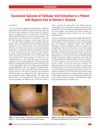 January 2021 in “Journal of Cutaneous and Aesthetic Surgery”
 Follicular unit extraction successfully restored hair growth in a leprosy patient without disease relapse.
 February 2026 in “Journal of Microbiology and Biotechnology”
 This study reported that abietic acid, derived from pine rosin, showed antimicrobial effects and reduced biofilm biomass in laboratory tests against microorganisms like Staphylococcus aureus and Candida albicans, suggesting potential further applications for skin infections.
4 citations
,
January 1993 in “Clinical Chemistry and Laboratory Medicine (CCLM)” This study developed a highly sensitive fluorescent assay for measuring enzyme activity in single hair follicles, allowing the efficient analysis of over 100 samples per day.
This study found that camel hair treated with the photosensitizer Rose Bengal exhibited strong antibacterial properties against Staphylococcus aureus and Escherichia coli when exposed to visible light, achieving over 99.90% bacterial inhibition and maintaining robust mechanical strength.
 December 2025 in “Universities Journal of Phytochemistry and Ayurvedic Heights”
 This study highlights a comprehensive approach for authenticating and assessing the quality of herbal medicines using a combination of physiological, morphological, and molecular techniques, including HPTLC, ICP-MS, UV spectroscopy, and DNA barcoding, to ensure the standardization of herbal medicinal products, particularly Eclipta alba.
January 2013 in “Hunan Agricultural Sciences” In this study, Lactobacillus reuteri and Bacillus natto were found to potentially replace Aureomycin in alleviating weaning stress in piglets, based on growth, diarrhea rate, immunity, and other health indicators.
7 citations
,
January 1986 in “Prenatal Diagnosis” This study demonstrated that biochemical analysis of proteins from fetal skin biopsies is feasible, potentially enhancing prenatal diagnostic capabilities for protein-related disorders.
April 2024 in “Iranian Journal of Microbiology” Shallot extract from Palu Valley can effectively kill Salmonella typhi.