 June 2011 in “Oncology times”
 This article covers discussions from the Society of Urologic Oncology Annual Meeting outlining that new therapies, such as Provenge, Prostvac, and denosumab, are making the treatment of advanced prostate cancer more complex but may offer extended survival benefits.
July 2022 in “DOAJ (DOAJ: Directory of Open Access Journals)” This article reviews various aspects of androgenetic alopecia, from its historical perceptions to current understanding and treatments, without providing new clinical results.
June 2025 in “British Journal of Dermatology” This study detailed the implementation of an autonomous AI device in an NHS skin cancer pathway, showing that it achieved a sensitivity of 97.3% for diagnosing skin cancers and exceeded sensitivity targets compared to specialists with a negative predictive value over 99.7%.
2 citations
,
March 2024 in “JAAD Case Reports” In this study, platelet-rich plasma treatments over three months were reported to improve hair growth in individuals with androgenetic alopecia, although objectively measuring its efficacy remains challenging.
28 citations
,
March 2019 in “Cellular Microbiology” This review discusses the advancements enabled by intravital microscopy in understanding host-parasite interactions in living animals and reports no new clinical results.
 March 2010 in “The Journal of Urology”
 This study found that men with early-onset androgenetic alopecia had larger prostate volumes and lower urinary flow rates compared to those without the condition, suggesting a potential link between AGA and urinary symptoms.
 May 2016 in “Endocrine Abstracts”
 The removal of the adrenal tumor improved the patient's symptoms and reduced androgen levels, indicating successful surgery.
 14 citations
,
May 2008 in “Journal of proteome research”
14 citations
,
May 2008 in “Journal of proteome research” This study found that dutasteride reduced β-amyloid plaque load in a cerebral amyloidosis model, seemingly linked to mitochondrial apoptosis and autophagy processes.
February 2026 in “Chemical Engineering Journal” This study found that a novel nano-engineered platform, PCA, significantly promoted hair regeneration in an androgenetic alopecia mouse model by enhancing angiogenesis and hair follicle stem cell proliferation, showing promise for future hair regrowth treatments.
 2 citations
,
January 2014 in “International Journal of Endocrinology”
2 citations
,
January 2014 in “International Journal of Endocrinology” In this study, women with a complete hydatidiform mole had significantly higher pre-evacuation levels of hCG, free testosterone, and DHEA-S compared to controls, which declined after HM evacuation.
 1 citations
,
July 2015 in “AACE clinical case reports”
1 citations
,
July 2015 in “AACE clinical case reports” This case report details a postmenopausal woman with hyperandrogenism due to both adrenal adenoma and ovarian hyperthecosis, highlighting the effectiveness of hormonal suppression and venous sampling for diagnosis.
February 2023 in “Clinical, Cosmetic and Investigational Dermatology” This study found that male patients with Androgenetic alopecia have higher serum leptin, lower vitamin D levels, and an altered adiponectin/leptin ratio, which may contribute to the disease's pathogenesis.
July 2021 in “Faculty of 1000 Research Ltd” This case series reported good hair growth results in three androgenic alopecia patients treated with a combination of autologous platelet-rich plasma and stromal vascular fraction cells.
 1 citations
,
March 2024 in “Skin health and disease”
1 citations
,
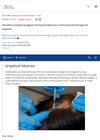
March 2024 in “Skin health and disease” This study found that vibration assisted analgesia reduced pain during intralesional corticosteroid therapy for hair loss, enabling treatment in a broader range of patients, including those with needle phobia.
![Discovery of (2S)-N-(6-Cyano-5-(Trifluoromethyl)Pyridin-3-Yl)-3-(6-(4-Cyanophenyl)-3,6-Diazabicyclo[3.1.1]Heptan-3-Yl)-2-Hydroxy-2-Methylpropanamide as a Highly Potent and Selective Topical Androgen Receptor Antagonist for Androgenetic Alopecia Treatment](/images/assets/693e7bf6-2325-4ddc-a20f-3470db9f4516/small/25627.jpg) December 2023 in “Journal of Medicinal Chemistry”
December 2023 in “Journal of Medicinal Chemistry” In this study, researchers identified compound 30a as a promising topical androgen receptor antagonist that promoted hair growth in mouse models of androgenetic alopecia without noticeable toxicity, suggesting its potential for treating this hair loss condition.
 May 2025 in “Frontiers in Bioengineering and Biotechnology”
 In this study, the researchers reported that a novel exosome-based treatment, EX104, effectively reversed hair follicle miniaturization and promoted hair growth in a mouse model of androgenetic alopecia, showing results comparable to minoxidil and surpassing it in stimulating capillary growth and follicular proliferation.
 September 2023 in “Forum Dermatologicum”
 Dutasteride injections can help treat hair loss in men and women.
 35 citations
,
March 2014 in “British Journal of Dermatology”
35 citations
,
March 2014 in “British Journal of Dermatology” This study found that in androgenic alopecia, the arrector pili muscle degenerates and is replaced by fat, unlike in normal skin or telogen effluvium.
 6 citations
,
January 2016 in “Springer eBooks”
6 citations
,
January 2016 in “Springer eBooks” Invasomes effectively deliver drugs through the skin and have potential for improved treatments.
7 citations
,
January 2013 in “Hormone Research in Paediatrics” This case report describes an adult female with congenital adrenal hyperplasia who developed secondary amenorrhea and hair loss due to androgen overproduction from ovarian adrenal rests, detectable only after pelvic venous sampling, and normalizing after unilateral oophorectomy.
9 citations
,
August 2011 in “The World Journal of Men s Health” This study concluded that administering 5-alpha reductase inhibitors before photoselective vaporization of the prostate increased hemoglobin change, lasing time, and energy required during the procedure compared to controls.
 February 2026 in “Skin Appendage Disorders”
 This study found that scalp microinfusion with dutasteride using microneedling and tattoo devices appears safe and shows promise as a treatment for male androgenetic alopecia, resulting in stabilization or improvement in 96.7% of patients, although further controlled studies are needed.
 January 2026 in “International Journal of Dermatology Venereology and Leprosy Sciences”
 In this randomized study, intradermal injections of dutasteride effectively improved androgenetic alopecia in 15 male patients, showing significant clinical improvement within one month and being well-tolerated without notable side effects, though the improvement was negatively correlated with longer disease duration.
17 citations
,
July 2024 in “Advanced Intelligent Systems” This review explores the complexity of human–robot interactions in robotic surgery, finding that complexity increases with conditional autonomy and is predicted to decrease with full autonomy, without reporting new clinical results.
 39 citations
,
December 2001 in “JNCI: Journal of the National Cancer Institute”
39 citations
,
December 2001 in “JNCI: Journal of the National Cancer Institute” This study found that enhanced expression of the Sonic hedgehog gene via an adenovirus vector accelerated hair regrowth in mice with chemotherapy-induced alopecia.
 May 2015 in “Hair transplant forum international”
 This review discusses androgenetic alopecia and reports no clinical findings; the authors highlight a need for further research.
 42 citations
,
July 2007 in “Journal of Biological Chemistry”
42 citations
,
July 2007 in “Journal of Biological Chemistry” This study found that most pathogenic HR mutants associated with atrichia with papular lesions had abolished corepressor activity due to defective interactions with histone deacetylases.
 9 citations
,
November 2018 in “Acta Clinica Belgica”
9 citations
,
November 2018 in “Acta Clinica Belgica” This case report suggests that spironolactone may induce prostate cancer proliferation in patients on abiraterone acetate, advising against its use for managing treatment-associated side effects in these individuals.
January 2026 in “Pattern Recognition” This study found that their newly developed ADRL framework significantly improved the accuracy of scalp tissue layer segmentation in HR-MR images compared to existing methods.
January 2026 in “Dermatologic Surgery” In this systematic review, researchers found that injectable therapies, including agents like dutasteride and multivitamin formulations, may offer cosmetic benefits for androgenetic alopecia; however, evidence is limited by small study sizes, varied methods, and short follow-up periods, necessitating standardized trials for routine use recommendations.