5 citations
,
December 2014 in “Molecular cytogenetics” This study identified a 290 Kb microduplication in chromosome 1q22 in a family with members exhibiting neurodevelopmental disorders, suggesting a link between this genetic alteration and the observed neurological symptoms.
 1 citations
,
June 2023 in “Journal of Dermatology”
1 citations
,
June 2023 in “Journal of Dermatology” This study found that patients with alopecia areata had a higher prevalence of autoimmune, inflammatory, and mental health conditions compared to a matched cohort without alopecia areata.
13 citations
,
April 2009 in “Journal der Deutschen Dermatologischen Gesellschaft” This article reviews nail involvement in various skin diseases, such as psoriasis and lichen planus, and highlights characteristic changes but reports no new clinical findings.
 May 2020 in “International journal of biology, pharmacy and allied sciences”
 This review discusses the correlation between vitiligo and various autoimmune, systemic, and dermatological diseases, highlighting the need to increase awareness of these comorbidities.
1 citations
,
May 2024 in “Journal of Clinical Medicine” This study found a reciprocal correlation between depressive disorders and several dermatological autoimmune diseases, such as psoriasis and lupus, suggesting that inflammation may be a shared pathomechanism for these conditions.
 1 citations
,
December 2010 in “The journal of small animal practice/Journal of small animal practice”
1 citations
,
December 2010 in “The journal of small animal practice/Journal of small animal practice” This article discusses hair loss disorders in domestic animals, but it contains no abstract or new research findings.
December 2021 in “OPAL (Open@LaTrobe) (La Trobe University)” This review discusses recent advancements in targeted therapies for vitiligo, highlighting the therapeutic potential of JAK inhibitors and mesenchymal stem cell-derived extracellular vesicles, and reports no new clinical results.
 July 2022 in “Dermatology Reports”
 This review found a predominance of low serum zinc levels across various skin disorders, indicating possible value in further investigating zinc supplementation as an adjunctive therapy.
6 citations
,
April 2012 in “Muscle & nerve” This letter to the editor documents a case where chronic inflammatory demyelinating polyneuropathy is associated with alopecia totalis and Sjögren syndrome, but reports no new clinical findings.
 October 2025 in “Italian Journal of Dermatology and Venereology”
 This study reported that lichen planopilaris predominantly affects females over 60, with a registered prevalence rate of 0.02581%, and is often associated with autoimmune diseases like systemic lupus erythematosus, suggesting a need for further research to enhance treatment approaches.
64 citations
,
December 1990 in “Journal of the American Academy of Dermatology” This review discusses the use of cyclosporine in dermatological conditions and its associated monitoring needs and potential side effects, but reports no new research results.
January 2025 in “Journal of Biosciences and Medicines” This narrative review explores contraindications for fractional CO2 laser treatment of aesthetic disorders, highlighting conditions such as pigmentary disorders, active skin conditions, photosensitivity, and recent isotretinoin use, emphasizing the importance of careful patient selection to minimize risks and enhance safety and effectiveness.
 April 2026 in “Frontiers in Immunology”
 In this study, researchers did not find any genome-wide significant genetic signals linked to comorbid chronic inflammatory disorders in patients with alopecia areata, but exploratory analysis suggested potential associations worth further study.
11 citations
,
June 2017 in “Mathematical Medicine and Biology A Journal of the IMA” This mathematical model of alopecia areata illustrates how inflammatory autoimmune responses interrupt the anagen phase of hair growth, and may help evaluate treatments and identify new therapeutic targets.
 12 citations
,
May 2011 in “Dermatologic Clinics”
12 citations
,
May 2011 in “Dermatologic Clinics” This review discusses the association between scarring alopecia and inflammatory processes in common acquired bullous disorders of the scalp, and reports no new clinical findings.
 April 2016 in “Journal of The American Academy of Dermatology”
 Lichen planus may be associated with a higher risk of metabolic syndrome.
 January 2023 in “International Journal of Pharmaceutical Research and Development”
 This review discusses alopecia, its pathophysiology, nanotechnology-based drug delivery systems, and related quality of life issues, without reporting new clinical results.
 90 citations
,
June 2006 in “The American Journal of Dermatopathology”
90 citations
,
June 2006 in “The American Journal of Dermatopathology” This review outlines the classification, histopathologic presentation, and pathogenetic concepts of scarring and nonscarring alopecias, reporting no new clinical results and emphasizing the need for clinicopathologic correlation.
 March 2025 in “Ukrainian Journal of Dermatology Venerology Cosmetology”
 This review highlights the crucial role of the immune system in hair follicle regulation and its potential link to autoimmune disorders like alopecia areata. It suggests that understanding immune-mediated hair regeneration could lead to new treatments for this condition.
8 citations
,
November 2017 in “Current problems in dermatology” This review discusses the cutaneous side effects of targeted anticancer therapies, such as rashes and hair changes, but presents no new clinical results.
1 citations
,
January 2018 in “Skin appendage disorders” This review discusses the role of the complement pathway in alopecia areata and reports no new clinical results; the authors suggest that targeting this pathway could offer treatment options.
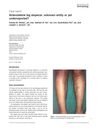 September 2018 in “International Journal of Dermatology”
 This case report about anterolateral leg alopecia discusses a potentially underreported condition with no new clinical results available.
39 citations
,
April 2019 in “The journal of immunology/The Journal of immunology” This study found that Malt1, particularly its protease activity, plays a crucial role in maintaining Treg cell function and homeostasis, with its inactivation leading to autoimmune diseases and altered immune responses in mice.
 105 citations
,
September 1995 in “Journal of The American Academy of Dermatology”
105 citations
,
September 1995 in “Journal of The American Academy of Dermatology” This review discusses the use of recombinant cytokines as therapeutic agents in clinical settings and describes the range of cutaneous complications associated with their use, including both minor and severe skin reactions.
 January 2010 in “Elsevier eBooks”
 Hair transplantation is a treatment for hair loss mainly caused by genetics, with various techniques and potential complications, and results visible after 8-12 months.
 3 citations
,
May 2023 in “Biomedicines”
3 citations
,
May 2023 in “Biomedicines” This article reviews the immunometabolic mechanisms linking polycystic ovary syndrome to infertility and stresses the need for interdisciplinary approaches to treat PCOS-related fertility issues; it reports no new clinical results.
This review found an increased prevalence of common skin disorders, such as infectious and inflammatory conditions, in patients with Down syndrome and highlighted the need for improved screening and management guidelines.
7 citations
,
July 2025 in “International Journal of Dermatology” This meta-analysis found that patients with alopecia areata have significantly higher odds of also having immune-mediated diseases such as atopic dermatitis, autoimmune thyroiditis, inflammatory bowel disease, systemic lupus erythematosus, and vitiligo, suggesting a need for comprehensive screening and interdisciplinary management.
 April 2023 in “IP Indian journal of clinical and experimental dermatology”
 This article reviews the pathogenesis, complications, and management of lichen planus, especially its persistent oral form, and highlights the need for further prospective studies.
11 citations
,
October 2021 in “Orphanet journal of rare diseases” This study found that patients with RASopathies have lower serum IgA and CD8 levels compared to controls, indicating a potential risk for developing autoimmune disorders.