January 2023 in “Cutaneous and Ocular Toxicology” This study found that ATP may help reduce ribociclib-induced skin damage in rats by mitigating biochemical changes associated with oxidative stress.
6 citations
,
November 2022 in “Antioxidants” In this study, sandalore was found to activate OR2AT4, which inhibits senescent cell traits and restores proliferation in human keratinocytes, suggesting potential anti-aging applications.
10 citations
,
June 2022 in “Biomedicine & Pharmacotherapy” This review examines the molecular mechanisms by which the proapoptotic protein ARTS inhibits tumorigenesis and discusses prospects for developing drugs that mimic its function, with no new experimental results reported.
 July 2026 in “Zenodo (CERN European Organization for Nuclear Research)”
 This study evaluated Korean herbal compounds in silico and identified Biochanin A, Saponin Re, and Emodin as potential topical treatments for androgenetic alopecia, each with specific safety and efficacy considerations.
 December 2018 in “Actas urológicas españolas”
 This study reported that cognitive biopsy diagnosed prostate cancer in 44% of patients with at least one previous negative biopsy, with higher detection rates in lesions classified as PI-RADS 4 and 5.
December 2025 in “The International Journal of Medical Science and Health Research” This literature review explored the potential of Rosmarinus Officinalis as a plant-based solution for Androgenetic Alopecia, highlighting its effectiveness and minimal side effects compared to conventional treatments, which often have significant adverse effects.
24 citations
,
November 2015 in “Frontiers in Genetics” This review discusses the development and potential therapeutic effects of nitroxide small molecule agents for age-related macular degeneration and cardiovascular disease, but reports no new clinical results.
70 citations
,
September 2017 in “Expert opinion on therapeutic patents” This review examines the patent literature on AKR1C3 inhibitors and suggests that although numerous potent inhibitors exist, further preclinical optimization is necessary before assessing their therapeutic potential in human diseases.
 December 2024 in “Journal of Biophotonics”
 In this study, researchers observed that red and red-orange LED light therapy stimulates nitric oxide production and decreases dihydrotestosterone synthesis in cell models, suggesting a potential mechanism for using light therapy to treat androgenetic alopecia.
May 2025 in “OPAL (Open@LaTrobe) (La Trobe University)” This study identified six molecules from herbal extracts that effectively bind to 5-alpha reductase (5-AR), with Jomogenin showing high binding stability when encapsulated in lipid nanoparticles, suggesting their potential for further experimental analysis to aid hair follicle growth.
 10 citations
,
December 2005 in “Aktuelle Dermatologie”
10 citations
,
December 2005 in “Aktuelle Dermatologie” This study reported that after 7.5 months of treatment, topical Alfatradiol significantly increased anagen hair rates in women and men with androgenetic alopecia, with minimal side effects.
September 2024 in “Annals of Medicine and Surgery” In this review, the authors highlight the FDA approval of Ritlecitinib, the first oral treatment specifically for moderate to severe alopecia areata in patients aged 12 and older, marking a significant advancement in managing this condition.
 January 2025 in “International Journal of Dermatology Research”
 In this study, a herbal preparation inhibited the conversion of testosterone to DHT and its binding on hair roots in vitro, suggesting potential as an alternative treatment for androgenic alopecia without the safety concerns associated with finasteride.
3 citations
,
May 2017 in “Bioorganic & medicinal chemistry letters” This study identified compounds 11d and 11k as potential dual 5α-reductase inhibitors and AR antagonists with significant anti-proliferative effects on prostate cancer cell lines, suggesting they may offer therapeutic value.
January 2023 in “Pharmaceutics” In this study, researchers developed a new topical atraric acid formulation, AA-TF#15, which showed a significantly higher drug penetration and increased hair regrowth in mice compared to minoxidil and finasteride treatments, suggesting its potential effectiveness for treating scalp androgenic alopecia.
 4 citations
,
November 2024 in “Cell Biology and Toxicology”
4 citations
,
November 2024 in “Cell Biology and Toxicology” This study suggests that targeting olfactory receptors in the lung epithelium might help treat odorant-induced asthma in cases without type 2 inflammation, as these receptors could play a role in airway sensitivity to smells.
 18 citations
,
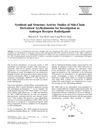
April 2001 in “Bioorganic & Medicinal Chemistry Letters”
18 citations
,
April 2001 in “Bioorganic & Medicinal Chemistry Letters” This study identified the N-(iodopropenyl) derivative 13 as a promising candidate for development as a radioiodinated androgen receptor ligand due to its binding affinity.
This study found that Clitocybin A from Clitocybe aurantiaca significantly increased the proliferation of immortalized rat dermal papilla cells, suggesting potential hair growth-promoting effects in a laboratory setting.
April 2023 in “Journal of Investigative Dermatology” In this study, a novel AR protein degrader was shown to reverse DHT-induced hair regrowth delay in a mouse model of androgenetic alopecia, with minimal circulation and potential side effects.
 June 2024 in “Korean Journal of Pharmacognosy”
 This study found that taxifolin glycosides isolated from Rhododendron mucronulatum showed promise for developing treatments for male pattern hair loss by inhibiting DHT production and enhancing hair growth-promoting factors.
 December 2024 in “Journal of Cancer Therapy and Research”
 In this study, researchers investigated the effects of Aqueous Artocarpus heterophyllus seed extract on testosterone enanthate-induced benign prostatic hyperplasia in adult Wistar rats, using three different dosages to assess its potential as an alternative therapy. Results are not reported in this abstract.
March 2022 in “Research Square (Research Square)” This study found that certain bioactive mushroom metabolites may inhibit the enzyme SRD5A2 more effectively than finasteride in computational models, suggesting potential for further research in treating androgenic alopecia.
12 citations
,
November 2024 in “Plants” This study found that the phytosterols β-sitosterol, stigmasterol, and campesterol have low-to-negligible inhibitory activity against steroidal 5α-reductase type 2 compared to the synthetic inhibitor dutasteride, with β-sitosterol showing the highest activity among the tested phytosterols.
 April 2024 in “Expert opinion on emerging drugs”
 In this research review, the authors note that while topical minoxidil and oral finasteride are FDA-approved treatments for male androgenetic alopecia, some patients experience inadequate responses or side effects, prompting exploration of alternative therapies like newer 5-α reductase inhibitors and androgen receptor antagonists.
 May 2026 in “Zenodo (CERN European Organization for Nuclear Research)”
 This review highlights the dual nature of Abrus precatorius as both a traditional medicine and a toxin, emphasizing its rich phytochemical profile and potential therapeutic applications, while noting the need for rigorous quality control and clinical trials to ensure safety and efficacy.
April 2026 in “Phytotherapy Research” This study found that glycyrrhizic acid may reduce the cutaneous toxicity caused by Osimertinib in mice, suggesting its potential as an adjunct treatment in clinical settings.
 36 citations
,
November 2018 in “BMC plant biology”
36 citations
,
November 2018 in “BMC plant biology” This study suggests that ROXYs and reactive oxygen species are likely involved in the signaling pathways plants use to respond to nitrate deprivation.
![Synthesis and In Vitro Study of 17β-[N-Ureylene-N,N′-Disubstituted]-4-Methyl-4-Aza-5α-Androstan-3-Ones as Selective Inhibitors of Type I 5α-Reductase](/images/assets/d19df8a7-8de6-4430-8a0d-4ffa1f502985/small/15608.jpg) 5 citations
,
February 1997 in “Bioorganic & Medicinal Chemistry”
5 citations
,
February 1997 in “Bioorganic & Medicinal Chemistry” This study found that among 17 beta-(N-ureylene-N,N'-disubstituted)-4-azasteroids, those with an N'-phenyl moiety were the most effective inhibitors of human type I 5 alpha-reductase.
4 citations
,
March 2025 in “The Journal of Dermatology” This study found that in Asian patients aged 12 and older with alopecia areata and significant hair loss, ritlecitinib showed clinical efficacy in improving hair regrowth and eyebrow and eyelash scores over 48 weeks, with an acceptable safety profile observed throughout.
 November 2025 in “SKIN The Journal of Cutaneous Medicine”
 In this phase 3 trial, baricitinib showed effectiveness and safety in both adolescents and adults with severe alopecia areata, with adolescents achieving higher response rates despite more severe baseline conditions, suggesting the advantages of early treatment.