 November 2025 in “Mendeley Data”
 This study found that tofacitinib and baricitinib, when administered with unorthodox weight-stratified dosing in pediatric patients with moderate-to-severe AA, showed comparable efficacy and tolerability, though baricitinib's efficacy decreased with non-standard dosing.
 December 2023 in “Journal of Cosmetic Dermatology”
 This study found that baricitinib, taken for 24 weeks, significantly reduced alopecia severity in patients with moderate-to-severe alopecia areata, with 50% showing marked improvement and overall favorable safety and efficacy reported.
 13 citations
,
November 2012 in “Journal of The European Academy of Dermatology and Venereology”
13 citations
,
November 2012 in “Journal of The European Academy of Dermatology and Venereology” This study found that topical clobetasol propionate cream provided a modest improvement in hair regrowth for alopecia areata patients, though those with atopy had higher relapse rates after treatment completion.
 March 2024 in “Dermatology and therapy”
 This study analyzed data from 2083 patients with alopecia areata in Europe and found that those with atopic, autoimmune, or psychiatric comorbidities encountered more severe disease and were more likely to require advanced treatments compared to those without comorbid conditions.
 August 2024 in “JAMA Dermatology”
 In this study, withdrawal of baricitinib therapy in patients with severe alopecia areata who had achieved hair regrowth led to a loss of benefit in almost all patients, suggesting that continued treatment is necessary to maintain hair regrowth.
2 citations
,
January 2023 in “Skin Appendage Disorders” This review discusses the evaluation, diagnosis, and management of beard alopecia areata and reports no new clinical results, though it highlights recent treatment advances with janus kinase inhibitors.
 June 2023 in “Dermatology and therapy”
 This study found that most dermatologists in the Middle East manage mild to severe alopecia areata primarily with potent topical corticosteroids and identified long-term disease control and improved efficacy as key unmet needs.
2 citations
,
June 2024 in “Journal of the American Academy of Dermatology” This study evaluated the agreement between clinician and patient assessments of eyebrow and eyelash hair loss severity in adults with severe alopecia areata, using data from two phase 3 studies over 52 weeks.
 June 2022 in “C&EN global enterprise”
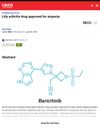
 This source notes that Olumiant (baricitinib), a rheumatoid arthritis drug by Eli Lilly and Company, has been approved as the first systemic treatment for severe alopecia areata.
1 citations
,
May 2013 in “Oncology Times” This narrative review reflects on the challenges faced by FDA's Oncologic Drugs Advisory Committee members, highlighting public pressure, decision-making complexity, and the evolving landscape of cancer drug development.
 June 2024 in “JEADV Clinical Practice”
 This study found that among placebo-treated patients in the BRAVE-AA trials, the likelihood of spontaneous hair regrowth in untreated severe alopecia areata was low, with only a small percentage achieving significant scalp, eyebrow, or eyelash hair improvement over 36 weeks.
 17 citations
,
September 2003 in “Journal of Investigative Dermatology Symposium Proceedings”
17 citations
,
September 2003 in “Journal of Investigative Dermatology Symposium Proceedings” This study found that anthralin and mechlorethamine were the most effective therapies among those tested in AA-affected rodent models, providing a basis for further analysis of their mechanisms in Alopecia Areata.
 4 citations
,
September 2022 in “Dermatologic Therapy”
4 citations
,
September 2022 in “Dermatologic Therapy” This study found that twice-daily oral baricitinib at a 2-mg dose showed promising results in treating refractory alopecia areata, particularly among Chinese patients, with 64% achieving significant hair regrowth, although none attained complete hair regrowth. Adverse events were mild and included nausea and folliculitis.
 February 2026 in “Biomedicines”
 This retrospective study at the University Clinical Centre in Gdańsk reported that 77.9% of patients with alopecia areata were treated with off-label pharmacotherapy, predominantly glucocorticosteroids, highlighting a reliance on these therapies in European clinical practice.
January 2026 in “Skin Health and Disease” This study conducted a survey among consultant dermatologists in Ireland to explore their use of JAK inhibitors for treating alopecia areata, acknowledging challenges posed by the lack of global guidelines and long-term safety data.
 489 citations
,
November 2021 in “Signal Transduction and Targeted Therapy”
489 citations
,
November 2021 in “Signal Transduction and Targeted Therapy” This review discusses the composition, activation, and regulation of the JAK/STAT pathway and highlights its role and inhibitors in various diseases, but reports no new experimental results.
278 citations
,
May 2013 in “Ca” This review discusses the shift in toxicity profiles of cancer therapies from traditional chemotherapy to targeted agents, noting similar overall toxicities but with different side effects, and reports no new findings.
248 citations
,
August 2015 in “Pharmacological Research” This review discusses case reports of autoimmune diseases following vaccination and the challenges of establishing a clear epidemiological connection, urging further investigation into vaccine-induced autoimmunity.
247 citations
,
June 2021 in “Frontiers in Cell and Developmental Biology” This review discusses the role of lncRNA Xist in cell growth regulation and disease development, particularly cancer, and reports no new experimental results.
122 citations
,
August 2020 in “Tropical Diseases Travel Medicine and Vaccines” This review discusses the disproportionate negative impact of the COVID-19 pandemic on individuals with chronic medical conditions and calls for strategies to protect these vulnerable populations.
 114 citations
,
January 2021 in “medRxiv (Cold Spring Harbor Laboratory)”
114 citations
,
January 2021 in “medRxiv (Cold Spring Harbor Laboratory)” This meta-analysis estimated that around 80% of patients who had COVID-19 experienced at least one long-term symptom, with fatigue being the most common reported effect.
113 citations
,
July 2020 in “International Journal of Molecular Sciences” This review suggests that allogenic adipose stem cell and extracellular matrix transplants may be safe and effective for various medical conditions, based on available studies.
112 citations
,
July 2020 in “BMC Medicine” This review discusses how overlapping risk factors in women with polycystic ovary syndrome may heighten their risk for severe COVID-19, advocating for integrated care approaches but provides no new clinical results.
92 citations
,
December 2020 in “Brain Sciences” This review discusses the potential of various Indian herbal medicines in treating cognitive impairment related to Alzheimer's disease but reports no new clinical findings; it highlights the need for further research.
88 citations
,
May 2024 in “Journal of Extracellular Vesicles” This scoping review found that while some small human pilot trials of extracellular vesicles as therapeutics showed promising outcomes, variability in study design and lack of placebo controls limit definitive conclusions about their safety and efficacy.
83 citations
,
May 2022 in “Journal of Advanced Research” This study suggests that enhancing glycolysis in MSCs may improve their immune functions and therapeutic potential, although more evidence is needed to understand the direct metabolic mechanisms involved.
54 citations
,
October 2022 in “Cells” This review discusses the therapeutic potential of mesenchymal stem cell-derived extracellular vesicles and modern technologies like 3D bioprinting but reports no new clinical results.
 52 citations
,
January 2022 in “Current Research in Pharmacology and Drug Discovery”
52 citations
,
January 2022 in “Current Research in Pharmacology and Drug Discovery” This review highlights ongoing efforts in drug repurposing and development of new therapeutics against COVID-19, emphasizing the promise of these strategies in addressing the challenges posed by SARS-CoV-2 mutations and post-infection complications.
52 citations
,
January 2021 in “Journal of Thoracic Oncology” Effective vaccines and treatments are crucial for long-term COVID-19 control.
51 citations
,
January 2024 in “Burns & Trauma” This review summarizes the therapeutic potential and development of engineered extracellular vesicles for tissue repair and regenerative medicine, reporting no new clinical findings.