 51 citations
,
January 2012 in “Annals of Dermatology”
51 citations
,
January 2012 in “Annals of Dermatology” This review discusses characteristics of androgenetic alopecia in Asian patients and includes algorithmic management guidelines, but reports no new clinical findings.
1 citations
,
January 2022 in “Annals of Dermatology” In this case report, researchers identified a novel homozygous missense mutation in the MBTPS2 gene associated with the mild form of IFAP syndrome in a 7-year-old boy.
April 2023 in “Journal of Investigative Dermatology” This study found that intradermal injection of a specially designed RNA molecule, cp-asiAR, successfully reduced androgen receptor levels and promoted hair growth in a mouse model of androgenetic alopecia, while also improving hair follicle characteristics in ex vivo human scalp tissues without significant toxicity.
 1 citations
,
September 2023 in “Clinical, cosmetic and investigational dermatology”
1 citations
,
September 2023 in “Clinical, cosmetic and investigational dermatology” This genome-wide association study identified several genetic markers, including specific SNPs and HLA genotypes, associated with alopecia areata susceptibility in the Taiwanese population, highlighting key pathways involved in immune response and offering insights into the genetic origins of this autoimmune condition.
 1 citations
,
August 2022 in “JAAD case reports”
1 citations
,
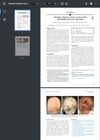
August 2022 in “JAAD case reports” This article discusses the patterns and variants of alopecia areata, including the rare sisaipho, but reports no new research findings.
1 citations
,
January 2025 in “JEADV Clinical Practice” This study reported that the AAPPO tool effectively distinguishes between patients with alopecia areata based on scalp hair loss severity, whereas the EQ‐5D‐5L may underestimate the specific disease burden, particularly in psychological and social aspects.
August 2025 in “OPAL (Open@LaTrobe) (La Trobe University)” In this study, PA-011 extract was reported to promote hair growth and alleviate alopecia areata symptoms in mice by reducing skin inflammation and modulating skin microbiota.
 62 citations
,
January 2004 in “The journal of investigative dermatology/Journal of investigative dermatology”
62 citations
,
January 2004 in “The journal of investigative dermatology/Journal of investigative dermatology” This study identified 16 novel high sulfur KAP genes and two KAP pseudogenes on chromosome 21q23, showing expression in a specific region of the hair fiber cuticle.
 25 citations
,
March 2017 in “Archives of Dermatological Research”
25 citations
,
March 2017 in “Archives of Dermatological Research” This study suggests that sinapic acid may promote hair growth in human hair follicle dermal papilla cells by activating specific signaling pathways and inducing the expression of growth factors.
14 citations
,
February 2013 in “Veterinary dermatology” This study reports that alopecia areata is a rare and typically cosmetic condition in horses, affecting breeds such as Appaloosas and quarter horses, with a possible seasonal pattern of worsening in spring and summer.
June 2026 in “Value in Health”  November 2025 in “Frontiers in Cell and Developmental Biology”
 This study mapped a detailed genetic profile of goat hair follicle apoptosis, identifying key genes and regulatory factors involved in the hair cycle, offering new insights into programmed cell death.
48 citations
,
November 2002 in “Journal of biological chemistry/The Journal of biological chemistry” In this study, researchers found that size polymorphisms in certain hKAP1 genes are linked to the hKAP1.1B and hKAP1.3 genes, arising from intragenic deletions and duplications in Japanese and Caucasian populations.
34 citations
,
January 2004 in “Genomics” In this study, researchers identified a cluster of hair-specific keratin-associated protein genes within the 21q22.3 region, revealing a novel transcription mechanism involving TSPEAR/C21orf29 that may bypass typical transcriptional termination sites.
 August 2024 in “Skin Appendage Disorders”
 This study introduces "alopecia areata in a male or female pattern distribution" as a new clinical subtype of alopecia areata, observed in three adult cases, to enhance diagnostic precision and treatment personalization.
7 citations
,
January 2024 in “Cancer Research Communications” This study found that TAp63 and ΔNp63 isoforms in the p63 family interact with different transcription factors to regulate distinct transcriptional programs, affecting various biological functions like metabolic pathways, oxidative stress response, and epithelial morphogenesis in mouse epidermal cells.
June 2022 in “Journal of Holistic and Health Sciences (Jurnal Ilmu Holistik dan Kesehatan)” This study found that a powder made from papaya seeds and celery leaves remained stable for 3 weeks when stored at room or cold temperatures, suggesting potential for hair health applications.
 July 2024 in “jurnal ABDIMAS Indonesia”
 In this study, the authors observed that among elderly participants, 59.1% did not experience depression, correlating with measured average levels of apolipoprotein A and B. They suggest early screening can help manage apolipoprotein levels, potentially reducing depression risk and improving quality of life.
May 2025 in “Acta Dermato Venereologica” The Paxbp1 gene is crucial for healthy hair follicles.
January 2026 in “Clinical and Experimental Dermatology” In this case report, complete hair regrowth was observed in a patient with autoimmune-related alopecia areata after treatment with a Janus kinase inhibitor, suggesting its potential effectiveness for both genetic and sporadic forms of the condition.
69 citations
,
May 2002 in “Journal of Investigative Dermatology” This study suggests that congenital atrichia with papular lesions may be more common than previously thought and proposes diagnostic criteria including the observation of hypopigmented whitish streaks on the scalp.
January 2017 in “Seoul National University Open Repository (Seoul National University)” This study found that the N-terminal fragment of AIMP1 enhances hair growth and proliferation of hair follicle stem cells in mice, suggesting its potential as a therapeutic peptide for hair loss treatment.
 30 citations
,
May 2005 in “Pediatric dermatology”
30 citations
,
May 2005 in “Pediatric dermatology” This report reviews familial cases of aplasia cutis of the scalp, noting large irregular defects at the vertex or anterior along the sagittal suture in six families.
 1 citations
,
May 2023 in “Jurnal Farmasi Galenika (Galenika Journal of Pharmacy) (e-Journal)”
1 citations
,
May 2023 in “Jurnal Farmasi Galenika (Galenika Journal of Pharmacy) (e-Journal)” This study explored the traditional use of 18 plant-based remedies by the Amarasi people in Indonesia for treating dandruff and hair loss, detailing plant types, parts used, and processing methods, highlighting their potential as anti-dandruff and anti-baldness treatments.
 1 citations
,
July 2025 in “Frontiers in Endocrinology”
1 citations
,
July 2025 in “Frontiers in Endocrinology” This review discusses the dual role of apoptotic vesicles in disease and therapy, emphasizing their potential in cancer treatment and tissue regeneration, but reports no new results.
This narrative review examined the potential of hibiscus leaves and apple skin as natural ingredients for hair tonics and reported their effectiveness in addressing hair loss, highlighting properties like strong antioxidant content and ability to strengthen hair roots.
July 2026 in “Journal of the American Academy of Dermatology” 23 citations
,
September 1957 in “Archives of Dermatology” This study investigated alkaline phosphatase activity in scalp biopsies from patients with alopecia areata and totalis, but provides no new conclusive clinical results.
 February 2020 in “Our Dermatology Online”
 A synthetic drug and a South American herb may help treat alopecia areata in Chinese men.
 July 2018 in “Hair transplant forum international”
 This abstract contains only author affiliations and mentions the Asian Association of Hair Restoration Surgeons, without presenting any new research findings.