In this descriptive retrospective study, researchers reported that low-dose oral minoxidil (0.25-5mg/day) for androgenic alopecia demonstrated a good safety profile, with 84.4% of 641 patients experiencing no adverse effects and only 1.4% discontinuing due to side effects that resolved with dose reduction or withdrawal.
 1 citations
,
January 1989 in “Handbook of experimental pharmacology”
1 citations
,
January 1989 in “Handbook of experimental pharmacology” This article reviews the use of anti-androgens for dermatological conditions linked to androgen involvement and reports encouraging clinical experiences in females, with use in males limited to specific conditions due to toxicity concerns.
8 citations
,
April 1991 in “European journal of endocrinology” This study found that cyproterone acetate significantly reduced both serum 3α-AdiolG levels and hirsutism scores in women with idiopathic hirsutism, PCOS, or 21-hydroxylase deficiency, suggesting its effectiveness in treating excessive hair growth.
 March 2025 in “Expert Opinion on Drug Discovery”
 This article discusses the pursuit of more effective treatments for androgenetic alopecia due to its widespread psychological and social impact, but reports no new clinical findings.
8 citations
,
June 2017 in “Steroids” This study evaluated novel steroid compounds for their ability to inhibit 5α-reductase, showing that compound 16a significantly reduced rat prostate weight more than epristeride and exhibited excellent in vitro inhibitory potency, indicating its potential as a lead candidate for further benign prostatic hyperplasia drug research.
December 2022 in “Clinical and experimental dermatology and therapies” In this study, the addition of a topical gel containing growth-factor mimicking oligopeptides and other ingredients showed improved efficacy in subjects with androgenic alopecia using minoxidil or finasteride compared to drug treatment alone.
 97 citations
,
November 1986 in “Journal of Steroid Biochemistry”
97 citations
,
November 1986 in “Journal of Steroid Biochemistry” This review discusses the pharmacological properties and clinical applications of cyproterone acetate and similar antiandrogens, noting previous failures in local applications due to concentration limitations; it reports no new empirical results.
 December 1998 in “Acta Crystallographica Section C-crystal Structure Communications”
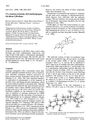
 This study describes the molecular conformation and intermolecular interactions in the crystalline structure of the compound C24H31BrO4.
65 citations
,
November 2019 in “European Journal of Pharmacology” This review discusses the role of anti-androgen therapies in cancer and other diseases and reports no new clinical results, highlighting both old and new generations of anti-androgens.
September 2024 in “Dermatology Reports” In this study, 45 patients with advanced basal cell carcinoma treated with the medication sonidegib experienced a 24% incidence of alopecia, with detailed trichoscopic and LC-OCT examination revealing specific hair changes, suggesting LC-OCT might help identify early signs of alopecia from sonidegib use.

This study found that the novel alcohol-free topical foam CG2001, combining minoxidil and finasteride, was safe and well-tolerated in Chinese males with androgenetic alopecia, with significantly lower systemic exposure to finasteride compared to oral administration, potentially reducing sexual side effects.
 20 citations
,
March 2005 in “Current Medicinal Chemistry”
20 citations
,
March 2005 in “Current Medicinal Chemistry” This study reports that newly synthesized steroidal trienones exhibit higher 5α-reductase inhibitory activity than dienones in various biological models, suggesting potential use in treating androgen-dependent diseases.
 April 2023 in “Journal of Investigative Dermatology”
 This study found that ALRN-6924 effectively protected human hair follicles from cyclophosphamide-induced damage in an ex vivo setting, suggesting it may reduce both acute and permanent chemotherapy-induced alopecia.
September 2025 in “Pharmaceutics” In this study, quercetin nanocrystals stabilized with glycyrrhizic acid were developed as a new treatment strategy for androgenetic alopecia, which significantly reduced DHT levels and improved hair regrowth in a mouse model, indicating synergistic potential for clinical application.
December 2022 in “CRC Press eBooks” This research outlines that antiandrogens have mechanisms involving competitive inhibition of androgen binding and enzyme inhibition, with contraindications during pregnancy due to potential fetal risks.
May 2025 in “Journal of the American Academy of Dermatology” Bicalutamide shows promise for treating female hair loss.
This study found that a combination of topical and oral treatment led to greater improvements in hair density, thickness, and anagen/telogen ratio in patients with androgenetic alopecia compared to topical treatment alone, with significant benefits observed over a 3-month period.
 June 2026 in “International Journal of Innovative Technologies in Social Science”
 This source describes clascoterone, a new topical treatment for acne vulgaris that blocks androgen receptors to reduce sebaceous gland activity and inflammation, offering a lower risk of systemic side effects compared to oral treatments.
 11 citations
,
August 1997 in “Expert Opinion on Therapeutic Patents”
11 citations
,
August 1997 in “Expert Opinion on Therapeutic Patents” This review discusses nearly 70 patent applications for the treatment of androgenetic alopecia and other hair conditions, highlighting the mechanisms of action explored but reports no clinical results.
 42 citations
,
May 2003 in “Mini-reviews in Medicinal Chemistry”
42 citations
,
May 2003 in “Mini-reviews in Medicinal Chemistry” This study found that newly synthesized steroidal trienones demonstrated stronger 5α-reductase inhibitory activity compared to dienones in various biological models, suggesting potential for developing enhanced antiandrogenic drugs.
 April 1992 in “Current opinion in therapeutic patents”
 This study reports the development of novel 4-amido-Δ4,6-steroids as potential inhibitors of 5α-reductase, showing promising in vitro results for conditions like acne and benign prostatic cancer.
 1 citations
,
January 1995 in “Journal of Investigative Dermatology”
1 citations
,
January 1995 in “Journal of Investigative Dermatology” RU58841, a substance from France, can potentially block the effects of hormones that cause hair loss and excessive hair growth, performing better than a similar substance, cyproterone acetate.
 January 2024 in “Journal of Biosciences and Medicines”
 This research suggests that recent discoveries of signaling pathways in androgenic alopecia may pave the way for targeted therapies, providing potential new treatment options beyond the current FDA-approved drugs, minoxidil and finasteride.
 August 2024 in “Archives of Dermatological Research”
 In this study, low-dose oral minoxidil was found to be an effective and safe treatment for androgenetic alopecia, showing comparable outcomes in patients with AGA alone and those with AGA unmasked by telogen effluvium.
 January 2024 in “La Ciencia al Servicio de la Salud y Nutrición”
 This narrative review attributes antiandrogenic properties to spironolactone, reporting its effectiveness in treating dermatological conditions like alopecia androgenica, acne, and hirsutism, though highlighting necessary attention to potential adverse effects and contraindications.
1 citations
,
December 1995 in “Archives of Dermatology” This case report describes a patient with advanced androgenetic alopecia who underwent a 6-month trial of topical minoxidil and oral finasteride, aiming to optimize hair regrowth without surgery.
 1 citations
,
May 2022 in “Revista Contemporânea”
1 citations
,
May 2022 in “Revista Contemporânea” This systematic review analyzed treatments for androgenetic alopecia, finding that combining two therapies, such as oral minoxidil with another treatment, resulted in better outcomes than using monotherapies alone, though some patients experienced non-severe side effects.
32 citations
,
March 2009 in “AAPS PharmSciTech” July 2026 in “Journal of the American Academy of Dermatology” 37 citations
,
November 2019 in “Journal of Microbiology and Biotechnology” This study found that loliolide enhanced hair growth-related functions in 3D dermal papilla spheroids by activating AKT/β-catenin signaling pathways, with increased expression of related growth factors and genes.