 13 citations
,
September 2018 in “Journal of the American Academy of Dermatology”
13 citations
,
September 2018 in “Journal of the American Academy of Dermatology” This editorial proposes a new classification for alopecia areata that incorporates the SALT score and body hair involvement, aiming to improve the assessment and treatment outcomes.
 9 citations
,
March 2018 in “Actas Dermo-Sifiliográficas”
9 citations
,
March 2018 in “Actas Dermo-Sifiliográficas” This study found that the Spanish version of the Hair Specific Skindex 29 (HSS29) is a reliable and valid tool for assessing the quality of life impact of female androgenetic alopecia.
1 citations
,
January 2026 in “International Journal of Dermatology” The BEARD Score helps assess beard hair loss in alopecia areata for better treatment.
 June 2021 in “Dermatologic surgery”
 This review discusses the measurement of patient satisfaction in acne scar treatment studies, highlighting the need for standardized satisfaction questions to enhance comparability and future research; it reports no new clinical results.
 17 citations
,
January 2011 in “Skin Research and Technology”
17 citations
,
January 2011 in “Skin Research and Technology” Hair from people with seborrheic dermatitis is thicker scaled, more damaged, and thinner than healthy hair, and atomic force microscopy can help monitor the condition.
 December 2022 in “International Journal of Women's Dermatology”
 This study reported that using the Sinclair Shedding Scale and intralesional corticosteroid injections may help diagnose and manage alopecia areata incognita in women experiencing excessive hair shedding without clear diagnostic indicators.
May 2022 in “Dermatology practical & conceptual” This study developed new graded visual scales integrating macroscopic and trichoscopic images for assessing the severity of androgenetic alopecia in men and women, potentially aiding in more objective disease evaluation.
 5 citations
,
June 2024 in “Cureus”
5 citations
,
June 2024 in “Cureus” In a study involving adults with mild to moderate dandruff, researchers observed that post-hair wash interventions significantly reduced dandruff as measured by three assessment methods, showing substantial reliability and correlation, which supports their use in clinical settings for evaluating scalp dandruff treatments.
 October 2023 in “The Journal of Dermatology”
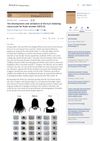
 This study developed and validated the Hair-Shedding Visual Scale for Asian Women, finding it to be an effective tool for identifying FPHL and TE.
March 2026 in “Journal of the European Academy of Dermatology and Venereology” This study introduced and validated the VESALT, a visual extension of the Severity of Alopecia Tool, finding it offers improved reliability and user-friendliness over SALT by incorporating pattern recognition and broader coverage, including non-scalp regions, in assessing alopecia areata severity.
 4 citations
,
June 2022 in “Clinical, cosmetic and investigational dermatology”
4 citations
,
June 2022 in “Clinical, cosmetic and investigational dermatology” In this study, researchers introduced the Sanusi FUE Score Scale to better predict and grade the difficulty of follicular unit excision hair transplantation by accounting for diverse hair and skin types, with further validation needed.
 April 2021 in “Research Square (Research Square)”
 This study concluded that achieving 80% or more scalp hair, corresponding to a SALT score of ≤20, represents a clinically meaningful treatment success for patients with alopecia areata experiencing ≥50% hair loss.
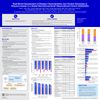
In this retrospective study of alopecia areata patients across several European countries, researchers observed a notable reduction in SALT scores, but few patients reached or maintained a clinically significant SALT score of ≤20, indicating potentially limited effectiveness of current treatments for extensive hair loss.
1 citations
,
August 2025 in “The Egyptian Journal of Internal Medicine” This paper reviews obesity diagnosis and screening methods, emphasizing BMI's practicality in low- and middle-income countries, but provides no new clinical results.
 4 citations
,
November 2011 in “Archives of Dermatology”
4 citations
,
November 2011 in “Archives of Dermatology” Hamilton scale imprecise, hair shaft diameter decreases, stem cell transplant regrows hair, ECP ineffective for alopecia areata universalis.
 1 citations
,
April 2020 in “Magnetic Resonance in Medical Sciences”
1 citations
,
April 2020 in “Magnetic Resonance in Medical Sciences” This study aimed to determine if MRI can assess anatomical changes in the scalp caused by androgenetic alopecia, but it reports no new clinical results.
 52 citations
,
March 2007 in “Dermatologic Therapy”
52 citations
,
March 2007 in “Dermatologic Therapy” This article describes the development and validation of a standardized instrument for measuring skin involvement in cutaneous lupus erythematosus, aiming to aid future clinical research and trials.
1 citations
,
June 2020 in “British Journal of Dermatology” This article reviews the psychological impact of alopecia areata on patients, including lower self-esteem and poorer quality of life, and reports no new clinical results.
40 citations
,
October 2012 in “Journal of the American Academy of Dermatology” This study found that the Cutaneous Lupus Disease Area and Severity Index (CLASI) is correlated with both physician-assessed and patient-reported outcomes in cutaneous lupus erythematosus, particularly highlighting concerns about body image in visible areas.
 December 2023 in “Gugje bogeon mi-yong haghoeji”
 In this study, researchers observed that aroma oil-enhanced scalp scaling significantly improved scalp conditions over 8 weeks, marked by increased water and oil content, reduced keratin and surface value, and higher satisfaction in hair-related outcomes compared to the control group.
30 citations
,
January 1997 in “ILAR Journal” This review details the development and genetic background of senescence-accelerated mouse strains, provides a comprehensive examination of their phenotypes, and highlights their importance for aging research, but reports no new experimental results.
 May 2023 in “Bali Medical Journal”
 This study found a very strong positive correlation between sebum levels and the severity of androgenetic alopecia in men.
 3 citations
,
January 2019 in “Dermatology and therapy”
3 citations
,
January 2019 in “Dermatology and therapy” This study found that standardized scalp massages may help stabilize or regrow hair in individuals with androgenic alopecia, as perceived by the participants themselves.
14 citations
,
July 2007 in “International Journal of Cosmetic Science” This study found that a new 3D image analysis method from SEM images enables quick and accurate measurement of cuticle scale heights in hair fibers.
 September 2015 in “Dermatologic Surgery”
 In this study, the researchers developed a computer-aided imaging system to quantitatively measure baldness in Chinese women with female pattern hair loss, potentially improving the precision of severity evaluation compared to traditional scales.
 1 citations
,
September 2023 in “Journal of Education Health and Sport”
1 citations
,
September 2023 in “Journal of Education Health and Sport” This study provides a comprehensive analysis of anabolic-androgenic steroids, reporting that their use enhances muscle mass but is associated with significant health issues including cardiac muscle hypertrophy, liver disease, and changes in gender characteristics, emphasizing the need for patient awareness of these risks.
 February 2026 in “Cureus”
 This study validated that both tape-based and image-based methods for measuring head crown areas, and the CASLite NOVA as well as Image-Pro software for hair count, showed acceptable agreement, supporting their interchangeable use in hair care research settings.
November 2020 in “Дерматовенерология, косметология” This study found that among men with androgenetic alopecia, the M-type pattern, either isolated or combined with others, was observed most frequently, using the BASP classification.
 22 citations
,
November 2021 in “Dermatology and Therapy”
22 citations
,
November 2021 in “Dermatology and Therapy” This study found that the Alopecia Areata Patient Priority Outcomes questionnaire is a reliable and valid tool for measuring the severity and impact of hair loss in individuals with alopecia areata.
 1 citations
,
December 2024 in “Dermatology and Therapy”
1 citations
,
December 2024 in “Dermatology and Therapy” This study found that the STRIAA scoring tool provides a rapid and highly reliable assessment of alopecia areata severity, showing a significant correlation with the traditional SALT score, thus enhancing clinical evaluation in patients with this condition.