 March 2026 in “Zenodo (CERN European Organization for Nuclear Research)”
 This study reports a novel geometric medicine solution, N‑K GM SERIES, claiming to eliminate aflatoxin, offer a universal cancer cure, and provide numerous health benefits, including increased life expectancy, with deployment focused on the "Aflatoxin Belt" regions like Sudan.
 January 2021 in “Dermatologic Therapy”
 Channels stay open for 24 hours, making laser treatment potentially effective for hair loss.
May 2023 in “Blood cancer discovery” This study found that Finasteride significantly reduced the proliferation of acute myeloid leukemia cell lines by inhibiting androgen receptor activity.

This study found that injecting growth factor concentrates into the scalp of five patients with androgenic alopecia led to notable improvements in hair density and quality over eight weeks, with patients reporting satisfaction and minimal side effects.
December 2022 in “Clinical and experimental dermatology and therapies” In this study, the addition of a topical gel containing growth-factor mimicking oligopeptides and other ingredients showed improved efficacy in subjects with androgenic alopecia using minoxidil or finasteride compared to drug treatment alone.
August 2019 in “Journal of the American Academy of Dermatology” Frontal fibrosing alopecia may be caused by an autoimmune reaction and hormonal imbalance.
 11 citations
,
May 2023 in “Journal of Cutaneous Medicine and Surgery”
11 citations
,
May 2023 in “Journal of Cutaneous Medicine and Surgery” This study found that combining plasma rich in growth factors with conventional treatment significantly improved hair regrowth and reduced symptoms in patients with frontal fibrosing alopecia compared to conventional treatment alone.
 11 citations
,
August 2018 in “Medicine”
11 citations
,
August 2018 in “Medicine” This study found that college students with androgenetic alopecia exhibited higher levels of various psychological symptoms compared to those without AGA, with medical and art students showing particularly elevated symptoms.
 February 2021 in “Journal of The American Academy of Dermatology”
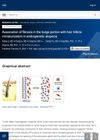
 This study observed that fibrosis occurs in the bulge region of hair follicles affected by androgenetic alopecia and is correlated with the hair miniaturization process.
1 citations
,
January 2012 in “Zhongguo shiyan fangjixue zazhi” This study found that adding Kang'ai injection to FLO chemotherapy for advanced gastric cancer improved clinical outcomes and quality of life while reducing side effects, compared to FLO chemotherapy alone.
 April 2022 in “Medicinus”
 This article discusses the challenges of treating androgenetic alopecia due to limited approved medications, potential side effects, and unmet expectations and reports no new clinical results.
1 citations
,
March 2012 in “Actas dermo-sifiliográficas/Actas dermo-sifiliográficas” Dermoscopy helps diagnose frontal fibrosing alopecia by identifying specific scalp features.
136 citations
,
July 2014 in “Proceedings of the National Academy of Sciences of the United States of America” This study identified mutations in the FGF5 gene as a cause of extreme eyelash growth in Pakistani families, highlighting a potential target for regulating eyelash growth.
This study tested a novel cryo-carboxy dispensing device for treating androgenetic alopecia in six volunteers and found an unexpectedly rapid and positive response, with significant hair regrowth observed by day 90, prompting early conclusion of the trial.
 2 citations
,
May 2025 in “Frontiers in Pharmacology”
2 citations
,
May 2025 in “Frontiers in Pharmacology” In this study, analysis of FDA data revealed a substantial risk of dermatologic adverse events with aromatase inhibitors, especially anastrozole and exemestane, highlighting the importance of dermatologic monitoring during such therapies.
 3 citations
,
November 2021 in “Journal of The American Academy of Dermatology”
3 citations
,
November 2021 in “Journal of The American Academy of Dermatology” This article discusses hormonal mechanisms underlying androgenetic alopecia but does not report any new findings; it reviews the roles of dihydrotestosterone and available FDA-approved treatments.
 1 citations
,
January 2015 in “Springer eBooks”
1 citations
,
January 2015 in “Springer eBooks” AGA is a common hair loss disorder, and early diagnosis and treatment with minoxidil or finasteride can help reduce emotional distress.
 March 2026 in “Zenodo (CERN European Organization for Nuclear Research)”
 In this study, a novel geometric medicine approach, utilizing the N-K Universal Computer, was reported to eliminate aflatoxin contamination and significantly reduce cancer rates across the "Aflatoxin Belt" through precision targeting of harmful fungi while preserving ecological balance, without observed toxicity or resistance.
 4 citations
,
September 2019 in “Journal of Cosmetic Dermatology”
4 citations
,
September 2019 in “Journal of Cosmetic Dermatology” This study found that follicular unit extraction megasession resulted in high patient satisfaction without infections for treating severe androgenetic alopecia, offering a promising one-stage option compared to multi-stage hair transplants.
8 citations
,
August 2023 in “Lasers in Surgery and Medicine” This study observed that treating acne scars with fractional ablative laser concurrently with isotretinoin improved outcomes more effectively compared to applying the laser 6 months after isotretinoin treatment ended, as measured by the Quantitative Global Acne Scarring Grading System.
March 2025 in “European Journal of Medical Genetics” This case report suggests that tofacitinib may effectively manage symptoms of AGS7 in a patient with an IFIH1 mutation, though further studies are needed to confirm its long-term safety and efficacy.
 July 2023 in “International journal of dermatology, venereology and leprosy sciences”
 This review discusses the increased prevalence of androgenic alopecia in men and women, highlighting the limited FDA-approved treatment options, and reports no clinical results; the authors note adherence challenges due to prolonged drug use.
 65 citations
,
February 2009 in “The journal of investigative dermatology/Journal of investigative dermatology”
65 citations
,
February 2009 in “The journal of investigative dermatology/Journal of investigative dermatology” This paper discusses the hypothesis that anti-acne agents may work by reducing FGFR2 signaling, and emphasizes FGFR2's potential role in acne pathogenesis, but it reports no new experimental findings.
1 citations
,
January 2019 in “Journal of Biomedical Science and Engineering” This study reports that monthly subcutaneous injections of concentrated growth factors improved hair appearance and density in patients with androgenetic alopecia, with no side effects observed in the follow-up period.
14 citations
,
January 2014 in “Indian Journal of Dermatology Venereology and Leprology” Frontal fibrosing alopecia can affect men's beards and leads to permanent hair loss.
 1 citations
,
September 2016 in “Journal of Dermatological Science”
1 citations
,
September 2016 in “Journal of Dermatological Science” This study found that FGF18 signaling helps protect hair follicles from radiation damage by maintaining the resting phase and supporting stem cell survival, potentially reducing radiation-induced hair loss.
66 citations
,
June 2004 in “Development” This study found that FGF signaling is necessary for the initiation of feather placode development in chicken embryos, with FGF10 being implicated as an early dermal signal in the process.
55 citations
,
October 2020 in “Frontiers in Pharmacology” This review discusses the role of endolysosomes in SARS-CoV-2 infection and COVID-19 pathogenesis, and explores potential therapeutic strategies targeting these cellular structures, but reports no new clinical findings.
49 citations
,
January 2023 in “Gels” This review summarizes recent advancements in three-dimensional bioprinting technology and hydrogel bioinks, highlighting their applications in tissue engineering, but reports no new experimental results.
49 citations
,
December 2022 in “Pharmacological Reviews” This review discusses androgen receptor targeting as a potential treatment strategy for triple-negative breast cancer and reports no new experimental outcomes.