 11 citations
,
June 2017 in “Journal of cell science”
11 citations
,
June 2017 in “Journal of cell science” In this study, researchers found that AGD1 is crucial for membrane recruitment during root hair development in Arabidopsis thaliana, with its pleckstrin homology domain essential for targeting specific plasma membrane regions.
31 citations
,
March 2016 in “Journal of Investigative Dermatology” AKR1B10 enzyme may cause keloid scars and could be a treatment target.
9 citations
,
August 2020 in “International Journal of Molecular Sciences” This review examines compounds that activate IK1 channels, highlighting their potential for developing Kir channel agonists and addressing safety concerns, but does not report new experimental findings.
 4 citations
,
January 2023 in “Skin health and disease”
4 citations
,
January 2023 in “Skin health and disease” This study shows that in a mouse model of Alopecia Areata, selective JAK1 inhibition facilitated hair regrowth and inflammation resolution while potentially offering a better safety profile compared to pan-JAK inhibition.
14 citations
,
August 2014 in “The FASEB Journal” This study found that the catalytically inactive serine protease CAP1/Prss8 can still induce skin disorders in mice and is subject to inhibition by nexin-1, independent of its catalytic activity.
48 citations
,
November 2002 in “Journal of biological chemistry/The Journal of biological chemistry” In this study, researchers found that size polymorphisms in certain hKAP1 genes are linked to the hKAP1.1B and hKAP1.3 genes, arising from intragenic deletions and duplications in Japanese and Caucasian populations.
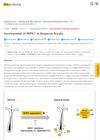
In this mouse model study, researchers observed that RIPK1 inhibitors delayed the onset of alopecia areata by modulating immune cells, specifically dendritic and CD8+ T cells, and increased hair length in organ culture mimicking the condition.
 May 2026 in “BMC Medicine”
 This study found that ACOD1 deficiency in dermal papilla cells promotes mitochondrial dysfunction and contributes to cellular senescence in androgenetic alopecia, suggesting ACOD1 as a potential therapeutic target and 4-octyl itaconate as a promising treatment option for AGA.

This study found that inhibiting AP-1 activity in mice can induce lineage transdifferentiation between squamous and sebaceous tumors, suggesting AP-1's role in maintaining tumor cell identity.
 May 2023 in “The journal of investigative dermatology/Journal of investigative dermatology”
 This study found that baricitinib can counteract the cytokine-driven reduction of the enzyme PADI1 in human keratinocytes, which may help improve skin barrier function in atopic dermatitis by enabling epidermal differentiation.
October 2024 in “The American Journal of Gastroenterology” This study described a case where both alopecia universalis and Crohn's ileitis in a 23-year-old man showed remarkable improvement with the JAK1 inhibitor upadacitinib, highlighting its potential as a treatment for patients with concurrent conditions.
 25 citations
,
November 2022 in “British journal of dermatology/British journal of dermatology, Supplement”
25 citations
,
November 2022 in “British journal of dermatology/British journal of dermatology, Supplement” In this analysis, safety data from two clinical trials showed that baricitinib for severe alopecia areata had predictable side effects like infections and elevated CPK, with some serious adverse events noted at low incidence rates; no deaths were reported.
66 citations
,
February 2013 in “PeerJ” This study found that CB1 activation by a specific agonist led to decreased expression of keratins K6 and K16 in human skin and inhibited keratinocyte proliferation, suggesting potential for cannabinoid receptors in psoriasis management.
29 citations
,
April 2000 in “Journal of histochemistry and cytochemistry/The journal of histochemistry and cytochemistry” This study found that ICAM-1 expression in murine skin is developmentally regulated and crucial for skin and hair follicle remodeling beyond its recognized role in immune responses.
65 citations
,
September 2014 in “Orphanet Journal of Rare Diseases” This study identified mutations in the STUB1 gene linked to hereditary cerebellar ataxia with cognitive impairment, revealing potential effects on protein function and patient symptoms, including accelerated aging.
April 2017 in “Journal of Investigative Dermatology” Deleting Crif1 in mouse skin disrupts skin balance and hair growth.
17 citations
,
June 2003 in “The journal of investigative dermatology. Symposium proceedings/The Journal of investigative dermatology symposium proceedings” This study found that genes in the human keratin-associated protein 1 family may have evolved mainly through gene duplication of cysteine-repeat motifs.
This study found that inhibiting AP-1 transcription factors in mice causes squamous tumors to transform into sebaceous tumors and regulates tumor cell lineage.
 September 2019 in “Journal of Investigative Dermatology”
 In this study, dose-response modeling predicted that once-daily abrocitinib doses of 100 mg and 200 mg may provide a clinically meaningful response in treating moderate-to-severe atopic dermatitis compared to placebo.
1 citations
,
April 2010 in “Digital WPI” This study found that CLK1 is necessary for epidermal differentiation but does not affect sebocyte differentiation in a telogen skin stem cell line.
 November 2022 in “The journal of investigative dermatology/Journal of investigative dermatology”
 This study found that STRIP1 and the STRIPAK complex play a key role in regulating F-actin and cell-cell junctions, which are essential for maintaining the epidermal barrier in mouse skin.
 March 2026 in “Clinical Cosmetic and Investigational Dermatology”
 In this case study, treatment with the selective JAK1 inhibitor upadacitinib significantly improved symptoms in a patient with refractory alopecia areata, vitiligo, ankylosing spondylitis, and allergic asthma-nasal syndrome, though a transient liver function abnormality was noted.
August 2017 in “Academic Commons (Stony Brook University)” This study found that the enzyme Acer1 plays a crucial role in skin health and tumor prevention by regulating ceramide metabolism in mice.
 9 citations
,
January 2019 in “American Journal of Dermatopathology”
9 citations
,
January 2019 in “American Journal of Dermatopathology” This study found that both androgenetic alopecia and alopecia areata showed significantly increased DKK-1 expression, potentially implicating it in the pathogenesis and as a treatment target for these conditions.
1 citations
,
April 2023 in “International journal of molecular sciences” In this study, AMACO was found to be non-essential for the formation or function of anchoring cords in mice, despite its presence in the structure.
12 citations
,
July 2004 in “Molecular genetics and genomics” This study identifies a new mutation in the Scd1 gene in a strain of Kunming mice, causing skin and hair defects with the mildest impact among similar mutations.
 April 2017 in “Journal of Investigative Dermatology”
 This study demonstrated that mitochondrial function in keratinocytes is crucial for maintaining skin homeostasis and hair follicle development, as its impairment led to disrupted hair morphogenesis and early death in mice.
 June 2026 in “Strathprints: The University of Strathclyde institutional repository (University of Strathclyde)”
 In this study, researchers found that inhibiting IKKα in patient-derived CCS tumour models reduces tumour viability, supporting the potential for topical IKKα inhibitors as a treatment for CCS.
47 citations
,
September 2004 in “Journal of Biological Chemistry” This study provides evidence supporting a regulatory relationship between the transcriptional regulator Hoxc13 and Krtap16 genes, which are crucial for proper hair growth in mice.
September 2025 in “Asian journal of pediatric dermatology.” This case study reports the successful use of abrocitinib for treating severe alopecia areata in a 14-year-old patient, demonstrating significant hair regrowth and suggesting the need for sustained JAK1 inhibition to prevent relapse.