11 citations
,
October 1941 in “Experimental Biology and Medicine” PABA helps prevent gray hair and hair loss in mice.
January 2014 in “生命科学(ISSN1934-7391)” A certain gene variation can affect protein production and is linked to male pattern baldness.

In this study, 1'-S-1'-acetoxychavicol acetate (ACA) from Alpinia galanga showed potential in suppressing testosterone-induced hair loss by inhibiting Nox isozymes in a mouse model of androgenetic alopecia.
 3 citations
,
May 2015 in “Journal of The American Academy of Dermatology”
3 citations
,
May 2015 in “Journal of The American Academy of Dermatology” Adalimumab significantly improves quality of life for patients with moderate to severe hidradenitis suppurativa.
December 2024 in “International Journal of Molecular Sciences” This study observed that CXCL12 is highly co-expressed with androgen receptors in human hair follicle cells, and its inhibition via antibodies increased hair length, suggesting a potential treatment strategy for androgenic alopecia.
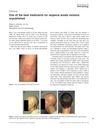 1 citations
,
June 2018 in “International Journal of Dermatology”
1 citations
,
June 2018 in “International Journal of Dermatology” DNCB is highly effective for treating alopecia areata with minimal long-term side effects.
August 2020 in “Benha Journal of Applied Sciences” This study observed that patients with androgenetic alopecia had significantly higher serum FABP4 levels compared to healthy controls, suggesting FABP4 may be involved in the condition's pathogenesis.
148 citations
,
May 2012 in “The American Journal of Human Genetics” This study identified heterozygous mutations in the ABCC9 gene as the genetic basis of Cantú syndrome, suggesting the syndrome as a new member of potassium channelopathies.
 August 2023 in “JAAD international”
 This study, conducted at Montefiore Medical Center, reports that central centrifugal cicatricial alopecia predominantly affects middle-aged Black or African American women, often presenting without symptoms, which may delay diagnosis and treatment. The study underscores the need for a specific ICD-10 code for better epidemiological studies.
 October 2023 in “FASEB bioAdvances”
 This study investigated the effects of Akkermansia muciniphila on testosterone-induced hair growth inhibition in mice, finding that both live and pasteurized forms significantly encouraged hair growth and increased hair follicle size and growth factor levels compared to testosterone treatment alone.
 February 2024 in “Research Square (Research Square)”
 This study optimized the extraction process for abomasum protein from Tianshan red deer, identifying two proteins with anti-inflammatory and anti-tumor activities, suggesting they could be beneficial in foods and nutraceuticals.
 May 2009 in “The American Journal of Dermatopathology”
 This abstract contains only journal subscription and informational content and does not present any research findings.
2 citations
,
September 2024 in “Journal of the American Academy of Dermatology” CCCA in African Americans may be linked to hair grooming, low vitamin D, and autoimmune factors.
 December 2000 in “British Journal of Dermatology”
 This article contains no abstract or new findings.
68 citations
,
August 2009 in “American Journal of Medical Genetics Part A” This study systematically reviewed clinical findings in trichothiodystrophy patients and suggested a new clinico-genetic classification to help better understand the ichthyotic phenotype and its management.
40 citations
,
July 2019 in “Journal of Investigative Dermatology” In this study, knockout mice lacking the Cyp4f39 gene showed severe skin barrier dysfunction and high early mortality, suggesting its critical role in skin barrier formation and insights into ichthyosis pathogenesis.
32 citations
,
August 2024 in “Journal of Investigative Dermatology” In vitro skin models are improving but still need more innovation to fully replicate human skin.
23 citations
,
June 2023 in “Cell Reports” In this study, researchers used transcriptomics and modeling to uncover previously unknown cell populations and marker genes in developing hair follicles, providing insights into early cell fate establishment and offering tools for further research on skin appendages.
 21 citations
,
July 2022 in “Orphanet journal of rare diseases”
21 citations
,
July 2022 in “Orphanet journal of rare diseases” This review discusses recent advancements in therapies for ichthyosis, highlighting promising prospects in protein replacement and gene therapy, but it reports no new clinical results.
21 citations
,
March 2018 in “American Journal Of Pathology” In this study, it was observed that NIPAL4 mutations linked to autosomal recessive congenital ichthyosis lead to abnormal skin barrier function due to cytotoxic effects disrupting lipid structure and organization, which topical treatments only partially ameliorated.
16 citations
,
September 2015 in “International Journal of Molecular Sciences” In this study, a genetic analysis identified a pathogenic variant in the ALOXE3 gene associated with non-bullous congenital ichthyosiform erythroderma, and the patient's response to antifungal treatment highlights the risk of cutaneous fungal infections.
 14 citations
,
June 2022 in “BMC genomics”
14 citations
,
June 2022 in “BMC genomics” This study identified key genes involved in hair follicle development in Merino sheep, offering insights for improving wool production and providing a basis for future breeding programs.
11 citations
,
December 2017 in “Orphanet Journal of Rare Diseases” This study found a previously unreported ST14 gene mutation in a patient with ichthyosis-hypotrichosis syndrome, highlighting novel skin and hair characteristics and emphasizing the critical role of the Asp482 amino acid in matriptase activation.
 5 citations
,
July 2022 in “Orphanet journal of rare diseases”
5 citations
,
July 2022 in “Orphanet journal of rare diseases” This study found that RSPO1 mutations in patients with a 46XX disorder of sexual development contribute to impaired skin integrity and increased risk of squamous cell carcinoma in areas subject to friction.
4 citations
,
December 2020 in “Tissue Barriers” This review explores the immunological aspects of epidermal differentiation in loricrin knockout mice, offering insights into keratinization and potential intrinsic factors affecting immune function, but provides no new clinical findings.
3 citations
,
August 2022 in “Molecules/Molecules online/Molecules annual” This study found that microbial adenosine and biotin treatments derived from Staphylococcus epidermidis Cicaria culture may help inhibit hair loss by maintaining the hair's growth phase.
2 citations
,
December 2023 in “International journal of molecular sciences” This study reviews the complex keratinization process in the epidermis, detailing how various factors regulate keratinocyte differentiation and emphasizing the importance of understanding this process for the pathogenesis of skin disorders like ichthyoses and psoriasis.
1 citations
,
July 2021 in “IntechOpen eBooks” This review discusses unspecific factors involved in the pathogenesis of skin diseases and potential ways cytokeratin changes might alleviate these conditions, but reports no new clinical results.
1 citations
,
November 2013 in “Actas dermo-sifiliográficas/Actas dermo-sifiliográficas” This article reviews the presentations from the First Symposium of Ichthyosis Experts in Spain, held to address the challenges in organizing care for ichthyosis patients, and reports no new clinical results.
January 2026 in “Aging and Disease” This study highlights the critical role of mitochondria in skin aging and wound repair, suggesting that targeted interventions such as antioxidants, NAD⁺ boosters, and NRF2-based therapies may enhance mitochondrial function and improve cutaneous health.