1 citations
,
September 2001 in “Dermatologic Surgery” This study found that adding a low-power CO2 laser to Er:YAG laser improves hemostasis in hair transplantation without significantly affecting hair counts or increasing thermal damage.
10 citations
,
June 2006 in “Clinical and experimental dermatology” Laser hair removal greatly improves quality of life.
December 2018 in “Zenodo (CERN European Organization for Nuclear Research)” This review of low-level laser therapy for patterned hair loss found that red-spectrum light may be effective for hair growth, but larger case-controlled studies are needed to further support this conclusion.

In this study involving 13 patients with vitiligo-associated leukotrichia, minimal hair repigmentation was observed following treatment with fractional CO₂ laser and topical betamethasone, though the method was well tolerated, highlighting the need for further research to optimize treatment parameters.
May 2026 in “Skin Appendage Disorders” This study determined that low-level light therapy and fractional lasers are effective and safe treatments for androgenetic alopecia, especially when combined with other agents like minoxidil, PRP, or growth factors.
 4 citations
,
September 2017 in “Dermatologic surgery”
4 citations
,
September 2017 in “Dermatologic surgery” This article contains no new research findings or results.

This study reports that low-level light therapy and fractional lasers are effective and safe treatments for androgenetic alopecia, with more pronounced results when combined with other therapies.
 19 citations
,
January 2001 in “Journal of cutaneous laser therapy”
19 citations
,
January 2001 in “Journal of cutaneous laser therapy” This study found that the long-pulse Nd:YAG laser effectively reduces unwanted facial hair across various skin types, with hair regrowth delayed significantly longer than with self-applied methods.
June 2018 in “Dermatologic Surgery” This abstract describes the Dermatologic Surgery journal's extensive focus on skin surgery procedures, but it presents no new research findings.
 September 2023 in “Journal of The American Academy of Dermatology”
 This review discusses the use of Raman spectroscopy to evaluate drug penetration in alopecia treatments and suggests it may be a promising tool for enhancing the effectiveness of laser-assisted drug delivery.

Using a specific laser and platelet-rich plasma together can effectively improve hair thickness and density in men with hair loss, without serious side effects.
 January 2025 in “Lasers in Surgery and Medicine”
 This study found that combining fractional CO2 laser with topical minoxidil 5% solution significantly improved hair growth in alopecia areata patients compared to minoxidil alone, with minimal side effects.
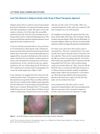 3 citations
,
April 2017 in “Dermatologic Surgery”
3 citations
,
April 2017 in “Dermatologic Surgery” Laser hair removal can be an effective last-resort treatment for men with stubborn Alopecia Areata who want to be uniformly bald.
October 2024 in “Journal of Pakistan Association of Dermatologists” This study evaluated the effect of 308 nm excimer laser on alopecia areata, reporting that among 34 patches treated, 13% showed excellent response and 67% demonstrated moderate to good response, as assessed by dermoscopic indicators of disease remission and regrowth.
 9 citations
,
July 2022 in “Dermatology and Therapy”
9 citations
,
July 2022 in “Dermatology and Therapy” In this study, long-pulsed 755-nm alexandrite laser treatment for keratosis pilaris significantly improved skin roughness and redness, as well as follicular plug reduction, with good safety and patient satisfaction compared to a moisturizing lotion alone.
 May 2017 in “Journal of The American Academy of Dermatology”
 595 nm pulsed dye laser is a cost-effective treatment for nonmelanoma skin cancer with a low recurrence rate.
This study found that home use of low-level light therapy reduced inflammation and symptoms like itching and burning in women with frontal fibrosing alopecia over six months.
12 citations
,
January 2011 in “Current problems in dermatology” This review covers the use of lasers and IPL for hair removal, noting short-term efficacy up to 6 months and variable long-term results with different devices, emphasizing safety considerations and evolving consumer-based treatments.
January 2017 in “Surgical and Cosmetic Dermatology” This study reported that combining Erbium Glass 1550nm laser therapy with scalp injections of minoxidil, finasteride, growth factors, and vitamins was an effective and safe treatment for androgenetic alopecia, with 96.77% of participants expressing satisfaction, especially those who underwent more than six sessions.
 73 citations
,
April 1999 in “Dermatologic Clinics”
73 citations
,
April 1999 in “Dermatologic Clinics” This article reviews patient selection and treatment protocols for various light-based hair removal systems but presents no new clinical results.
 January 2009 in “Actas dermo-sifiliográficas/Actas dermo-sifiliográficas”
 This review discusses various methods of light-based hair removal and reports no new clinical results, highlighting advances in laser and intense pulsed light technologies used for targeting hair pigmentation.
This case report describes a 62-year-old male with multiple warty dyskeratomas found on the scalp, chest, abdomen, and lower back, a rare presentation confirmed by histological findings consistent with warty dyskeratoma, as noted by the researchers.
 April 2024 in “Cognizance journal”
 In this study, treatment of unwanted hair with 755 nm alexandrite laser in 14 patients showed a decrease in excess hair at the armpit and thigh areas, with a 75% accuracy rate in hair density estimation using Monte Carlo modeling.
 December 1997 in “Proceedings of SPIE, the International Society for Optical Engineering/Proceedings of SPIE”
 This study concluded that low energy laser therapy may effectively complement classical treatment for scalp alopecia, leading to faster results, although long-term maintenance still requires ongoing classical therapy.
 3 citations
,
October 2022 in “Clinical, Cosmetic and Investigational Dermatology”
3 citations
,
October 2022 in “Clinical, Cosmetic and Investigational Dermatology” This study found that repetitive 532 nm laser therapy significantly decreased scores for macules, pigmented, and vascular lesions on the facial area, regardless of skin phototype or age.
 August 2023 in “Journal of Cosmetic Dermatology”
 This study found that combining fractional ablative erbium YAG laser with minoxidil led to slightly better dermoscopy scores than minoxidil alone in male patients with moderate to severe androgenetic alopecia, although no significant difference was observed in photography scores between the two groups.
 May 2017 in “Journal of The American Academy of Dermatology”
 Combining microneedling with Q-switched laser treatment for tattoo removal did not improve results and caused more pain.
October 2025 in “Dermatologica Sinica” This study's network meta-analysis reported that botulinum injection combined with red laser and topical minoxidil is most effective for increasing hair density in androgenetic alopecia when using low-level laser therapy.
 2 citations
,
January 2022 in “Skin appendage disorders”
2 citations
,
January 2022 in “Skin appendage disorders” This study presents two cases where intralesional methotrexate combined with ablative fractional CO2 laser treatment resulted in excellent outcomes for refractory alopecia areata.
11 citations
,
October 2017 in “Dermatologic Surgery” This review discusses sex-specific cosmetic treatment recommendations using lasers and energy-based devices for male patients and reports no new clinical findings, highlighting the need for tailored approaches for common male concerns.