18 citations
,
November 2016 in “Transgenic research” This study found that transgenic cashmere goats overexpressing thymosin beta-4 have a higher secondary to primary hair follicle ratio, suggesting potential for increased cashmere yield.
 16 citations
,
November 2016 in “Journal of Cosmetic and Laser Therapy”
16 citations
,
November 2016 in “Journal of Cosmetic and Laser Therapy” This review highlights that laser and light treatments could serve as safe and effective alternatives to current therapies for alopecia areata, with the excimer laser showing positive results, though further randomized controlled trials are necessary to establish optimal treatment protocols.
15 citations
,
September 2018 in “Applied Biological Chemistry” This review discusses the development of Matrigel and its role in identifying thymosin beta 4 as a regenerative protein, without reporting new experimental findings.
15 citations
,
June 2015 in “F1000Research” This study examined immune responses to Diphencyprone and found that its induced skin reactions have higher levels of negative immune regulators compared to psoriasis, suggesting differences in immune regulation may contribute to psoriasis chronicity.
14 citations
,
August 2021 in “Molecular Genetics and Metabolism Reports” This case series highlights the real-world challenges and experiences of US healthcare providers using pegvaliase for phenylketonuria treatment, emphasizing patient education on adverse events and dietary changes, and tailored titration schedules, while reporting that most patients achieved treatment efficacy despite initial adverse events.
12 citations
,
January 2000 in “Biochemical and Biophysical Research Communications” This study characterized the intron-exon organization of human keratin 15 and keratin 19 genes to aid future mutation detection analyses related to potential genetic disorders of keratinization.
 11 citations
,
January 2000 in “The Journal of Steroid Biochemistry and Molecular Biology”
11 citations
,
January 2000 in “The Journal of Steroid Biochemistry and Molecular Biology” This study found that LY320236 is a competitive inhibitor of type I and a non-competitive inhibitor of type II steroid 5alpha-reductase, indicating its potential as a dual inhibitor with differing modes of activity.
 7 citations
,
March 2012 in “European Journal of Pediatrics”
7 citations
,
March 2012 in “European Journal of Pediatrics” This case report describes a 4.5-year-old boy with steroid-resistant nephrotic syndrome linked to X-linked recessive ichthyosis, where remission was achieved using cyclosporine, suggesting STS deficiency as a potential genetic cause of the condition.
 5 citations
,
November 2020 in “medRxiv (Cold Spring Harbor Laboratory)”
5 citations
,
November 2020 in “medRxiv (Cold Spring Harbor Laboratory)” In this study, the authors reported that dutasteride significantly reduced total remission time for COVID-19 symptoms in men compared to placebo, especially for fatigue and loss of taste or smell.
4 citations
,
January 2025 in “The Journal of Cell Biology” This study found that deleting ceramide synthase 4 in skin epidermis stem cells disrupts hair follicle and skin barrier function, leading to immune responses similar to atopic dermatitis, due to imbalances in lipid composition affecting differentiation.
 4 citations
,
October 2020 in “Research Square (Research Square)”
4 citations
,
October 2020 in “Research Square (Research Square)” This study reported that more sensitive, early diagnosis and treatment of COVID-19 with drug combinations significantly improved clinical outcomes in males with or without androgenetic alopecia, preventing severe progression.
1 citations
,
December 2023 in “Animals” In this study, researchers observed that the skin quality and hair follicle development of Rex rabbits improved when slaughtered in winter compared to summer, with findings suggesting seasonal regulation via multiple signaling pathways affecting fur characteristics.
 1 citations
,
January 2021 in “Research Square (Research Square)”
1 citations
,
January 2021 in “Research Square (Research Square)” This study found that the AndroCoV Clinical Scoring for COVID-19 Diagnosis may offer a more sensitive and timely diagnostic tool for COVID-19 than conventional rtPCR testing, especially enhancing potential treatment timing.
 1 citations
,
January 2021 in “medRxiv (Cold Spring Harbor Laboratory)”
1 citations
,
January 2021 in “medRxiv (Cold Spring Harbor Laboratory)” This study reports that the AndroCoV Clinical Scoring for COVID-19 Diagnosis provides a quicker, more sensitive, and inexpensive alternative to rtPCR-SARS-CoV-2 with an accuracy above 80% in diagnosing COVID-19.
 1 citations
,
October 2020 in “Research Square (Research Square)”
1 citations
,
October 2020 in “Research Square (Research Square)” This study observed that males with androgenetic alopecia using dutasteride showed significantly improved COVID-19 outcomes, including shorter duration of symptoms and viral shedding, compared to those not using it and non-AGA males.
March 2026 in “World Rabbit Science” This study found that overexpression and knockdown of DKK4 influence genes involved in hair follicle growth and development in Angora rabbits and identified specific SNPs in DKK4 associated with wool quality, notably showing that the TT/GG haplotype combination relates to higher fibre diameters.
August 2025 in “American Journal of Dermatopathology” In this study, researchers presented cases of cellular neurothekeoma in three male family members with early-onset in infancy, suggesting a potential genetic component and inheritance pattern, which deviates from the typical presentation seen mostly in women between 20–30 years.
 February 2025 in “Frontiers in Veterinary Science”
 This case report highlights the successful use of Prussian Blue to treat a dog suffering from thallium intoxication, demonstrating the importance of early diagnosis and targeted therapy in veterinary care for improving recovery outcomes.
 May 2023 in “Journal of Investigative Dermatology”
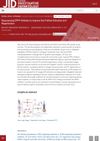
 In this study, researchers found that topical application of the diabetes medication Sitagliptin in mice accelerates hair follicle regeneration and reduces fibrosis, suggesting it could be repurposed to treat hair loss conditions like alopecia.
 December 2021 in “Innovation in aging”
 This study found that frailty independently raises the risk of clinical BPH progression and serious adverse events in older men, suggesting that shared decision-making is essential when considering medical therapy for frail patients.
 December 2020 in “Research Square (Research Square)”
 This study found that the AndroCoV Clinical Scoring for COVID-19 Diagnosis is a feasible, sensitive, and cost-effective tool with higher accuracy than most rtPCR-SARS-CoV-2 tests for diagnosing COVID-19.
September 2017 in “The journal of investigative dermatology. Symposium proceedings/The Journal of investigative dermatology symposium proceedings” This case report suggests that in African-American patients, the histology of Central Centrifugal Cicatricial Alopecia may resemble lichen planopilaris, indicating a potential diagnostic challenge.
30 citations
,
February 2010 in “The journal of investigative dermatology/Journal of investigative dermatology” This study found that the orphan protein Plet-1 is expressed in specific keratinocytes of mouse hair follicles and may regulate keratinocyte interactions with inert tissues by affecting migration and adhesion.
 4 citations
,
May 2019 in “Zeitschrift für Naturforschung C”
4 citations
,
May 2019 in “Zeitschrift für Naturforschung C” This study found that Ishige sinicola extract stimulated osteoblast differentiation and bone formation in MC3T3-E1 cells, suggesting potential use for osteoporosis prevention and treatment.
 3 citations
,
January 2018 in “İstanbul Kuzey Klinikleri”
3 citations
,
January 2018 in “İstanbul Kuzey Klinikleri” This study found that 37.4% of high-school students in rural Eskisehir had alopecia, with affected students experiencing poorer health-related quality of life, particularly in general health perception, vitality, and mental health.
 2 citations
,
July 2005 in “Baylor University Medical Center Proceedings”
2 citations
,
July 2005 in “Baylor University Medical Center Proceedings” This case report diagnosed a 4-year-old girl with trichotillomania after observation of her twirling and pulling her hair at the affected site.
 1 citations
,
December 2022 in “BMC Plant Biology”
1 citations
,
December 2022 in “BMC Plant Biology” This study suggests that the floral secretions of Brasiliorchis schunkeana may attract Diptera as potential pollinators, but field observations are needed to confirm this pollination syndrome.
 1 citations
,
December 2020 in “Dermatology Archives”
1 citations
,
December 2020 in “Dermatology Archives” This study found that pediatric patients with severe alopecia areata showed significant improvement with systemic corticosteroids but typically experienced relapse within 4-5 months, also seeing an increase in weight percentiles.

This study observed that intramuscular injection of sodium 131iodide at doses of up to 1 mCi can successfully induce hypothyroidism in rats without significantly damaging muscle or nearby tissues, despite concerns of adverse effects.
 January 2023 in “International Journal of Molecular Sciences”
 This review discusses the biologically active compounds in Maxillariinae orchids, highlighting 62 semiochemicals with medical potential, but reports no new clinical findings.