13 citations
,
June 2012 in “Dermatologic Surgery” This review discusses treatment strategies for managing scarring based on severity using volume, surface, and movement interventions, but does not present new experimental results.
 8 citations
,
February 2019 in “Scientific Reports”
8 citations
,
February 2019 in “Scientific Reports” This article describes the immunofluorescence tomography method to achieve high-resolution 3-D reconstruction of epithelial tissues and reports no clinical results.
7 citations
,
June 2001 in “PubMed” This study details the histological structure of the white domesticated pig's ear skin and discusses its relevance as a model for human dermatological research.
1 citations
,
February 2024 in “Preprints.org” This review discusses the pharmacology and potential therapeutic effects of rare ginsenoside compound K on metabolic disorders but presents no new clinical results, highlighting the need for further studies on its bioavailability and toxicity.
 November 2025 in “Discover Pharmaceutical Sciences”
 In this study, a nanoemulsion containing lavender, peppermint, and rosemary essential oils was developed and shown to promote hair growth in mice at a rate comparable to 2% topical minoxidil, suggesting a promising natural alternative due to its antioxidant and anti-inflammatory effects.
January 2022 in “Faculty of 1000 Research Ltd” This study found that many participants in India lacked adequate awareness and practices for essential measures in managing COVID-19 at home, highlighting a need for targeted training programs.
January 2023 in “Faculty of 1000 Research Ltd” This report details a case of tuberculous lymphadenitis in a 21-year-old female with SLE, suggesting that immune suppression may increase susceptibility to this extra-pulmonary TB.
22 citations
,
January 2021 in “Clinical Therapeutics” This review discusses sex and gender differences in COVID-19 presentation, treatment, and outcomes, and reports no new clinical findings.
 15 citations
,
June 2018 in “Journal of Chromatographic Science”
15 citations
,
June 2018 in “Journal of Chromatographic Science” This study successfully developed a method to measure four flavonoids from Platycladus orientalis leaves in rat plasma, which was used in a pharmacokinetic study on healthy rats.
57 citations
,
March 2021 in “International Journal of Molecular Sciences” This study found that type 2 immunity may play a role in the development of alopecia areata in patients with extrinsic atopic dermatitis, indicating different immunological states compared to non-atopic patients.
48 citations
,
November 2002 in “Journal of biological chemistry/The Journal of biological chemistry” In this study, researchers found that size polymorphisms in certain hKAP1 genes are linked to the hKAP1.1B and hKAP1.3 genes, arising from intragenic deletions and duplications in Japanese and Caucasian populations.
 4 citations
,
July 2008 in “British journal of dermatology/British journal of dermatology, Supplement”
4 citations
,
July 2008 in “British journal of dermatology/British journal of dermatology, Supplement” This study found that alopecia areata patients who responded poorly to topical immunotherapy had impaired peripheral blood mononuclear cell responses to T-cell stimulants.
3 citations
,
January 2020 in “Acta veterinaria indonesiana” In this case study, a Persian cat with dermatophytosis showed a reduction in skin lesions after being treated with oral itraconazole and topical ketoconazole.
 November 2024 in “Journal of Investigative Dermatology”
 TGF-β signaling is essential for new hair growth after wounds.
April 2024 in “Surgical Techniques Development” This article describes the significance of the Italian Association of Plastic Aesthetic Surgery's annual congress in European aesthetic plastic surgery, but reports no new research findings.
 19 citations
,
September 2002 in “Acta dermato-venereologica”
19 citations
,
September 2002 in “Acta dermato-venereologica” In this retrospective study, anti-tuberculous agents, likely rifampicin, were effective adjunctive therapies for a chalazion, coinciding with spontaneous drainage in a patient with rosacea.
11 citations
,
January 2013 in “International Journal of Trichology” This article reports a case of neurodermatitis where a combination of intralesional steroids, oral doxepin, and psychotherapy resulted in complete symptom remission and hair regrowth, highlighting the importance of addressing emotional factors in treatment.
 2 citations
,
December 2022 in “PNAS nexus”
2 citations
,
December 2022 in “PNAS nexus” In laboratory experiments, this study found that the topical prodrug SCD-153, a derivative of 4-methyl itaconate, reduced inflammation-related gene expression and induced significant hair growth in mice, suggesting it as a promising treatment candidate for alopecia areata.
January 2026 in “Experimental Dermatology” The study suggests that refractory chronic alopecia areata cases have more infiltrating skin resident memory T cells, and using a JAK inhibitor may be an effective treatment option.
 6 citations
,
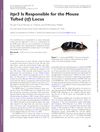
October 2012 in “Journal of Heredity”
6 citations
,
October 2012 in “Journal of Heredity” This study identified the Itpr3 gene as responsible for the tufted hair loss phenotype in the BTBR mouse strain.
 32 citations
,
April 2014 in “American Journal of Clinical Dermatology”
32 citations
,
April 2014 in “American Journal of Clinical Dermatology” People with psoriasis are more likely to have Metabolic Syndrome than those without psoriasis.
2 citations
,
December 2021 in “Dermatology and therapy” This review reports that clinical studies generally showed favorable results for microneedling as an adjunct therapy for androgenic alopecia and alopecia areata, despite the low quality of existing data.
1 citations
,
September 2024 in “Veterinary Medicine and Science” In this study, researchers found that a single oral dose of afoxolaner was safe and effective in treating a severe case of Trixacarus caviae mange in a guinea pig, achieving full remission of clinical signs and mite eradication within 4 weeks without needing repeated treatment.
 1 citations
,
March 2014 in “Hair transplant forum international”
1 citations
,
March 2014 in “Hair transplant forum international” This abstract discusses the pervasive promotion and marketing of plastic and cosmetic procedures, without reporting any new clinical findings.
 1 citations
,
October 2023 in “British journal of dermatology/British journal of dermatology, Supplement”
1 citations
,
October 2023 in “British journal of dermatology/British journal of dermatology, Supplement” This study found that, in Germany between 2016 and 2020, alopecia areata had an annual prevalence of 210 cases per 100,000 and an incidence of 72 cases per 100,000, with higher rates in specific regions and associated with comorbidities like atopic dermatitis and psoriasis.
 April 2023 in “World Journal Of Advanced Research and Reviews”
 This study in Morocco found that all women with frontal fibrosing alopecia presented frontotemporal hairline recession, with trichoscopic features such as perifollicular erythema and follicular hyperkeratosis being indicative of the condition, and suggested a potential link between cosmetic products or emotional factors and the disease.
 August 2020 in “Egyptian Veterinary Medical Society of Parasitology Journal (EVMSPJ)”
 In this study, 10.5% of sheep examined in Ismailia, Egypt, were infested with Sarcoptes scabiei, showing specific molecular and skin alterations.
 March 2020 in “Hair transplant forum international”
 This article discusses male pattern hair loss and informed consent in hair transplantation consultations without presenting new clinical findings.
 April 2021 in “European medical journal”
 In this case report, the authors describe a patient with coronavirus disease where visible skin manifestations were the most prominent symptom.
20 citations
,
August 2021 in “Journal of Cosmetic Dermatology” This review examines the potential use and challenges of topical cannabinoids for skin diseases and hair growth, highlighting limited clinical data on their efficacy and safety.