 3 citations
,
January 2017 in “Yonsei Medical Journal”
3 citations
,
January 2017 in “Yonsei Medical Journal” This study found that inhibiting 11β-HSD1 can partially reverse the negative impact of glucocorticoids on dermal papilla cells in human scalps, suggesting potential for treating stress-related hair loss.
 1 citations
,
May 2019 in “Journal of The European Academy of Dermatology and Venereology”
1 citations
,
May 2019 in “Journal of The European Academy of Dermatology and Venereology” New method, hair distribution width (HDW), improves accuracy in diagnosing androgenetic alopecia (AGA).
 November 2022 in “Journal of Investigative Dermatology”
 This study found that stimulating the olfactory receptor OR2A4/7 with cyclohexyl salicylate promoted human hair growth and increased progeny of hair follicle epithelial stem cells in an ex vivo setting.
 19 citations
,
May 2004 in “The American Journal of Dermatopathology”
19 citations
,
May 2004 in “The American Journal of Dermatopathology” In this study, scalp biopsies from HJMD patients revealed histological similarities to chronic telogen effluvium and highlighted the role of CDH3 mutations disrupting normal hair cycles.
 7 citations
,
December 2014 in “Gynecological Endocrinology”
7 citations
,
December 2014 in “Gynecological Endocrinology” This study found that LC-MS/MS is a more reliable method than immunoassays for measuring serum 17OHP and androgen levels in women with hyperandrogenism.
 March 2022 in “VNU Journal of Science Medical and Pharmaceutical Sciences”
 This study developed a sensitive method using LC-ESI-MS/MS for accurate and reliable measurement of nine steroid hormones in children's serum.
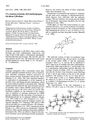 December 1998 in “Acta Crystallographica Section C-crystal Structure Communications”
 This study describes the molecular conformation and intermolecular interactions in the crystalline structure of the compound C24H31BrO4.
50 citations
,
September 2009 in “Molecular Genetics and Metabolism” This study identified a novel V26M mutation in the vitamin D receptor as the cause of hereditary vitamin D resistant rickets in a patient, characterized by severe rickets and an unusual pattern of alopecia.
1 citations
,
July 2001 in “Pediatrics in review” This case report describes a 14-year-old girl with signs of virilization, including increased facial and body hair, deepened voice, and elevated serum testosterone and androstenedione levels.
 19 citations
,
August 1999 in “European journal of endocrinology”
19 citations
,
August 1999 in “European journal of endocrinology” This study concluded that neither basal nor ACTH-stimulated 17-OHP concentrations effectively indicate carrier status for 21-hydroxylase deficiency among Slovenian hyperandrogenic women, recommending molecular analysis of the CYP21 gene for reliable screening.
November 2022 in “Journal of Investigative Dermatology” This study reported that an HS-associated NCSTN mutation in iPSC-derived skin organoids led to altered hair follicle stem cell differentiation and increased expression of proteins linked to HS inflammation.
 1 citations
,
October 2022 in “Curēus”
1 citations
,
October 2022 in “Curēus” This case report highlights the challenges in diagnosing simple-virilizing congenital adrenal hyperplasia, emphasizing the importance of early expert evaluation to prevent irreversible changes such as virilization.
15 citations
,
November 2012 in “Archives of Ophthalmology” This description of dystrophy hypotrichosis associated with juvenile macular dystrophy provides an overview of this rare disorder characterized by short hair from birth and progressive loss of central vision but reports no new findings.
 3 citations
,
May 2015 in “Journal of The American Academy of Dermatology”
3 citations
,
May 2015 in “Journal of The American Academy of Dermatology” Adalimumab significantly improves quality of life for patients with moderate to severe hidradenitis suppurativa.
 3 citations
,
September 2019 in “PLOS ONE”
3 citations
,
September 2019 in “PLOS ONE” In this study, the authors identified the DHRS9 SNP rs72623193 as most significantly associated with response to dutasteride in treating male pattern hair loss, with additional variants potentially contributing.
 June 2024 in “International Journal of Pharmaceutical Quality Assurance”
 This study established a new reverse-phase high-performance liquid chromatography method to accurately and precisely quantify silodosin and dutasteride in mixtures, meeting International Council of Harmonization validation criteria for stability, sensitivity, and recovery.
 August 2025 in “International Journal of Contemporary Pediatrics”
 This case report presents a rare subtype of hypomyelinating leukodystrophy linked to a PYCR2 gene mutation, emphasizing exome sequencing's value in diagnosing undiagnosed childhood HLDs with atypical symptoms.
7 citations
,
April 2022 in “Journal of pharmaceutical and biomedical analysis” This study describes a new method using high-resolution mass spectrometry for analyzing multiple steroids in human scalp hair, with newborn hair showing the highest steroid concentrations among examined age groups.
January 2011 in “The Journal of Secondary Vocational Education” This study found that isotretinoin treatment in adolescents with nodulocystic acne may lead to changes in adrenal hormone levels, and hirsutism and menstrual irregularity can occur during treatment.
 9 citations
,
March 2022 in “Journal of the Endocrine Society”
9 citations
,
March 2022 in “Journal of the Endocrine Society” This study found that testosterone more accurately predicts PCOS diagnosis than 11-oxyandrogens, which were linked with hirsutism severity and showed varying responses to contraceptive and metformin treatments.
June 2022 in “Dermatologic Therapy” This case report describes a 14-year-old girl with congenital hypotrichosis who experienced improved hair density and thickness after 3 months of treatment with oral minoxidil.
3 citations
,
May 2022 in “Clinical endocrinology” This study found that measuring certain steroids in hair can help diagnose and monitor congenital adrenal hyperplasia in Indonesian patients, offering a simple noninvasive method for developing countries.
25 citations
,
March 2004 in “Regulatory Toxicology and Pharmacology” Using testosterone-stimulated weanling rats can effectively replace castrated rats for anti-androgen testing, reducing animal stress.
3 citations
,
December 2020 in “Skin Appendage Disorders” This case report highlights a family member with a confirmed diagnosis of hypotrichosis with juvenile macular dystrophy due to a CDH3 gene mutation, emphasizing the importance of genetic testing for accurate counseling.
July 2001 in “Pediatrics in review” This case describes a 14-year-old girl whose symptoms of hirsutism and virilization were attributed to an ovarian Sertoli-Leydig tumor, with improvement following surgical removal.
 165 citations
,
February 2014 in “Phytotherapy Research”
165 citations
,
February 2014 in “Phytotherapy Research” Myrtle has various health benefits and potential for medicine development.
 61 citations
,
June 2010 in “European Journal of Pharmaceutics and Biopharmaceutics”
61 citations
,
June 2010 in “European Journal of Pharmaceutics and Biopharmaceutics” This study found that liposomes coated with cationic polymers, chitosan and Eudragit EPO, showed improved physicochemical stability and enhanced skin diffusion of aciclovir and minoxidil compared to uncoated liposomes.
 49 citations
,
October 2014 in “International Scholarly Research Notices”
49 citations
,
October 2014 in “International Scholarly Research Notices” This review explores the medicinal properties of Eclipta alba and its phytoconstituents and reports their potential for developing new drugs, but presents no new research results.
 43 citations
,
July 2019 in “Stem Cells International”
43 citations
,
July 2019 in “Stem Cells International” This review discusses advances and challenges in skin tissue engineering, focusing on developing 3D constructs for functional skin substitutes, and reports no new clinical results.
 27 citations
,
July 2013 in “Journal of Dermatological Science”
27 citations
,
July 2013 in “Journal of Dermatological Science” The conclusion is that androgenetic alopecia and senescent alopecia have unique gene changes, suggesting different causes and potential treatments for these hair loss types.