 115 citations
,
November 1999 in “Journal of The American Academy of Dermatology”
115 citations
,
November 1999 in “Journal of The American Academy of Dermatology” In this study, men using 2% and 5% minoxidil solutions experienced a significant increase in hair weight for 96 weeks compared to placebo, with effects diminishing after treatment cessation.
 370 citations
,
September 1999 in “The New England Journal of Medicine”
370 citations
,
September 1999 in “The New England Journal of Medicine” This article discusses the treatment of androgenetic alopecia and alopecia areata with finasteride and minoxidil but reports no new clinical results.
23 citations
,
September 1999 in “Archives of Dermatology” Chronic telogen effluvium is a common hair loss condition with specific characteristics and treatment options.
 32 citations
,
August 1999 in “Journal of Investigative Dermatology”
32 citations
,
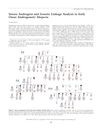
August 1999 in “Journal of Investigative Dermatology” This study found that individuals with early onset extensive androgenetic alopecia have an elevated ratio of DHT to testosterone, but no significant genetic linkage to markers on chromosomes 2 or 5 was detected.
 29 citations
,
December 1998 in “Seminars in Cutaneous Medicine and Surgery”
29 citations
,
December 1998 in “Seminars in Cutaneous Medicine and Surgery” This review examines recent approvals and emerging treatments for androgenetic alopecia, discussing newly approved drugs like Propecia and Rogaine Extra Strength 5%, but without presenting new clinical results.
 581 citations
,
October 1998 in “Journal of The American Academy of Dermatology”
581 citations
,
October 1998 in “Journal of The American Academy of Dermatology” In male pattern hair loss, this study found that finasteride 1 mg daily significantly slowed hair loss and increased hair growth over two years compared to placebo.
 179 citations
,
September 1998 in “BMJ”
179 citations
,
September 1998 in “BMJ” This article reviews the pathogenesis, genetic basis, and recent treatment breakthroughs for androgenetic alopecia but reports no new clinical findings.
 15 citations
,
August 1998 in “Australasian journal of dermatology”
15 citations
,
August 1998 in “Australasian journal of dermatology” This review discusses various treatments for hirsutism, including cosmetic techniques, anti-androgens like spironolactone, and new drugs such as finasteride and flutamide, but it reports no new clinical results.
169 citations
,
June 1998 in “Journal of Investigative Dermatology” This study found no significant genetic association between the 5α-reductase enzyme genes and male pattern baldness, suggesting a polygenic etiology rather than simple inheritance.
 118 citations
,
April 1998 in “Dermatologic Clinics”
118 citations
,
April 1998 in “Dermatologic Clinics” This review discusses the advancements in understanding and treating androgenetic alopecia and alopecia areata but reports no clinical findings; the authors emphasize the need for further research on molecular control mechanisms.
 11 citations
,
September 1997 in “Archives of Dermatology”
11 citations
,
September 1997 in “Archives of Dermatology” Reduced androgens linked to kinky hair disorder and hair loss; 5a-reductase inhibitors may help.
 416 citations
,
September 1997 in “Journal of Investigative Dermatology”
416 citations
,
September 1997 in “Journal of Investigative Dermatology” People with hair loss have more androgen receptors and enzymes in certain follicles, with men and women showing different patterns.
 329 citations
,
January 1997 in “Journal of the American Academy of Dermatology”
329 citations
,
January 1997 in “Journal of the American Academy of Dermatology” This study reports that progressive frontal fibrosing alopecia, a distinct and gradually stabilizing form of lichen planopilaris affecting elderly women and often involving eyebrow hair loss, lacks effective treatments.
 234 citations
,
December 1996 in “Journal of The American Academy of Dermatology”
234 citations
,
December 1996 in “Journal of The American Academy of Dermatology” The authors concluded that chronic telogen effluvium in middle-aged women presents distinct clinical and histological features that differ from androgenetic alopecia and acute telogen effluvium.
 48 citations
,
October 1996 in “Dermatologic clinics”
48 citations
,
October 1996 in “Dermatologic clinics” This review discusses the variability and limitations of treatments for severe alopecia areata, noting some patients may achieve cosmetic hair regrowth with treatment, while others experience persistent hair loss or relapse.
 75 citations
,
October 1996 in “Dermatologic Clinics”
75 citations
,
October 1996 in “Dermatologic Clinics” This review examines chronic telogen effluvium, highlighting its distinctive features and the need for reassurance about its non-progressive nature, but reports no new clinical results.
 143 citations
,
October 1996 in “Dermatologic Clinics”
143 citations
,
October 1996 in “Dermatologic Clinics” Too much androgen can cause hair loss; finasteride may help.
 135 citations
,
August 1994 in “Clinical Endocrinology”
135 citations
,
August 1994 in “Clinical Endocrinology” In this study of women with hirsutism or androgenic alopecia, diverse underlying endocrine disorders including polycystic ovaries and various enzyme deficiencies were detected, often associated with elevated testosterone levels.
 309 citations
,
May 1993 in “Journal of The American Academy of Dermatology”
309 citations
,
May 1993 in “Journal of The American Academy of Dermatology” This study concluded that horizontal sections of scalp biopsy specimens provide more diagnostic information for male pattern androgenetic alopecia than vertical sections and can predict hair regrowth potential following topical minoxidil therapy.
 214 citations
,
March 1993 in “Archives of Dermatology”
214 citations
,
March 1993 in “Archives of Dermatology” This article proposes five different mechanisms for telogen effluvium, supported by clinical findings, based on changes in different phases of the hair cycle.
84 citations
,
August 1991 in “British Journal of Dermatology” This study found that 67% of children treated with diphencyprone for alopecia areata or alopecia totalis regrew scalp hair, with 33% achieving complete regrowth.
 166 citations
,
November 1990 in “Journal of Investigative Dermatology”
166 citations
,
November 1990 in “Journal of Investigative Dermatology” Minoxidil sulfate stimulates hair growth.
109 citations
,
November 1987 in “Archives of dermatology” In this study, 0.5%-1.0% anthralin cream led to a cosmetic response in 25% of patients with severe alopecia areata, despite common side effects like pruritus and erythema.
 57 citations
,
July 1987 in “Journal of The American Academy of Dermatology”
57 citations
,
July 1987 in “Journal of The American Academy of Dermatology” In this study, minoxidil treatment was associated with an increase in nonvellus scalp hairs, but this effect was not sustained once the treatment was stopped.
 67 citations
,
March 1987 in “Journal of The American Academy of Dermatology”
67 citations
,
March 1987 in “Journal of The American Academy of Dermatology” This study found that both 2% and 3% minoxidil resulted in a significant increase in hair counts for participants with androgenetic alopecia over 12 months.
 101 citations
,
March 1987 in “Journal of The American Academy of Dermatology”
101 citations
,
March 1987 in “Journal of The American Academy of Dermatology” Minoxidil solution helps hair regrowth in alopecia areata, with 5% being more effective.
 53 citations
,
March 1987 in “Journal of The American Academy of Dermatology”
53 citations
,
March 1987 in “Journal of The American Academy of Dermatology” Minoxidil effectively regrows hair in male pattern baldness.
 51 citations
,
March 1987 in “Journal of The American Academy of Dermatology”
51 citations
,
March 1987 in “Journal of The American Academy of Dermatology” This study found that twice-daily application of 3% topical minoxidil maintained a higher nonvellus hair count compared to once-daily application over 2 years and 9 months in men with male pattern baldness.
 34 citations
,
January 1987 in “Dermatology”
34 citations
,
January 1987 in “Dermatology” In this study, topical minoxidil was found to be an effective, safe, and easy treatment for individuals with alopecia areata affecting 25–99% of the scalp, but less effective for total scalp hair loss.
203 citations
,
November 1984 in “Journal of the American Academy of Dermatology” This study presents evidence suggesting that androgenetic alopecia is most likely inherited through a polygenic model, challenging the traditional view that it is caused by a simple Mendelian autosomal dominant gene.