32 citations
,
August 1982 in “Journal of the American Academy of Dermatology” This study reports two cases of follicular lichen planus, suggesting that GLPLS and LPP may be variants of this condition based on clinical and immunofluorescent findings.
January 2024 in “Biomarker Insights” This study found significant associations between PCOS susceptibility and specific genetic variants in the APOA5 and PLIN1 genes among Western Saudi women, identifying novel alleles and genotypes that may influence PCOS risk and related clinical characteristics.
5 citations
,
November 2001 in “Auris Nasus Larynx” This case report presents a rare instance of Winer's dilated pore in a 51-year-old female, emphasizing its pathological features and the need for accurate differential diagnosis to avoid misinterpreting it for more serious conditions.
March 2025 in “International Journal of Molecular Sciences” This study analyzed proteomic changes in Jiangnan cashmere goats' secondary hair follicles and found that the PLIN2 gene significantly impacts hair follicle growth cycles by affecting dermal papilla cell proliferation, offering insights into breeding strategies to enhance cashmere yield.

The project developed and tested a method using plasma rich platelets to treat hair loss.
1 citations
,
December 2025 in “Journal of Investigative Dermatology” Photocrosslinkable biomaterials can improve wound healing by controlling mechanical environments.
 3 citations
,
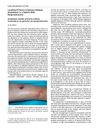
March 2012 in “Actas Dermo-Sifiliográficas”
3 citations
,
March 2012 in “Actas Dermo-Sifiliográficas” An elderly man with skin amyloidosis and abnormal blood proteins was monitored without finding widespread disease after 18 months.
research News
February 2023 in “Chemistry & Industry” January 2006 in “Journal of Liaoning University of Petroleum & Chemical Technology”  232 citations
,
June 2012 in “Cold Spring Harbor Perspectives in Biology”
232 citations
,
June 2012 in “Cold Spring Harbor Perspectives in Biology” This review summarizes the roles of Wnt signaling in wound healing but presents no new clinical findings, suggesting potential for Wnt-based therapies to enhance tissue regeneration.
April 2017 in “Journal of dermatological science” This study found that while epidermal PLCγ1 is not necessary for keratinocyte differentiation in interfollicular epidermis, it is crucial for normal hair and sebaceous gland formation in mice.
4 citations
,
December 2024 in “European Journal of Medicinal Chemistry” This study reported the development of new pyrazole-based MPC inhibitors that effectively inhibit mitochondrial pyruvate transport, showing potential as therapeutic candidates for conditions like metabolic dysfunction-associated steatohepatitis without activating PPARγ.
 16 citations
,
May 2000 in “Endocrinology”
16 citations
,
May 2000 in “Endocrinology” This study identified a new gene, mrp4, in mice, which suggests it may have a unique role in the growth and development of hair follicles in the ears and tails.
 September 2023 in “International Journal of Science and Research (IJSR)”
 In this case study, PRP and PRF treatments helped achieve complete healing of chronic wounds, including a chemical burn ulcer in three weeks and a pilonidal sinus post-incision in eight weeks, suggesting potential benefits for chronic wound management.
5 citations
,
January 2025 in “Burns & Trauma” This study suggests that activating the PPARs/SHH-mitochondrial axis may enhance diabetic wound healing by improving endothelial cell metabolism and angiogenesis, indicating potential for PPAR agonists in treating diabetic foot ulcers.
26 citations
,
May 2016 in “Journal of biological chemistry/The Journal of biological chemistry” This study found that mice lacking sPLA2-IIE had distinct skin abnormalities, particularly affecting hair follicles, highlighting the differing roles of sPLA2 isoforms in mouse skin.
1 citations
,
January 2015 in “Hair transplant forum international” This review discusses low level laser therapy for hair loss but reports no new research findings; it serves as an introduction to understanding existing knowledge before upcoming evaluations of recent studies.
 8 citations
,
June 2012 in “PloS one”
8 citations
,
June 2012 in “PloS one” This study found that the Plcd3(mNab) mutation in mice worsens the alopecia caused by Plcd1 loss, suggesting synergistic effects between Plcd1 and Plcd3 on hair follicle health.
 1 citations
,
January 2025 in “Advances in Dermatology and Allergology”
1 citations
,
January 2025 in “Advances in Dermatology and Allergology” In this animal study, PRF enhanced the repair of chronic wounds in rats by reducing inflammation and promoting collagen deposition and new blood vessel formation, potentially through activating the Wnt/β-catenin signaling pathway.
12 citations
,
December 2016 in “Medical Hypotheses” This research suggests that the enzyme Phospholipase D from E. coli is a strong candidate as the underlying cause of benign prostatic hyperplasia, potentially mediated by its conversion to lysophosphatidic acid in the prostate.
April 2026 in “Applied Materials Today” This study introduced a pH-responsive polymeric wound dressing that enhances healing in chronic wounds by changing shape and drug delivery based on wound pH, achieving a 94.88% healing rate in diabetic mice by day 14.
June 2026 in “Cancer Research Communications” In this phase 1B study, patients with ER-positive/HER2-negative metastatic breast cancer receiving combined pegylated liposomal doxorubicin and pembrolizumab had a disease control rate of 67% with responses lasting a median of 11 months; the treatment was well tolerated and showed potential for extended use.
September 2015 in “OUKA (Osaka University Knowledge Archive) (Osaka University)” Poly(ethylene-co-vinyl alcohol) monoliths can be made using heat separation for various uses.
 84 citations
,
June 2010 in “The Plant Cell”
84 citations
,
June 2010 in “The Plant Cell” In this study, disruptions in phospholipase A2 activity in Arabidopsis thaliana significantly impaired the plasma membrane localization of PIN proteins, affecting auxin transport and root development.
 April 2017 in “Journal of Investigative Dermatology”
 This study found that SM04755, a novel topical drug, inhibited inflammation, keratinocyte proliferation, and fibrosis in vitro and improved skin health in a mouse model of psoriasis, indicating potential as a topical psoriasis treatment.
 6 citations
,
July 2021 in “Microbial biotechnology”
6 citations
,
July 2021 in “Microbial biotechnology” This study found that combining LED yellow light with an engineered strain expressing CXCL12 improved wound healing and reduced inflammation in a mouse model of scald wounds.
1 citations
,
July 2025 in “PubMed” This pilot study found that cord blood platelet-rich plasma treatment was safe and improved symptoms and sexual function in women with vulvar lichen sclerosus after standard topical corticosteroid treatment.
 7 citations
,
August 2020 in “Animal biotechnology”
7 citations
,
August 2020 in “Animal biotechnology” This study found that lncRNA-599547 positively regulates the expression of the Wnt10b gene by interacting with miR-15b-5p, enhancing the inductive property of dermal papilla cells in cashmere goats.
May 2026 in “JAAD International” This article notes the lack of US prevalence data for primary lymphocytic cicatricial alopecias due to the recent introduction of subtype-specific ICD-10 codes and highlights the importance of early diagnosis for hair preservation.
 21 citations
,
January 2023 in “The International Journal of Developmental Biology”
21 citations
,
January 2023 in “The International Journal of Developmental Biology” This review examines the Wnt signaling pathway's role in regeneration across key model species, but it reports no new findings and highlights the need for more research to understand the underlying molecular mechanisms.