 115 citations
,
March 2019 in “Nature Communications”
115 citations
,
March 2019 in “Nature Communications” This study identified significant genetic associations with frontal fibrosing alopecia at four genomic loci, suggesting it is a genetically predisposed immuno-inflammatory disorder influenced by the HLA-B*07: 02 allele.
 16 citations
,
February 2014 in “Journal of Investigative Dermatology”
16 citations
,
February 2014 in “Journal of Investigative Dermatology” This study developed a mouse model to monitor hair follicle cycling macroscopically through live bioluminescence imaging, enabling detailed analysis of hair cycle and propagation dynamics influenced by environmental factors.
18 citations
,
January 2021 in “Skin Research and Technology” This study found that high-frequency ultrasound was effective in localizing deep tumor margins in basal cell carcinoma, suggesting its utility in selecting therapeutic approaches.
36 citations
,
October 2009 in “Journal of biological chemistry/The Journal of biological chemistry” This study reports that TFM-4AS-1, a selective androgen receptor modulator, promoted bone and muscle growth with reduced effects on reproductive organs in ovariectomized rats.
 April 2010 in “The Journal of Urology”
 Human prostate cells produce more WISP1/CCN4 when there's not enough oxygen.
 1 citations
,
May 2024 in “Dermatology and Therapy”
1 citations
,
May 2024 in “Dermatology and Therapy” This review article examines the current understanding of frontal fibrosing alopecia, noting its prevalence in different demographics and the roles of genetic and environmental factors in its pathogenesis, while highlighting that treatment approaches remain varied and lack standardization.
 53 citations
,
May 2010 in “Dermatologic Surgery”
53 citations
,
May 2010 in “Dermatologic Surgery” This article appears to be a table of contents or navigation page for a journal, not presenting any new findings or research results.
1 citations
,
May 2024 in “Skin Appendage Disorders” In this study, researchers analyzed trichoscopy findings in black patients with FFA to aid in precise diagnosis and treatment, highlighting the importance of understanding disease characteristics to improve hair care in this group.
This study examined epidemiological data on patients with frontal fibrosing alopecia in Greece and found demographic patterns consistent with international studies.
 September 2011 in “Urology”
 This study reports on biofeedback treatment for dysfunctional voiding in three adult cases, providing insights into this condition when diagnosed beyond childhood.

This study demonstrated that the differential wetting characterization (DWC) method can effectively differentiate changes in the wetting properties of hair fibers after chemical or physical treatment.
 1 citations
,
January 2024 in “Advanced science”
1 citations
,
January 2024 in “Advanced science” This study found that fibronectin-attached cell sheets significantly improved wound healing in vivo by increasing wound closure rates, reducing inflammation, and promoting tissue regeneration compared to conventional cell sheets.
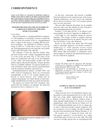
January 1976 in “Revista de Estudios Agrosociales” This study suggests a potential causal link between frontal fibrosing alopecia and vitiligo, as observed in two cases where the conditions co-occurred on preexisting vitiligo of the forehead.
 1 citations
,
January 2020 in “Skin appendage disorders”
1 citations
,
January 2020 in “Skin appendage disorders” Finasteride may help treat frontal fibrosing alopecia, but more research is needed.
This study found that FGF5 alternative spliceosomes inhibit dermal papilla cell proliferation and regulate hair follicle growth-related gene expression, impacting hair follicle development in rabbits.
4 citations
,
June 2017 in “Annales de dermatologie et de vénéréologie” This prospective study in Morocco reported on 20 cases of frontal fibrosing alopecia, finding that dermoscopy played a key role in diagnosing and managing the condition, which can increasingly affect premenopausal women.
 2 citations
,
July 2022 in “Frontiers in Medicine”
2 citations
,
July 2022 in “Frontiers in Medicine” This review discusses the current understanding of frontal fibrosing alopecia's pathogenesis, highlighting genetic susceptibility, immune response involvement, and possible links to steroid hormones, but reports no new clinical results.
 64 citations
,
January 2015 in “BioMed Research International”
64 citations
,
January 2015 in “BioMed Research International” In this study, topical application of fibroblast growth factors was found to promote hair growth by inducing and prolonging the anagen phase in telogenic C57BL/6 mice, suggesting potential as hair growth-promoting agents.
 January 2007 in “대한피부과학회지”
 In this clinical trial, the topical agent AP-FHG0604T significantly increased hair counts and growth rates in women with female pattern hair loss compared to a placebo, though some reported mild local irritation.
5 citations
,
April 2019 in “DOAJ (DOAJ: Directory of Open Access Journals)” This article discusses the characteristics and pathogenesis of pseudofolliculitis barbae, particularly its prevalence in men of African and Asian descent, but presents no new research findings.
 16 citations
,
January 2005 in “Pediatric Dermatology”
16 citations
,
January 2005 in “Pediatric Dermatology” This brief report describes a case of Fox-Fordyce disease in a prepubertal girl but reports no new clinical findings.
 18 citations
,
October 2002 in “Veterinary dermatology”
18 citations
,
October 2002 in “Veterinary dermatology” This study observed that follicular dysplasia in Weimar Pointers produces histopathological features and hair abnormalities similar to color dilution alopecia, though less severe.
 23 citations
,
April 2021 in “Journal of Clinical Medicine”
23 citations
,
April 2021 in “Journal of Clinical Medicine” This review compiles existing data on frontal fibrosing alopecia and highlights the promise of 5-alpha reductase inhibitors as a treatment option, while noting the need for clarity on its cause and progression.
 January 2020 in “Revista da Sociedade Portuguesa de Dermatologia e Venereologia”
 This study reports that frontal fibrosing alopecia in Brazilian patients is common in postmenopausal women and often associated with hypothyroidism and facial irritation from cosmetic products.
April 2019 in “Journal of Investigative Dermatology” Targeting immune pathways like JAK/STAT may help treat frontal fibrosing alopecia.
 November 2022 in “Research Square (Research Square)”
 This meta-analysis suggests a significant association between the use of facial sunscreen and moisturizer and frontal fibrosing alopecia, while finding no significant relationship with hair products or treatments.
 5 citations
,
August 2014 in “Journal of The American Academy of Dermatology”
5 citations
,
August 2014 in “Journal of The American Academy of Dermatology” This article notes slow progression and spontaneous stabilization in untreated cases of a specific scarring alopecia and reports no new results; the authors call for randomized trials to confirm the treatment's benefit.
 May 2025 in “Health Science Reports”
 This study reported that applying Serum WS Biotin, a water-soluble form of D-Biotin, daily for 3 months significantly reduced hair shedding and increased hair strength in volunteers with moderate to excessive hair shedding, while showing good skin compatibility.
 6 citations
,
October 2020 in “Endocrine journal”
6 citations
,
October 2020 in “Endocrine journal” This case report identifies two specific mutations in the WRN gene in a 40-year-old female with Werner syndrome, highlighting the need for awareness of its early manifestations and treatment options.
 5 citations
,
March 2014 in “Journal of The American Academy of Dermatology”
5 citations
,
March 2014 in “Journal of The American Academy of Dermatology” The study suggests hormonal factors may play a role in Frontal Fibrosing Alopecia and that treatments like oral antiandrogens and steroids could be beneficial.