In this study, researchers used the CRISPR/Cas9 system to edit the FGF5 gene in Dorper sheep, observing increased density and finer wool, along with changes in cortisol levels and antioxidant enzyme activity linked to hair follicle development.
 2 citations
,
September 2003 in “Annals of Plastic Surgery”
2 citations
,
September 2003 in “Annals of Plastic Surgery” This paper discusses a method for eyebrow reconstruction using intermediate hair from the forehead hairline with a pedicled temporoparietal fascial flap and reports no new clinical results.
April 2014 in “Zhonghua shiyan waike zazhi” This study found that follicular unit-like wigs made from a polycaprolactone matrix exhibited good histocompatibility in New Zealand white rabbits, with reduced inflammatory cell infiltration compared to a polypropylene matrix.
3 citations
,
December 2021 in “Proteins” This study found that straight crimp mutant wool differs from crimpy wool in the layout of cortical cells and the relative proportions of keratin and keratin-associated proteins.
 1 citations
,
January 2017 in “PubMed”
1 citations
,
January 2017 in “PubMed” This study found that despite chemical differences, five different brands of reconstructive hair fibers all provided successful cosmetic results in disguising hair loss in patients.
 2 citations
,
March 2023 in “European Polymer Journal”
2 citations
,
March 2023 in “European Polymer Journal” This study developed multifunctional nanofiber wound dressings that significantly reduced bacteria and promoted healing in a mouse wound model by incorporating antibacterial and growth-promoting agents.
 January 2025 in “Indian Journal of Dermatology”
 This review discusses the various factors implicated in the etiology of frontal fibrosing alopecia and notes the need for effective treatments, reporting no new clinical findings.
1 citations
,
January 2001 in “Acta Archaeologica Academiae Scientiarum Hungaricae” This review details the Follicular Unit Extraction technique for hair restoration, highlighting its advantages over traditional strip surgery, but includes no new clinical findings.
September 2023 in “Animals” In this study, researchers conducted whole-genome resequencing of eight sheep breeds to identify additional genes associated with wool fineness, revealing 269 genes in fine wool and 319 in coarse wool breeds that are linked to significant traits and pathways.
 3 citations
,
March 2019 in “PubMed”
3 citations
,
March 2019 in “PubMed” In this report, Biofibre® medical hair prosthetic fibers were shown to meet safety and biocompatibility standards, offering immediate aesthetic results for hair loss treatment with minor surgical intervention and reversible implantation, but requiring good after-care and yearly maintenance for optimal cosmetic outcomes.
 117 citations
,
November 2006 in “Experimental Dermatology”
117 citations
,
November 2006 in “Experimental Dermatology” This review explores the biology of wool follicles and suggests their potential use as research models in modern biology, but it reports no new findings.
This paper examines factors affecting the stretching setting treatment of human hair and wool, concluding that the intended outcomes can be achieved using their customized testing equipment and technology.
 6 citations
,
December 2013 in “Journal of Cosmetic Dermatology”
6 citations
,
December 2013 in “Journal of Cosmetic Dermatology” This article reviews the use of pigmented concealing powders as a viable cosmetic option for patients with alopecia, noting the potential for a more natural appearance compared to traditional hairstyling or hairpieces, but it presents no new clinical results.
 39 citations
,
July 2015 in “British Journal of Dermatology”
39 citations
,
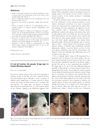
July 2015 in “British Journal of Dermatology” This article discusses the pseudo 'fringe sign' in frontal fibrosing alopecia, highlighting that it is not solely related to traction, and it reports no new clinical results.
 December 2024 in “Veterinary Sciences”
 In this study of Zhexi Angora rabbits, researchers found that the fine-wool group exhibited lower fiber diameters and a higher hair follicle density than the coarse-wool group, and they identified key candidate genes potentially regulating wool quality through RNA-seq and genome resequencing techniques.
 62 citations
,
March 2015 in “PLOS ONE”
62 citations
,
March 2015 in “PLOS ONE” In this study, microporous electrospun scaffolds pre-seeded with dermal fibroblasts accelerated wound healing and improved dermal matrix structure and hair follicle regeneration compared to acellular scaffolds in a rat model.
August 2021 in “Journal of the American Academy of Dermatology” This article reviews the use of hair filler fibers for improving the appearance of thinning hair and calls for more studies on patient satisfaction and side effects, without providing new clinical results.
4 citations
,
February 2015 in “PubMed” This study reported that a hair fiber filler product improved quality of life, scalp coverage, and hair fullness in individuals with thinning hair, with a high level of product satisfaction observed.
7 citations
,
February 1985 in “Textile Research Journal” This study found that wool fiber surfaces damaged in processing tended to have cellular debris adhering to them, while undamaged surfaces did not show this interaction.
 April 2023 in “World Journal Of Advanced Research and Reviews”
 This study in Morocco found that all women with frontal fibrosing alopecia presented frontotemporal hairline recession, with trichoscopic features such as perifollicular erythema and follicular hyperkeratosis being indicative of the condition, and suggested a potential link between cosmetic products or emotional factors and the disease.
 1 citations
,
March 1985 in “Head & neck surgery”
1 citations
,
March 1985 in “Head & neck surgery” This study reports disastrous outcomes from artificial hair fiber implants, with some patients still needing repair to remove retained fiber fragments; hair-bearing punch grafts may help some patients.
47 citations
,
June 2017 in “The FEBS journal” This study found that CRISPR/Cas9-induced loss-of-function mutations in the FGF5 gene significantly increased wool length and yield in genetically modified Chinese Merino sheep compared to wild-type controls.
 April 2006 in “Dermatologic Clinics”
 This study found that white wax and its extract significantly promoted hair growth in a mouse model of androgenetic alopecia, outperforming finasteride by inhibiting 5α-reductase activity and enhancing cellular proliferation.
This article discusses techniques to reduce donor incision scars in follicular unit hair transplants for androgenic alopecia but reports no new clinical findings.
7 citations
,
January 2024 in “Regenerative Biomaterials” This study developed a multifunctional core-shell fiber dressing that preserves platelet-rich plasma for 180 days, facilitating sustained growth factor release and improved wound healing.
 1 citations
,
May 2015 in “Dermatologic Therapy”
1 citations
,
May 2015 in “Dermatologic Therapy” The microstrip technique for hair transplantation is effective and discreet for patients needing fewer than 1500 grafts.
June 2024 in “British Journal of Dermatology” In this study, researchers reviewed wig prescribing practices for alopecia at a single center and found a high demand for wigs, especially acrylic ones, and noted significant funding discrepancies between different regions, emphasizing their importance in managing patient wellbeing on the NHS.
 January 2023 in “Skin appendage disorders”
 The case study reports a patient with acute telogen effluvium in the donor region post-hair transplant, highlighting trichoscopic findings that aid in diagnosis and reassuring the self-resolutive nature of this condition.
July 2020 in “Hair transplant forum international” This study reported that using FUE to place grafts inside widened scars from FUT hair transplants achieved the best results for improving scar appearance.
This article describes an improved trichophytic closure technique for hair restoration surgery, achieving nearly invisible donor scars in over 95% of patients, but emphasizes tailoring the method to individual patient characteristics.